

When the Past Is Present, page 1


ABOUT THE BOOK
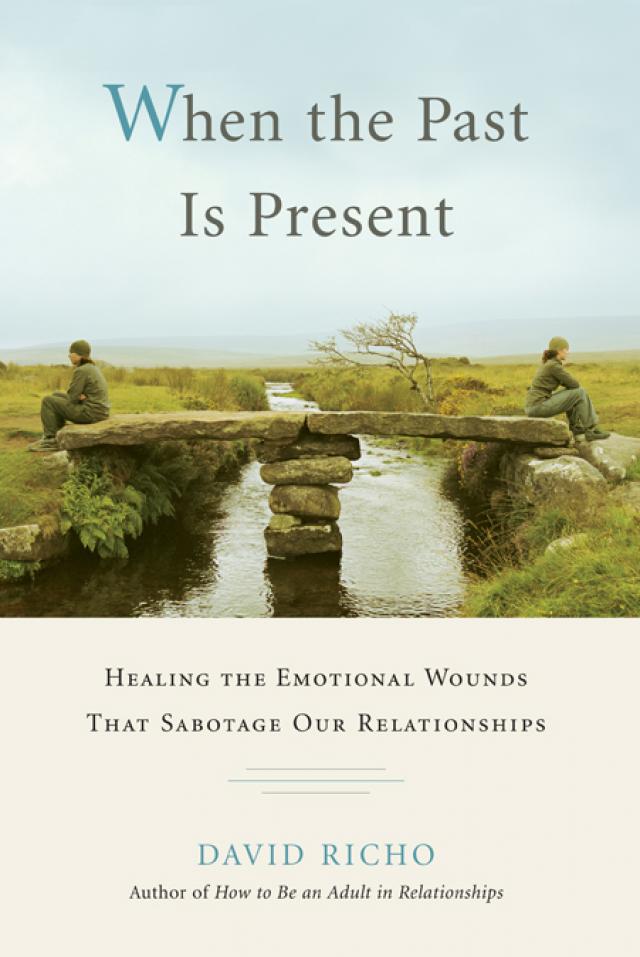
In this book, psychotherapist David Richo explores how we replay the past in our present-day relationships—and how we can free ourselves from this destructive pattern. We all have a tendency to transfer potent feelings, needs, expectations, and beliefs from childhood or from former relationships onto the people in our daily lives, whether they are our intimate partners, friends, or acquaintances. When the Past Is Present helps us to become more aware of the ways we slip into the past so that we can identify our emotional baggage and take steps to unpack it and put it where it belongs.
Drawing on decades of experience as a psychotherapist, Richo helps readers to:
Understand how the wounds of childhood become exposed in adult relationships—and why this is a gift
Identify and heal the emotional wounds we carry over from the past so that they won’t sabotage present-day relationships
Recognize how strong attractions and aversions to people in the present can be signals of own own unfinished business
Use mindfulness to stay in the present moment and cultivate authentic intimacy
DAVID RICHO, PhD, is a psychotherapist, teacher, writer, and workshop leader whose work emphasizes the benefits of mindfulness and loving-kindness in personal growth and emotional well-being. He is the author of numerous books, including How to Be an Adult in Relationships and The Five Things We Cannot Change. He lives in Santa Barbara and San Francisco, California.
Sign up to learn more about our books and receive special offers from Shambhala Publications.
Or visit us online to sign up at shambhala.com/eshambhala.
When the Past
Is Present
Healing the Emotional Wounds
That Sabotage Our Relationships
David Richo, PhD
SHAMBHALA
Boston & London
2010
Shambhala Publications, Inc.
Horticultural Hall
300 Massachusetts Avenue
Boston, Massachusetts 02115
www.shambhala.com
© 2008 by David Richo
The selections from Emily Dickinson’s poems are reprinted by permission of the publishers and trustees of Amherst College from The Poems of Emily Dickinson, Thomas H. Johnson, ed., Cambridge, Mass.: The Belknap Press of Harvard University Press, copyright © 1951, 1955, 1979, 1983 by the President and Fellows of Harvard College.
All rights reserved. No part of this book may be reproduced in any form or by any means, electronic or mechanical, including photocopying, recording, or by any information storage and retrieval system, without permission in writing from the publisher. American National Standards Institute Z39.48 Standard.
Library of Congress Cataloging-in-Publication Data
Richo, David, 1940–
When the past is present: healing the emotional wounds that sabotage our relationships / David Richo.—1st ed.
p. cm.
eISBN 978-0-8348-2317-4
ISBN 978-1-59030-571-3
1. Transference (Psychology) 2. Interpersonal relations— Psychological aspects. 3. Psychoanalysis. I. Title.
RC489.T73R53 2008
616.89′17 DC22
2007048996
To all the Slubowski family with gratitude and appreciation for loving-kindness that began in 1942 and still cheers and comforts me now
CONTENTS
Introduction
1. What Is Transference?
How We Defend
Getting You to Feel for Me
One of Our Habits
The Birth of Our Expectations
Do We Hope or Despair?
How Childhood Continues into Our Adult Relationships
2. What Transference Does and Why
The Clues
Causes and Choices
Noticing What We Are Up To
We Have Good Reasons to Transfer
Practice: Address, Process, Resolve, and Integrate
3. Ways We Can Be Together
The Real You, the Real Me
Practice: Presence, Mindfulness, and Loving-kindness
4. Reactions and Reacting
Persons, Pets, Places, and Things
On the Job Too
Practice: In the Workplace
The Critic Within
Practice: Releasing Ourselves from Our Myths
Why Others Get to Us as They Do
Practices
Seeing What Gets in the Way
Opening
F.A.C.E.-ing Ourselves
Searching Questions
From Trigger to Anchor
Handling Others’ Reactions to Us
Practice: Power in Responding
5. How Our Fears Figure In
Four Fearsome Hurdles
Comings and Goings
Giving and Receiving
Being Accepted and Being Rejected
Letting Go and Moving On
Practice: Scaling the Hurdles with Grace
6. Our Compulsion to Repeat
Events Too Huge
Something Ancient and Primitive Within Us
Why We Are All So Concerned about Abandonment
The Impact on Us
Hate and Hurt
Practice: Staying with Feeling
7. Memories of Mistreatment
Ongoing Stress
Our Delicate Timing
We Don’t All Have to Go Back
Practices
Honoring Timing and Lifestyle
Identifying What Is Missing
8. The Physical Dimension
How the Brain Figures In
Practice: Alternatives to Freezing Up
9. Our Yearning for Both Comfort and Challenge
Practice: How to Grieve and Let Go
Grief in the Family
Regrets and Disappointments
Practice: Handling Regret and Disappointment
10. Mirrors and Ideals
Our Search for Mirroring Love
Can’t Live without You
A Bridge Appears
Where Our Ideals Came From
The Gift of Self
How Our Needs Are Transferred
Transference Meets Us Everywhere
Practices
New Ways of Trusting
Whom Do We Trust?
Examining Our Ideals
11. Why I Love You But Don’t Really See You
Sex and Our Erotic Transferences
Sex as Addiction
Love and In Love
Daring an Adult Love
Working Out Our Relationship Clashes
How Codependency Arises
Practices
Committing to Loving-kindness
Entering Another’s World
12. Noticing Transferences in Our Relationships
Practice: Letting Conflicts Help Us
Good-Enough Relating
The Introvert/Extrovert Dimension in Relating
Working Back in Time
We Really Can Be Here Now
Practice: Pausing to Check In and Settle In
13. From Transference to Transformation
Our Psychological Work
Practice: A Checklist
How Spiritual Practice Renews Us
Hidden Help
How It All Comes Together
Practice: Opening to Spiritual Shifts
14. Transferring beyond the Personal
The Archetypes We Live With
Acknowledge or Disavow Our Wholeness?
The Example of Patriotism
Religion and Transference
Light and Dark
Epilogue: A Jungian View of Our Larger Life
E-mail Sign-Up
INTRODUCTION
The past is never ended; it isn’t even past.
—William Faulkner
A poignant thing about us humans is that we seem hardwired to replay the past, especially when our past includes emotional pain or disappointment. As a psychotherapist, so much of my work involves joining people in noticing the ways in which the past is still very much alive in presentday relationships. Though most of us want to move on from the past, we tend to go through our lives simply casting new people in the roles of key people, such as our parents or any significant person with whom there is still unfinished business. Freud called this phenomenon “transference.”
In transference, feelings and beliefs from the past reemerge in our present relationships. Transference is unconscious; we do not realize we are essentially involved in a case of mistaken identity, mistaking someone in the present for someone from the past. The term transference is usually used in the context of psychotherapy to refer to the client’s tendency to see a parent, a sibling, or any significant person in the therapist and to feel and act in accord with that confusion. (There is also a phenomenon called “countertransference,” which refers to the therapist’s reactions to a client, especially when she appears to be a simulacrum of someone from his own past.)
Yet transference and countertransference are not restricted to therapy. Transferences from us and onto us happen in our lives every day. Unbeknownst to us, we are glimpsing important figures from our past in our partners, friends, associates, enemies, and even strangers. What we transfer are feelings, needs, expectations, biases, fantasies, beliefs, and attitudes. Transference is a crude way of seeing what is invisible, the untold drama inside us, or to use Ernst Becker’s compelling phrase, “a miscarriage of clumsy lies about reality.”
One exa
The enduring impression made upon us by significant relationships sets up a template that we apply to others throughout life. Our life is a theme and then variations that are never far off from the original tune. What chance do people have to be just who they are to us when we are comparing them to others while neither we nor they realize it is happening? What chance do we have to be seen as we are by others when they are transferring onto us?
Because of our natural tendency to twist our vision of others in accord with outmoded blueprints, it is only in rare moments that we see one another “as we in-ly are,” as Emerson said. Most of the time, we are looking at one another through the lenses of our own history. There are two ways in which this can happen: (1) we might project onto each other our own beliefs, judgments, fears, desires, or expectations; (2) we might transfer onto each other the traits or expectations that actually belong to someone else.
This book is about our natural inclination, and at times our compulsion, to transfer and about how we can learn to see one another without obstructions or elaborations from our own story, even if only for a moment. Such clarity is a triumph of mindfulness, pure attention to the purely here. Unconscious transference gives power to then. Awareness of our transference gives the power to now.
Mindfulness is attention to the moment. Yet the moment is transitory by definition. So mindfulness is actually attentiveness to a flow. To live mindfully is not about a way of seeing reality as if it had stopped for us but flowing with reality that never ceases to shift and move. In transference we stop ourselves from flowing with present possibilities and instead stop to stare at a poster with a face from the past. We can catch ourselves in the act of placing our mother’s face on a spouse or our former spouse’s face on a new partner. We can also notice how others transfer onto us and we can find ways to handle their mistaking us for someone else.
When we engage in transference, we are attracted, repelled, excited, or upset by others. Our strong reactions of approach or avoidance may give us a clue to something still unsettled, still unfinished in us. Perhaps this person to whom we react so vehemently has reminded us of someone else, by physical resemblance or by personality. Perhaps he has released a feeling not fully expressed, a desire not yet satisfied, an expectation not yet met, a longing still shyly in hiding. It is called “transference” because we carry over onto someone now what belongs to the world back then. Indeed, as we look carefully into any present reactions, we inevitably notice a hookup to the past. “Introspection is always retrospection,” wrote Jean-Paul Sartre. As we interpret our transferences in the light of our past, we understand our behavior in relationships.
Anyone who becomes deeply important to us is, by that very fact, replaying a crucial role from our own past. In fact, this is how people become important to us. They come from central casting and they pass the audition for us, their casting directors. We then make them the stars of our dramas. We don’t call them “stars.” We might instead call them “soul mates” or “archenemies.” We are often sure “we were together in a former life.” That is not so far off; we were together indeed, except it may not have been centuries ago, only decades or years ago. Synchronicity, meaningful coincidence, makes just the right actors come along for the audition. Our partners are then put under contract as performers, who gradually memorize the scripts of our lifelong needs or fears, and we may be busily doing the same for them. Do I live in my own home or on a movie set?
We might say, “We are working out our karma together.” Yes, our bond in intimate relationships is often fashioned from the ancient and twisted consequences of our childhood or of former relationships. How ironic that those who matter to us have become stand-ins for those who, we might falsely believe, no longer matter to us. In reality, once someone is no longer important to us, his face becomes flatlined on our emotional screen and we no longer include him in our transferences.
Transference does not have to be seen as pathology but rather as our psyche’s signal system, alerting us to what awaits an updating. Our work is to take notice of this and to face our tasks without the use of unwitting apprentices or surrogates. Unconscious transference is a hitching post to our past. As we make it conscious, it becomes a guidepost.
We engage in transference for some positive reasons. We are seeking healing for what is still an open wound. We are yearning for the sewing up of something that has long remained ripped and ragged. We try to complete our enigmatic history through our relationships with new partners, workmates, or colleagues. In this sense, transference can provide a useful shortcut to working on our past. This is healthy when transference is recognized, brought out of hiding, and used to identify what we then take responsibility to deal with. Finding out where our work is can be as important a purpose of relationship as personal happiness.
Transference is unhealthy for us when we remain unconscious of it and use others as fixit-persons for our troubled past relationships. We evolve when that past can find more direct and conscious ways to complete itself. Then others become prompters that help us move on in our story rather than actors who keep us caught in it.
Sometimes in our relationships we do step out of our old story with no need of a prompter. We approach someone not because she grants entry into our own unopened past or helps us forget it but because she is truly brand-new and only herself. This is the experience of an authentic you-and-I relationship. We approach a real person, not someone costumed in garments gathered from the trunks in our own attic. We then become more sincerely present with someone just as she is. This leads to the liberating possibility offered in authentic intimacy: mutual need-fulfillment and openness to each other’s feelings. Our definition in healthy adulthood widens and deepens from the adolescent version: an attachment that feels good.
Transference issues can be baggage—the Latin word for which is impedimenta—or they can be fertile possibilities for growth. How sad it is that what shaped us became a burden and a secret too. Bringing consciousness to our transferences makes everything lighter to bear. There is no way around the past, but there are ways of working with it so that it does not impinge upon us or others quite so much. Our psyche’s unrecognized operations can be exposed. The misreadings that are transference can become meaningful. Then the long longed-for restoration of our full selves can be consummated.
Transference is essentially a compulsion to return to our past in order to clear up emotionally backlogged business. We go back like restless ghosts to the house where the power-packed events occurred or, perhaps, did not fully occur as we wanted them to. The house we haunt is not our original address but the one we live at now. The people whom we haunt for fulfillment of our earliest needs are not our parents but partners, coworkers, friends, or strangers in our present life. Since all we have is the present, we use it to make up for the past. This is not wrong, only inaccurate. It is not a malady, only a misdirection.
We can expand our repertory for dealing with the past. It begins when we embark on a practice of noticing transference mindfully. We may then peer into the true nature of the unsatisfactory transactions of the past that yearn to fulfill themselves so desperately and futilely now. This form of mindfulness makes the unconscious conscious, the implicit explicit, just the technique that facilitates mental awareness, the psychological version of spiritual enlightenment.
Mindfulness is an unconditional awareness of the present without the clutter, conditioning, or contaminations of the past. We can deal with transference mindfully by bringing it into a present no longer conditioned by the past. In Buddhism, the here and now, when it is truly experienced, is ultimate reality. Our work on transference thus commandeers us to a high spiritual consciousness.





