

The Pope at War, page 1


Copyright © 2022 by David I. Kertzer
All rights reserved.
Published in the United States by Random House, an imprint and division of Penguin Random House LLC, New York.
Random House and the House colophon are registered trademarks of Penguin Random House LLC.
library of congress cataloging-in-publication data
Names: Kertzer, David I., author.
Title: The pope at war : the secret history of Pius XII, Mussolini, and Hitler / David I. Kertzer.
Other titles: Secret history of Pius XII, Mussolini, and Hitler
Description: First edition. | New York : Random House, [2022] | Includes bibliographical references and index.
Identifiers: LCCN 2022000861 (print) | LCCN 2022000862 (ebook) | ISBN 9780812989946 (hardcover) | ISBN 9780812989953 (ebook)
Subjects: LCSH: World War, 1939–1945—Diplomatic history. | Pius XII, Pope, 1876–1958. | Catholic Church—Foreign relations. | Catholic Church—Relations—Judaism. | Judaism—Relations—Catholic Church. | Pius XII, Pope, 1876–1958—Relations with Jews. | Holocaust, Jewish (1939–1945) | World War, 1939–1945—Vatican City. | World War, 1939–1945—Religious aspects—Catholic Church. | National socialism and religion.
Classification: LCC D749 .K47 2022 (print) | LCC D749 (ebook) | DDC 940.53/2545634—dc23/eng/20220127
LC record available at https://lccn.loc.gov/2022000861
LC ebook record available at https://lccn.loc.gov/2022000862
Ebook ISBN 9780812989953
randomhousebooks.com
Maps by Laura Maestro
Title-page images: (top) Pius XII giving benediction to crowd following his coronation, Saint Peter’s Square, March 1939. Popperfoto/via Getty Images; (bottom) Hitler and Mussolini, Rome, May 1938. Fototeca Gilardi.
Book desisgn by Barbara M. Bachman, adapted for ebook
Cover design: Christopher Brand
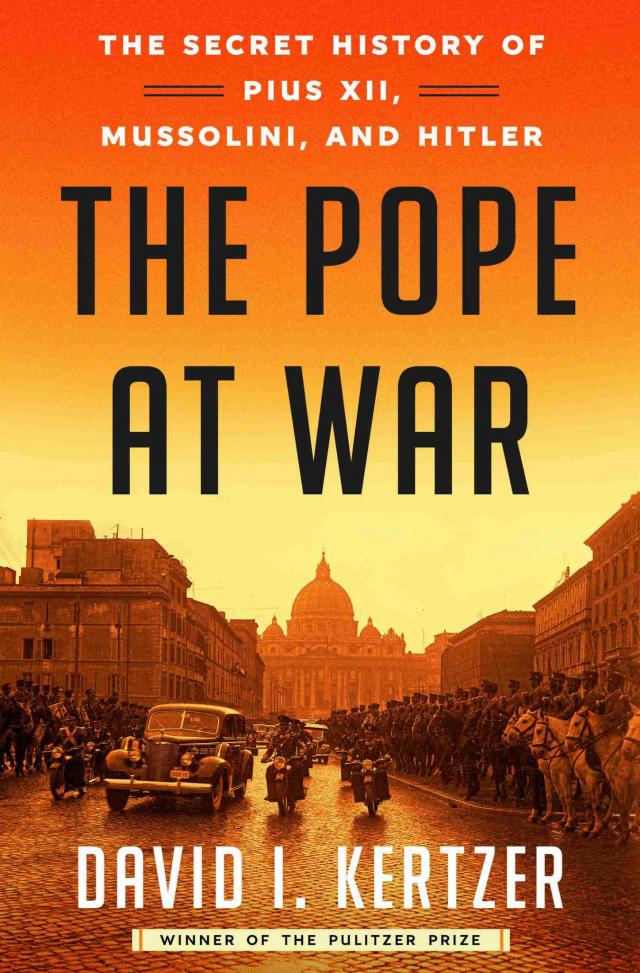
Cover photograph: Umberto Cicconi/Getty Images
ep_prh_6.0_140138097_c0_r0
Contents
Cover
Title Page
Copyright
Maps
List of Illustrations
Cast of Characters
Foreword
Prologue: The Twisted Cross
Part One: War Clouds
Chapter 1: Death of a Pope
Chapter 2: The Conclave
Chapter 3: Appealing to the Führer
Chapter 4: The Peacemaker
Chapter 5: “Please Do Not Talk to Me About Jews”
Chapter 6: The Nazi Prince
Chapter 7: Saving Face
Chapter 8: War Begins
Chapter 9: The Prince Returns
Chapter 10: A Papal Curse
Chapter 11: Man of Steel
Chapter 12: A Problematic Visitor
Part Two: On the Path to Axis Victory
Chapter 13: An Inopportune Time
Chapter 14: An Honorable Death
Chapter 15: A Short War
Chapter 16: Surveillance
Chapter 17: The Feckless Ally
Chapter 18: The Greek Fiasco
Chapter 19: A New World Order
Chapter 20: Hitler to the Rescue
Chapter 21: The Crusade
Chapter 22: A New Prince
Chapter 23: Best to Say Nothing
Part Three: Changing Fortunes
Chapter 24: Escaping Blame
Chapter 25: Papal Premiere
Chapter 26: Disaster Foretold
Chapter 27: A Thorny Problem
Chapter 28: An Awkward Request
Chapter 29: The Good Nazi
Chapter 30: Deposing the Duce
Chapter 31: Musical Chairs
Chapter 32: Betrayal
Part Four: The Sky Turned Black
Chapter 33: Fake News
Chapter 34: The Pope’s Jews
Chapter 35: Baseless Rumors
Chapter 36: Treason
Chapter 37: A Gratifying Sight
Chapter 38: Malevolent Reports
Chapter 39: A Gruesome End
Epilogue
Final Thoughts: The Silence of the Pope
Dedication
Acknowledgments
Archival Sources and Abbreviations
Notes
References
Illustration Credits
Index
Also by David I. Kertzer
About the Author
1. Galeazzo Ciano and Cardinal Eugenio Pacelli in prayer at the body of Pope Pius XI in the Sistine Chapel, February 10, 1939
2. Cardinal Pacelli presides over the Camera Apostolica, February 1939
3. Il Regime Fascista, March 3, 1939
4. Cardinal Luigi Maglione
5. Pius XII coronation, March 12, 1939
6. King Victor Emmanuel III and Queen Elena at the ceremony for the acceptance of the title of King of Albania, Quirinal Palace, Rome, April 16, 1939
7. Pius XII in his sedia gestatoria, May 1, 1939
8. Following the signing of the Pact of Steel, Berlin, May 22, 1939: Bernardo Attolico, Hermann Göring, Adolf Hitler, Galeazzo Ciano, Joachim von Ribbentrop
9. Guido Buffarini with Heinrich Himmler, Palazzo Venezia, Rome, May 4, 1938
10. Prince Philipp von Hessen and Princess Mafalda, June 8, 1933, Hesse-Nassau, Germany
11. Monsignor Domenico Tardini, Cardinal Luigi Maglione, Monsignor Giovanni Montini, and (seated) Kazimierz Papée, Polish ambassador to the Holy See, March 16, 1939
12. Official portrait of Pius XII at his desk, ca. 1940
13. Dino Alfieri with Rudolf Hess and Joseph Goebbels, Germany, July 19, 1939
14. Mussolini at his desk, Palazzo Venezia, February 1, 1940
15. Nuncio Cesare Orsenigo with Adolf Hitler at Reich Chancellery, Berlin, 1936
16. Adolf Hitler and Benito Mussolini at train station, Brenner Pass, March 18, 1940 (Galeazzo Ciano looking on with chin thrust out)
17. Ambassador Bernardo Attolico and Eleonora Pietromarchi Attolico with Adolf Hitler, Berlin, December 10, 1937
18. L’Avvenire d’Italia, June 11, 1940
19. Cardinal Eugène Tisserant
20. Rome’s Catholic newspaper, L’Avvenire, July 21, 1940: “A Great Speech by Hitler”
21. Monsignor Francis Spellman, archbishop of New York
22. Mussolini and Hitler in Florence, October 28, 1940
23. Clara Petacci
24. Pius XII poses for sculptor, 1941
25. Raffaele Guariglia and wife, Francesca Maria Palli, with Cardinal Maglione, following presentation of his credentials as new ambassador to the Holy See, February 24, 1942
26. Roberto Farinacci
27. Princess Maria José and Prince Umberto, heir to the Italian throne, 1939
28. Myron Taylor returning from European trip, New York, October 1942
29. Francis D’Arcy Osborne, Britain’s envoy to the Vatican, during visit to London, April 14, 1943
30. General Pietro Badoglio, 1940
31. Pius XII at scene of Allied bombardment of Rome, August 13, 1943
32. Princess Mafalda
33. General Graziani with Hitler and Mussolini, E. Prussia, July 20, 1944
34. Edda Mussolini with her children, 1938
35. Execution of Galeazzo Ciano, Verona, January 11, 1944
36. Abbey of Montecassino after the Allied bombing, 1944
37. Myron Taylor and Cardinal Maglione with visiting Henry Lewis Stimson, U.S. secretary of war, Vatican City, July 6, 1944
38. Adolf Hitler, Berlin, March 20, 1945
39. Benito Mussolini, 1945
40. Pope Pius XII
THE POPE AND THE CHURCH
PIUS XII (EUGENIO PACELLI) (1876–1958): Son and grandson of lay luminaries of the Vatican, the frail but highly intelligent Pacelli never served as a parish priest or diocesan bishop but, following ordination, immediately joined the Vatican Secretariat of State. In Germany as nuncio from 1917 to 1929, he acquired a deep knowledge of that country before being appointed cardinal secretary of state by Pius XI in 1930. Ever cautious, and never comfortable with multiparty governments, on becoming pope in 1939 he attempted to repair frayed Vatican relations with Mussolini and Hitler.
BORGONGINI DUCA, FRANCESCO (1884–1954): A priest who had lived his entire life in Rome, Borgongini was appointed the Vatican’s first nuncio to Italy following the signing of the Lateran Accords in 1929. He would remain at that post throughout the war and beyond. Although ignorant of the larger world and devoid of intellectual curiosity, Borgongini was one of Pius XII’s key emissaries to the Fascist regime, which he constantly lobbied on behalf of the pope. Along with Father Tacchi Venturi, he repeatedly urged the Fascist authorities to spare baptized Jews from the draconian racial laws.
MAGLIONE, LUIGI (1877–1944): Through his intelligence and drive, Maglione, a Neapolitan from a poor family, made his way up through Rome’s elite church training ground for the Vatican diplomatic service, serving as nuncio in Switzerland and then, from the mid-1920s to the mid-1930s, nuncio to France. Made a cardinal in 1935, he was one of the main contenders at the conclave that elected Pacelli pope. Although Pius XII named Maglione as his secretary of state, the two men never developed a warm relationship. Approachable, but careful about what he said, he was popular among the foreign ambassadors to the Vatican who met with him every Friday. Pius XII’s discomfort with having anyone in the role of secretary of state became clear when, following Maglione’s death, he decided not to name a successor.
MONTINI, GIOVANNI BATTISTA (1897–1978): From a prominent northern Italian Catholic family, his father having served as a member of parliament for the Catholic Popular Party before Mussolini disbanded it, Montini was appointed substitute for ordinary affairs, one of the two deputy positions in the Vatican Secretariat of State in 1937 under Cardinal Pacelli. He remained in that position following Pacelli’s elevation to the papacy. Smart and refined in manner but with little worldly experience, he was a favorite of Pius XII and would himself one day become pope, taking the name Paul VI.
ORSENIGO, CESARE (1873–1946): A priest in Milan with no international experience and little knowledge of the larger world, Orsenigo was appointed nuncio to the Netherlands and then to Hungary in the 1920s before being named to replace Eugenio Pacelli as nuncio to Germany in 1930. A man of limited intelligence and enamored of Hitler, he would try to impress the Nazi officials with his sympathy for their cause, while wishing they treated the church better.
PACELLI, EUGENIO (see Pius XII)
PIUS XI (ACHILLE RATTI) (1857–1939): The then-archbishop of Milan was elected pope in 1922, the same year that the Fascist March on Rome led the king to appoint Mussolini prime minister. Remarking that God works in strange ways, Pius XI found in Mussolini a man who could help restore many of the privileges the church had lost in Italy the previous century. But by the last year of his life Pius XI began to regret all he had done to help the Duce solidify power in Italy, antagonized above all by Mussolini’s embrace of Hitler, a man he despised as an enemy of the church and a proponent of a pagan ideology.
TACCHI VENTURI, PIETRO, S.J. (1861–1956): A prominent Roman Jesuit and from 1918 to 1940 rector of Rome’s major Jesuit church, Tacchi Venturi became Pius XI’s unofficial conduit with Mussolini shortly after Mussolini came to power, meeting with the dictator regularly to convey Pius XI’s requests. Although the Jesuit met with Mussolini less often during the war years, Pius XII would often take advantage of the huge network of contacts Tacchi Venturi had made with the leaders of the Fascist regime to convey papal requests. Among these were repeated attempts to have baptized Jews spared from the country’s antisemitic campaign.
TARDINI, DOMENICO (1888–1961): From a modest Roman family, Tardini served in the Vatican Secretariat of State much of his life. Named substitute for ordinary affairs in 1935 and then secretary for extraordinary ecclesiastical affairs in 1937, he would share, with Giovanni Montini, the two major positions under the secretary of state over the following years. Sharp-tongued and quick-witted, he would regularly be called upon by the pope to prepare briefing papers to lay out his options during the war. Tardini trusted neither the Germans nor the Allies.
MUSSOLINI AND THE FASCIST REGIME
MUSSOLINI, BENITO (1883–1945): Formerly a radical socialist, Mussolini was nothing if not an opportunist and realized that gaining Vatican backing would prove a great boon to his ambitions. Offering a range of benefits to the church, culminating in the Lateran Accords of 1929, which created Vatican City and ended the separation of church and state in Italy, he came to be hailed by the Vatican as the Man of Providence. But his increasing embrace of Nazi Germany in the late 1930s antagonized Pius XI. He would boast to Hitler that he knew how to keep the pope in line, and Pius XII relied on the Italian dictator to help convince the Führer to make peace with the church. As his own troubles mounted during the Second World War, Mussolini placed constant pressure on Pius XII to do nothing to undercut the Axis cause.
ALFIERI, DINO (1886–1966): Elected to parliament on the Fascist ticket in 1924, Alfieri rose through government ranks. In November 1939 Mussolini appointed Alfieri, then in charge of the government propaganda ministry, to replace Bonifacio Pignatti as Italy’s ambassador to the Holy See. A few months later Mussolini would decide he needed an ambassador more kindly disposed to the Nazis to go to Berlin, and so he appointed Alfieri to the German embassy. At his last meeting with Alfieri before he left for Germany, the pope entrusted Alfieri with a message for Hitler, but then thought better of it.
ATTOLICO, BERNARDO (1880–1942): A southerner and career diplomat, Attolico married into the black aristocracy, the Roman elites whose families were closely linked to the popes. Following stints as Italian ambassador to Brazil and the Soviet Union, he was named ambassador to Germany in 1935. No friend of the Nazis, he tried to dissuade Mussolini from joining the Axis war. Switching positions with Alfieri in 1940, he served as the Duce’s loyal ambassador to the Vatican until his death in early 1942. Typical of many men in Italy’s foreign service, Attolico served the Fascist regime loyally and, following Italy’s entry into the war, worked tirelessly to prevent any Vatican criticism of the Axis cause.
BUFFARINI, GUIDO (1895–1945): Perhaps the most intelligent member of Mussolini’s government, the short, fat, ruddy-cheeked Buffarini was also among its most corrupt members. Among other side endeavors, he ran a booming business in falsifying parish records to make Catholics of Jews and so spare them the effects of the racial laws it was his responsibility to oversee. As in practice Mussolini’s minister of internal affairs (a post technically held by the Duce himself), Buffarini greeted Cardinal Pacelli’s election to the papacy by remarking, “He is just the Pope that is needed.” Following Mussolini’s initial fall, Buffarini served as minister of internal affairs in the Nazi-puppet Italian Social Republic.
CIANO, GALEAZZO (1903–44): His father was an early Fascist government minister, whose recently conferred aristocratic title of Count was then passed on to him. Galeazzo rose rapidly to the heights of the Fascist state thanks as well to his 1930 marriage to Mussolini’s daughter, Edda. Appointed foreign minister in 1936 at the age of thirty-three, he remained his father-in-law’s heir apparent for the next several years. Eager to stay on the pope’s good side, he regularly offered professions of his deep Catholic faith to the pope’s emissaries and cast himself as the pope’s ally in trying to prevent Mussolini from joining the war. After briefly serving as the Duce’s ambassador to the Vatican in 1943, he would end up facing a Fascist firing squad.
FARINACCI, ROBERTO (1892–1945): One of the original Fascists, boss of the northern city of Cremona, member of the Grand Council of Fascism from 1922, Farinacci styled himself as the most Fascist of Fascists and the one most devoted to Hitler. Mussolini would frequently use Farinacci and his anticlerical newspaper, Il Regime Fascista, as his stick to keep the pope in line. No one better incarnated what the pope considered the bad wing of the Fascist Party.
GUARIGLIA, RAFFAELE (1889–1970): Cardinal Maglione was delighted to learn of Mussolini’s appointment of Guariglia, formerly ambassador to France, as Italy’s ambassador to the Holy See following Attolico’s death in early 1942. He regarded Guariglia, a fellow Neapolitan, as a friend. Recognizing later in 1942 that the Axis was likely to lose the war, Guariglia hoped to find an escape for himself and for Italy. Sent to serve as Italy’s ambassador to Turkey in early 1943, he returned following Mussolini’s overthrow in July to serve briefly as Italy’s foreign minister, meeting secretly many evenings with Cardinal Maglione as the Italian government faced a terrible dilemma.


