

Disrupted Magic (Shamrock Disposal Book 1), page 1


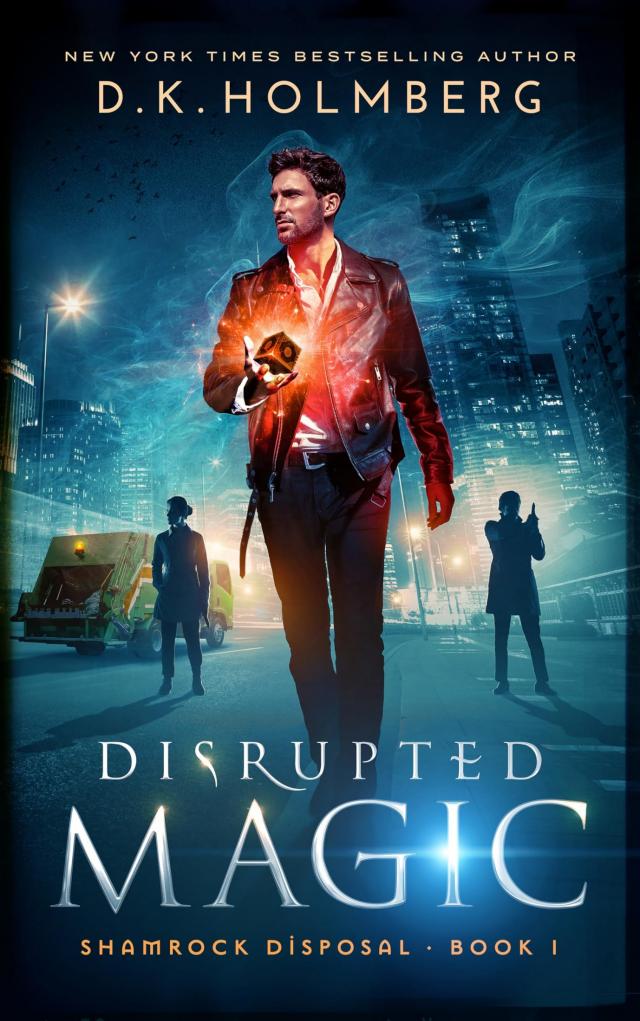
DISRUPTED MAGIC
SHAMROCK DISPOSAL: BOOK 1
D.K. HOLMBERG
Copyright © 2025 by ASH Publishing
Cover art by Damonza.com
All rights reserved.
No part of this book may be reproduced in any form or by any electronic or mechanical means, including information storage and retrieval systems, without written permission from the author, except for the use of brief quotations in a book review.
CONTENTS
Chapter 1
Chapter 2
Chapter 3
Chapter 4
Chapter 5
Chapter 6
Chapter 7
Chapter 8
Chapter 9
Chapter 10
Chapter 11
Chapter 12
Chapter 13
Chapter 14
Chapter 15
Chapter 16
Chapter 17
Chapter 18
Chapter 19
Chapter 20
Chapter 21
Chapter 22
Chapter 23
Chapter 24
Chapter 25
Chapter 26
Chapter 27
Chapter 28
Chapter 29
Chapter 30
Author’s Note
Series by D.K. Holmberg
CHAPTER 1
“All breakers are to be licensed and monitored. All morphs are to be contained or eliminated.”—Shamrock Disposal Agency Directive 37-B
The letter on my makeshift coffee table practically vibrated with judgment—eviction, three hundred and forty-two dollars past due. I’d been playing this game for twenty minutes now: Look at the letter, look away, check my bank account, wince, repeat.
“Come on, Universe,” I muttered. “I’m a good guy. Mostly. Sometimes. When it’s convenient.”
I picked up the remote and clicked off the TV, which had been playing a rerun of some medical drama where all the doctors were unreasonably attractive and had enough time for complicated love lives. Must be nice.
My phone buzzed from somewhere within the couch cushions. I dug it out and saw Marcus’s name on the screen.
“Please tell me you have a job for me,” I answered.
“Hello to you too, Cal,” Marcus said, his voice carrying that mixture of amusement and concern I’d grown used to over the years. “And no, I don’t have a job for you. I’m calling to see if you want to grab dinner tonight. You still owe me for last time.”
I glanced at the letter again. “Can’t. Unless you’re offering to pay my rent.”
“That bad, huh?”
“Let’s just say I’m considering what internal organs I could live without.”
“You need me to Venmo you a kidney?” Marcus asked. “Or you could always—”
“Stop,” I cut him off. “If you’re about to suggest I get a real job again, I’m hanging up.”
“Fine,” Marcus said with a sigh. “But the offer to help get a job with my firm still stands.”
“I’ll figure it out. I always do.”
After we hung up, I walked to my tiny kitchen and opened the fridge. Half a sandwich from two days ago, a carton of milk that was definitely questionable, and a single beer. The bachelor’s holy trinity.
I grabbed the beer and walked to the window, looking out at the city. Most people saw a normal urban landscape—office buildings, apartments, coffee shops where baristas spelled your name wrong and charged you seven bucks for the privilege. But I saw what lurked beneath: the magical currents running through everything, the hidden places where reality bent just a little, the weak spots where things could slip through.
Dad had made sure I could see it all. Not that I was grateful for his particular brand of education. Spending your childhood learning to identify magical threats isn’t exactly what the child psychologists recommend for healthy development.
My phone rang again, snapping me back to the present. Unknown number. Normally I’d let it go to voicemail, but beggars with overdue rent can’t be choosers.
“Cal Drexler,” I answered, trying to sound professional.
“Mr. Drexler? This is Teresa Mendoza from Mendoza’s Bakery on 4th Street. You were recommended by Jacob at River City Pawn.”
I straightened up. Jacob only referred magical problems my way. If he was passing me jobs again, that meant he either trusted me… or wanted plausible deniability when I got caught.
“What can I help you with, Ms. Mendoza?”
“We have a… pest problem,” she said hesitantly. “Jacob said you handle unusual situations.”
“I do indeed. What kind of pests are we talking about?”
“I’d rather not discuss it over the phone. Can you come by the bakery? We close at seven, but I can stay late.”
I checked the time. Six thirty. “I’ll be there in twenty minutes.”
After hanging up, I moved quickly around my apartment, gathering what I’d need. In the magical community, there are users and there are breakers. Users create and manipulate magical energy. Breakers disrupt it, shutting down spells and magical effects. Simple division of labor.
Then there are morphs. We’re something else entirely. Something that scares both sides.
I stuffed chalk and herbs into my bag—useless props for show. I’m a morph, which means I don’t just break magic. I absorb it, store it, and can redirect it later. I can take a fire spell and shoot it back as ice. I can absorb a protection ward and turn it into an attack. And I can drain another magic user completely if I’m not careful.
That’s why the Shamrock Disposal Agency—the magical garbagemen who keep the supernatural world controlled and in the “right” hands—has a simple policy about morphs: contain or eliminate. Usually the latter.
So I pretend to be a breaker. I take small jobs, disrupting minor magical problems while being very careful not to show what I can really do. I make my breaking look flashy and dramatic to hide the fact that I’m actually just sipping power through a straw, as Dad would say.
It’s exhausting, living with one foot in each world and belonging to neither. But it beats the alternative.
I checked my reflection in the bathroom mirror. Dark circles under my eyes, hair a bit too long. I looked like what I was—a guy barely keeping it together. But I also looked normal. Human. Harmless. Just how I needed to appear.
My phone buzzed with a text notification. Dad again. Third time this week. I swiped to clear it without reading it and shoved the phone in my pocket.
Mendoza’s Bakery was a small storefront with warm yellow light spilling onto the sidewalk. Through the window, I could see a woman wiping down counters. She looked up as I approached and hurried to unlock the door.
“Mr. Drexler? Thank you for coming so quickly.”
Teresa Mendoza was in her fifties, with streaks of gray in her dark hair and worry lines around her eyes. The bakery smelled amazing—cinnamon and sugar and fresh bread.
“Just Cal is fine,” I said, offering my hand. “So, tell me about these pests.”
She locked the door behind me and lowered her voice, even though we were alone. “They started appearing three days ago. Small, fast, glowing a little. They’re getting into the ingredients, and whatever they touch changes.”
“Changes how?”
She led me to the kitchen and pointed at a tray of what should have been normal muffins but were instead pulsing with a faint blue light. “Like that. And when a customer ate one yesterday, they hovered. Just an inch off the ground, but still. I had to tell them it was some kind of dizzy spell.”
I leaned closer to the muffins, extending my awareness. Magic has a feel to it, different for every user. This had the chaotic, mischievous signature of minor fae. Kitchen sprites, probably. The tricksters of the Seelie Court, who think practical jokes are the height of charm.
“Have you noticed anything else unusual? Deliveries from new suppliers, maybe? Or a gift from someone?”
Teresa thought for a moment, then nodded. “A new flour. Organic, from a farm upstate. The salesman was very insistent I try it.”
“Let me guess—good deal, too good to pass up?”
“How did you know?”
I smiled. “Just a hunch. Can you show me the flour?”
She led me to a storage room and pointed to a burlap sack in the corner. I didn’t need to get close to feel the magic emanating from it. The flour itself wasn’t magical, but it had been treated with something that attracted sprites. Probably a Seelie Court trick—they were known for their sense of humor.
“Okay, I can handle this,” I told her. “But I’ll need you to wait in the front of the shop. These, uh, treatments can get a bit dramatic.”
Once she left, I approached the sack of flour. Now came the tricky part. I needed to draw out the sprites, absorb just enough of their magic to weaken them, and make it look like I was performing some complicated breaking ritual.
I pulled out a stick of chalk from my bag—completely unnecessary but good for show—and drew a hasty circle around the flour. Then I sprinkled some dried herbs around it (also useless) and started chanting nonsense that sounded vaguely Latin.
As expected, my activity agitated the sprites. Three tiny, glowing blue figures emerged from the flour, chittering angrily at being disturbed.
“Yeah, yeah, I’m ruining your fun. Take it up with management,” I muttered.
The first one felt like pop rocks and lemon juice—fizzy, sharp, slightly painful. I drew a thin stream of its power into myself, just enough to weaken it without completely draining it. The sprite wobbled in the air, its glow dimming.
I repeated the process with the other two, being careful not to take too much. Sprites weren’t dangerous, just annoying, and completely draining them would be cruel.
Every time I absorbed magic, it changed me. The power flowed in, mingling with whatever made me who I was. Sometimes I’d catch myself doing things that weren’t me—craving foods I’d never liked, humming songs I’d never heard, feeling emotions that came from nowhere. The more I took, the more I risked becoming something else, something I wouldn’t recognize. A little was fine, but too much... that was the danger. Not what I lost, but what I might become.
As the sprites weakened, I made a show of waving my arms and raising my voice in my fake incantation. For the finale, I clapped my hands together loudly and stomped my foot. The sprites, already disoriented from having their energy partially drained, took the hint and fled, disappearing into a crack in the wall.
I turned to find Teresa watching from the doorway, eyes wide.
“All done,” I said, trying to sound like this was routine. “The, uh, negative energy has been neutralized.”
“That was amazing,” she breathed. “I’ve never seen anything like it.”
“Just a standard breaking procedure,” I said with a shrug. “But you’ll want to get rid of that flour. And maybe be more careful about special deals from charming salespeople in the future.”
“Of course. How much do I owe you?”
This was always the awkward part. “Three hundred would cover it.”
She hesitated, and I braced myself for haggling. Instead, she nodded. “That seems fair, considering. Let me get my checkbook.”
“Actually, cash would be better. Professional breakers like to stay off the books.” I gave her my most disarming smile. “Tax purposes; you understand.”
A few minutes later, I was walking back to my apartment with three hundred dollars in my pocket and a small bag of affected pastries that Teresa had insisted I take. The muffins weren’t dangerous—the magic was already fading without the sprites to maintain it—but they might make for an interesting breakfast.
The job had gone smoothly. No complications, no questions, and most importantly, no one suspecting I was anything other than a run-of-the-mill unlicensed breaker. The kind the Shamrock Disposal Agency would fine or maybe give a stern warning to, not the kind they’d hunt down and dispose of.
I should have felt relieved. Instead, that familiar emptiness gnawed at me—the space where I’d absorbed the sprites’ magic. It wasn’t much, barely a sip compared to what I could take, but it still left its mark. I’d wake up tomorrow craving sugar, probably, and maybe find myself wanting to play pranks on people. Little sprite behaviors seeping into my personality until they faded.
My phone buzzed again as I reached my building. Dad. Again. I pulled it out, finger hovering over the ignore button, then sighed and looked at the message.
We need to talk. They’re getting more active.
Cryptic as always. I typed back a quick response:
Busy. Will call later.
I wouldn’t, and he knew it. But it maintained the illusion that we still had some kind of relationship beyond his paranoid warnings and my stubborn refusals to listen.
Inside my apartment, I tossed the cash on the table next to the rent notice. Three hundred dollars. Still forty-two short, but close enough that I could cover the difference from my emergency stash. Another month of not being homeless. Another small victory in the endless game of survival.
I sat on my threadbare couch, suddenly hollow. The sprite energy swirled inside me, looking for somewhere to settle. I felt the urge to rearrange my furniture, to move things just slightly out of place so people would bump into them. Classic sprite mischief.
“Not tonight,” I murmured, pushing the impulse aside.
I thought about what it would be like to not have to hide. To use my abilities openly, to help people without the elaborate charade. But that was a fantasy. In reality, I’d either end up as a lab rat for the Agency or dead in a ditch somewhere.
So I’d keep playing the breaker’s game. Keep pretending to be less than I was. Keep absorbing magic in secret and living with the emptiness it left behind.
I glanced at my phone one more time, at the notification from my father that I’d ignored. Maybe someday I’d be ready to deal with him and all the complications he represented. But not tonight. Tonight, I just wanted to be normal, even if it was only a pretense.
I switched the TV back on, letting the noise fill my apartment and drown out the sprite-thoughts flickering through my mind. Tomorrow would bring another day of hiding, another job if I was lucky, another chance to pass as something I wasn’t.
It wasn’t a great life. But it was mine. Or at least, what was left of it.
CHAPTER 2
“Minor magical intrusions often yield disproportionate damage when improperly contained. Report all disruptions in local reality immediately.”—Shamrock Disposal Agency Field Manual, Section 4.7
The muffin from Mendoza’s Bakery hovered about an inch above my kitchen counter. The sprite magic was fading, but was still strong enough to make breakfast entertaining. I poked it with my finger and it spun slowly like a tiny blue UFO.
“At least I got paid,” I muttered, taking a bite. It tasted like cinnamon and electricity—not unpleasant, just weird. The sprite energy I’d absorbed last night had mostly settled, leaving just a faint itch to rearrange the furniture. I’d resisted the urge, mostly.
My phone buzzed. Unknown number. After yesterday’s job, I was feeling optimistic enough to answer.
“Cal Drexler.”
“Mr. Drexler, this is Eleanor Kincaid from the Luminous Gallery downtown. Reginald Walsh gave me your number. He said you helped with a situation at his auction house last month.”
I straightened up. Reginald Walsh dealt in magical artifacts disguised as antiques. If he’d referred this gallery owner, it meant legitimate magical work. Better paying than sprite removal.
“What can I help you with, Ms. Kincaid?”
“We have a painting with a protection issue. It’s quite valuable, and we’re hosting a private showing tonight. The problem needs to be resolved before then.” Her voice had that particular tone wealthy people get when they’re trying not to sound desperate but absolutely are. “Reginald assured me you’re discreet.”
“Discretion is my specialty,” I said, watching my floating muffin slowly rotate. “What time would you like me there?”
“Two o’clock? That gives us a few hours before the event.”
I checked the time: 11:23. “I’ll be there.”
After hanging up, I did a quick search for Luminous Gallery. The results showed a high-end art space in the financial district—the kind of place with marble floors and Champagne at openings. My standard fee wouldn’t cut it here. I could charge triple and they’d barely notice.
I jumped in the shower, trying to look less like someone who’d spent the previous night chasing sprites through a bakery. The hot water helped with the lingering sprite energy too, washing away the last of the magical residue.
As I got dressed, I caught myself humming an unfamiliar tune—something bouncy and mischievous. Another sprite remnant. I shook my head to clear it and focused on preparing for the gallery job.
I packed my breaker kit with extra flair—silver chalk instead of the regular white, fancy herbs in glass vials instead of plastic baggies, a leather-bound notebook with meaningless symbols I’d copied from an old fantasy novel. Rich clients expected a show.
My reflection in the bathroom mirror looked almost professional. I’d gone with dark jeans and a button-down shirt—casual enough to work in, nice enough to not get immediately kicked out of a fancy gallery. My consultant look, as Marcus called it.


