A Very Private School, page 1


Copyright
William Collins
An imprint of HarperCollinsPublishers
1 London Bridge Street
London SE1 9GF
WilliamCollinsBooks.com
HarperCollinsPublishers
Macken House, 39/40 Mayor Street Upper
Dublin 1, D01 C9W8
This eBook first published in Great Britain by William Collins in 2024
Copyright © Charles Spencer 2024
Charles Spencer asserts the moral right to be identified as the author of this work
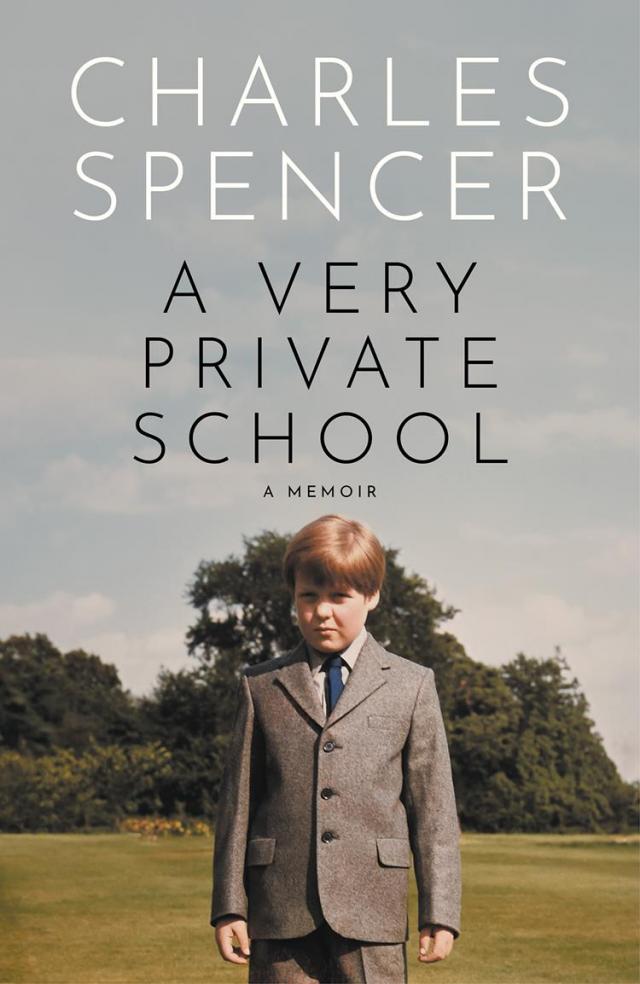
Cover image courtesy of the author
All except one of the photographs in the picture sections were taken by the author’s father. The picture of the 8th Earl Spencer was taken by the author’s mother Frances. Courtesy of the author. Copyright of all photographs taken by the author’s father reside with the author. The copyright of the remaining photograph resides with the author’s mother’s Executors.
A catalogue record of this book is available from the British Library
All rights reserved under International and Pan-American Copyright Conventions. By payment of the required fees, you have been granted the non-exclusive, non-transferable right to access and read the text of this e-book on-screen. No part of this text may be reproduced, transmitted, down-loaded, decompiled, reverse engineered, or stored in or introduced into any information storage and retrieval system, in any form or by any means, whether electronic or mechanical, now known or hereinafter invented, without the express written permission of HarperCollins.
Source ISBN: 9780008666088
Ebook Edition © March 2024 ISBN:9780008666095
Version: 2024-02-18
Dedication
For Buzz
Epigraphs
One of the luckiest things that can happen to you in life is, I think, to have a happy childhood.
– Agatha Christie
I am not writing to solicit any special sympathy. People survive much worse and never put pen to paper. I am writing in order to take charge of my childhood.
– Hilary Mantel
Contents
Cover
Title Page
Copyright
Dedication
Epigraphs
Preface
Introduction: For the Empire
1 Early Misgivings
2 A Place Called Maidwell
3 New Boy
4 Judging Jack
5 At Arm’s Length
6 A Day in the Life
7 Willing Henchmen
8 Potential Saviours
9 Blood on the Floor
10 Bullying
11 Please
12 My Parents
13 Leaver
14 Looking Back
15 Facing the Past
16 A Different Generation
Epilogue
Acknowledgements
Picture Section
Also by Charles Spencer
About the Author
About the Publisher
Preface
This is a look back at how things too often were, fifty years ago, in the English private educational system.
Maidwell Hall, the school at which I boarded from the age of eight to thirteen, was built on a lie common to institutions of its type: on the cock-and-bull notion that children were better off under its roof, learning to be biddable, influential members of society, rather than living as we should have done, as nature intended – with our families.
This book is a blend of chronicle and memoir that’s intended to stand as a piece of modern history – a record of a time, not so far back, when things were quite different for children in these most privileged of English academic settings.
There were no emails or mobile phones in the 1970s, of course, and we boys at Maidwell had no access to a landline. During the three annual terms, each of some twelve or thirteen weeks, contact with our parents was a Sunday letter home, written under supervision.
But it’s not just the tools of interaction that were different. Privileged parents back then tended to devote less direct energy to their children than is expected, and considered normal, now. The limitations set around communication, and the nature of our family relationships back then, made abuse possible – indeed, more likely – and hard to detect.
Maidwell was typical of the boarding schools of its time in being, effectively, a closed community. It attracted staff who were drawn to this blend of quiet and secrecy. Some of them welcomed power, and status, and the ability to cut with the outside world. Many of these adults weren’t there for the boys’ best interests, but to meet their own darker needs.
While abuse in boarding schools is impossible to eradicate, owing to the flaws of humankind, we can hope that modern-day victims have greater recourse to help than what was previously available. Now, there is a general understanding of the importance of having those who act in the parents’ stead trained and vetted. It’s no longer acceptable to subcontract the crucial business of bringing up children to unregulated amateurs with unknown tendencies, as happened in my time.
During the years that this book has taken me to contemplate and complete, various of my Maidwell contemporaries have re-entered my life. We first knew one another as boys, but have become reacquainted in late middle age. One of these faces from the past came to visit me a couple of years back, on business, at my family home, Althorp. We had last seen each other back in 1978.
‘It’s so good to see you,’ I said, starting gently: I knew from his wife that this kind, quiet man refused to discuss his time as a pupil at Maidwell with her, or with anyone else. It was a subject that, if raised, made him stare at the floor, in silent desolation.
My greeting was left hanging as we sat on either side of a fireplace, taking in the changes in each other’s appearance. But then I suddenly remembered how much I’d liked him, four decades before, and this spurred me to jump in.
‘I’m writing a book about Maidwell … What do you remember most about the place?’
He paused before answering, then opened up to me about his experiences and the impact they have had on his life ever since. I jotted down what he said, in ten pages of my notebook, as we shared and compared our recollections.
When I told him that I had been sexually abused at Maidwell, he immediately named the member of staff responsible.
‘Yes – goodness. You’re right …’
‘I always knew,’ he said.
‘But how?’ I replied. We had been friendly as boys but, being in separate years in a rigidly hierarchical place, never confidants.
‘I just did. It was obvious.’ Then he named others who had been victims of the same predator. Three I knew about, while the other was a new entry to The Preyed Upon, a dire club whose membership nobody would seek.
To my horror, he told me of his being sexually assaulted at Maidwell three times, when aged nine, by someone who was meant to protect him. His assailant threatened him with terrible retribution if he ever told anyone about it. He remembers feeling troubled that other boys within earshot must have heard his struggles as he was overpowered, and this added a further layer of humiliation to the ghastliness of his violation.
His main memory of Maidwell, he told me, was of being made to feel worthless, every day of his five years there. He was badly bullied, particularly by the headmaster. ‘I was petrified of him,’ he said. ‘He took me to a place inside myself that I didn’t want to go to.
‘I have never got over it,’ he continued. ‘I don’t have anger, I don’t want justice – whatever that would be – but I do know that my life never had a chance, once I’d been so badly scarred by that school.’
At the end of a harrowing hour, I set down my notebook, declaring that what he’d told me was too terrible to be committed to the page. I promised that I would never betray his confidences by naming him in this book, or by disclosing the breadth or detail of his suffering. At this he became animated for the first time and leaned forward. ‘But someone has to tell our story!’ he pleaded.
I’ve had several similar reunions since, with Maidwell contemporaries who suffered terribly. Four years ago, as I arrived to speak at a book festival, a tall, lean man approached me and his features called to mind someone I’d briefly known, as a boy.
‘Charles Spencer?’ he asked, holding out his hand in greeting. ‘You won’t recognise me, but a very long time ago …’
‘Yes, I actually do recognise you,’ I replied, naming him. ‘We were at Maidwell together.’ He looked surprised: we’d only overlapped at the school during my first ten months there.
‘Tell me,’ I asked, ‘when you think of Maidwell, what’s the one word that comes to mind – the one that really sums up the place?’
He stopped and stared into the distance. ‘Fear,’ he said.
He sniffed, apparently surprising himself at having revealed so much in one, stark word.
I pushed him: ‘And what was at the root of that fear?’
He sniffed again.
‘Waiting to be beaten yet again, for God knows what.’ He blinked hard, a successful professional in his sixties, unexpectedly reconnected with the vulnerable child he had been, caught in the tendrils of unfathomable sadistic rituals.
I’ve learned of other contemporaries who have died, accompanied to their ends by deeply painful memories of their time at that school. The cumulation of all this hurt and damage persuaded me to write this book – my record of what it was like for us, as boys, to live in a beautiful place, under a dark power.
I hope that this account might lead to some form of closure for those who, it’s clear to me, are still bearing the emotional scars of a regime that was so very harsh and gruelling.
There were bright spots of happiness and comradeship in those years, and they are celebrated in what follows, too. But these were despite, not because of, the fundamental nature of the place. Meanwhile the resilience that such a tough upbringing can impart has been bought at the cost of sensitivity being trampled, and sometimes eradicated.
I’ve frequently witnessed deep pain, still flickering in the eyes of my Maidwell contemporaries. The snarled root of that hurt trails back to not being cherished, encouraged or valued, as we might have been at home, but belittled, scolded, beaten or – if lucky – merely tolerated. This, while being moulded into end products that were not only damaged but outmoded, even back then.
Others appear to have survived intact, some even to have enjoyed their time in the school, while acknowledging its severe shortcomings; but many of us left Maidwell with demons sewn into the seams of our souls.
While writing my story I have inevitably taken a good look at what I believe is a fascinating aberration: the boarding school system as a whole.*
It’s a fact that many of the leading figures in British public life today – from prime ministers to royalty – have received the privilege of just such a private, boarding school, education. While some thrived under benevolent headteachers, others have been wounded by wretched treatment during formative years. Some of this poisonous legacy they’ve unwittingly passed on to society. As Diogenes said in the fourth century BC: ‘The foundation of every state is the education of its youth.’ If that education system is flawed, the state’s foundations will be, too.
I have to say – without wanting sympathy, but because it’s important to know the context to what follows – that it’s been an absolutely hellish experience at times, this chronicling of casual cruelty, sexual assault and other perversion from long ago. As I wrote this book, the crushing migraines that often felled me back then returned. This, after forty-odd years of welcome absence. I’ve also had dozens of Maidwell nightmares. Fenn traps have gone off in my mind as I retraced the footpaths of my early schooldays. I have come to accept that they have snared part of my psyche forever.
The events I describe in the following pages all happened as written, and the character sketches are, I believe, accurate. The reported speech is as near to the truth as I can remember, and certainly conveys the meaning of what was said at the time. I have changed all the boys’ names – even though many said they were happy for their true identities to be used.
I wrote the body of this manuscript from my extremely clear recollections, which were seared into my brain as a child. The psychotherapists I have seen over the decades say that trauma at this age often leads to memories being expunged; but it can go the other way. Recollections can remain with the abused, vividly and forever, as they have with me. In addition, I have drawn on contemporaneous sources from my Maidwell years – my school reports from each of my fifteen terms there, as well as my diaries and my letters home.
Clearly, what I endured during five years in one of the most expensive private schools in England, during a time of solid political and economic stability, is not at all comparable with the terrible suffering of so many other children – now and in the past – forced to struggle to survive in landscapes of total despair. There is only the most tenuous of links between my privileged experience and the experience of those facing economic adversity and social exclusion: that of childhood trauma.
I’ve read avidly about childhood trauma, particularly those elements that are connected to emotional attachment. This area fascinates me because I experienced abandonment before being sent off to Maidwell. This was in the mid-sixties, when I was two, and my mother left home for a man she had fallen in love with.
Back then the discipline of a boarding environment was often thought to provide a stability that a ‘broken home’ was believed to be incapable of. But I loved home, and most definitely did not want to leave it, even when it lacked a mother. Being transplanted to a strange and repressive place was the last thing I needed – especially as a child of divorce.
As a historian, as a product of the system and as a man, I am fascinated by what on earth was going on at schools such as the one I attended. Why were parents blithely sending us away, to live with adults and children who were total strangers, in a clear rejection of family? Why replace this natural unit with an environment of often marked harshness?
There remain 630,000 boarders in 2,500 boarding schools in England now, but few of those institutions would have survived if they hadn’t evolved significantly from the time I write about.
If you look at Maidwell’s website today you will see there is a head of pastoral care, who has a deputy to assist. The recently appointed headmaster declared, on taking up office: ‘I have been dedicated to education – education in its fullest sense – to seeing the whole child and their potential and helping them to achieve this.’
This was not the Maidwell that I knew. There was not one person in the structure of the place who had any responsibility for us young children beyond the tight confines of bookwork, discipline, the sports field, hygiene and nutrition. The emotional wellbeing of the child was not considered a specific need.
Our softest nerve endings were crushed by an experience that was irreversible in its distress. While a small number of boys, sadly, came from abusive homes, and were arguably better off in this harsh place, the rest of us had to learn to live without the comfort and protection of home. What we suffered was not just a separation from all that we knew and loved, but an amputation from it.
While this book describes a world of privilege alien to most, I hope it will resonate with anyone, anywhere – from all walks of life – who was ever made to feel frightened, powerless and abandoned as a child. For Maidwell, in the 1970s, was meant to serve as a surrogate home. But it lacked the most important quality of a home: it was without love.
* While many girls suffered similarly back then, of course, this book is my eyewitness account, with historical context, of the male system that I was an involuntary part of; it therefore – inevitably – focuses on the male side of the issue.
Introduction
For the Empire
The upper echelons of English society have long subjected their sons and daughters to the forced abandonment of boarding school. Such exile from home has been seen as a worthwhile sacrifice: in return for a broken heart, the discarded child was launched down a narrow chute that ended in the soft landing of an adulthood where privilege and power lay all around them.
I can trace this trend through the past three hundred years of my own family’s history, and see that my being sent away to boarding school at an early age was simply part of an ancestral tradition. My parents weren’t being deliberately cruel; they were simply being true to the customs of their class.
In 1716, my ancestor John Spencer went to board at Eton College with his brothers. John was, like me when I started at boarding school, eight years old. But John’s maternal grandmother, Sarah, the Duchess of Marlborough, was unhappy about the decision. She was a force of nature who had been Queen Anne’s favourite at court, captivating the plodding monarch with her charisma and vitality, until the two fell out forever. Sarah’s free thinking had seen her absorb the works of the philosopher John Locke. In Some Thoughts Concerning Education, Locke insisted that the next generation of England’s ruling class must be taught practical and useful disciplines – mathematics, the sciences and modern languages – instead of being burdened with the dead tongues and academic disciplines of ancient Greece and Rome. More enlightened learning, Locke insisted, would benefit not only the individual child, but also the nation as a whole.
John Spencer’s father died in 1722, when he was thirteen, and his duchess grandmother swung into action straight away. She removed John and his brothers from Eton and installed them in her favourite residence, Windsor Lodge, where they were home-tutored by James Stephens, a brilliant mathematician. This rare escape from conventional boarding school for one of my distant forefathers was brought about by their grandmother’s educational prejudices rather than a hatred of sending children away to learn. The nineteenth-century Spencer boys were less fortunate.