

Diary of a Misfit, page 2
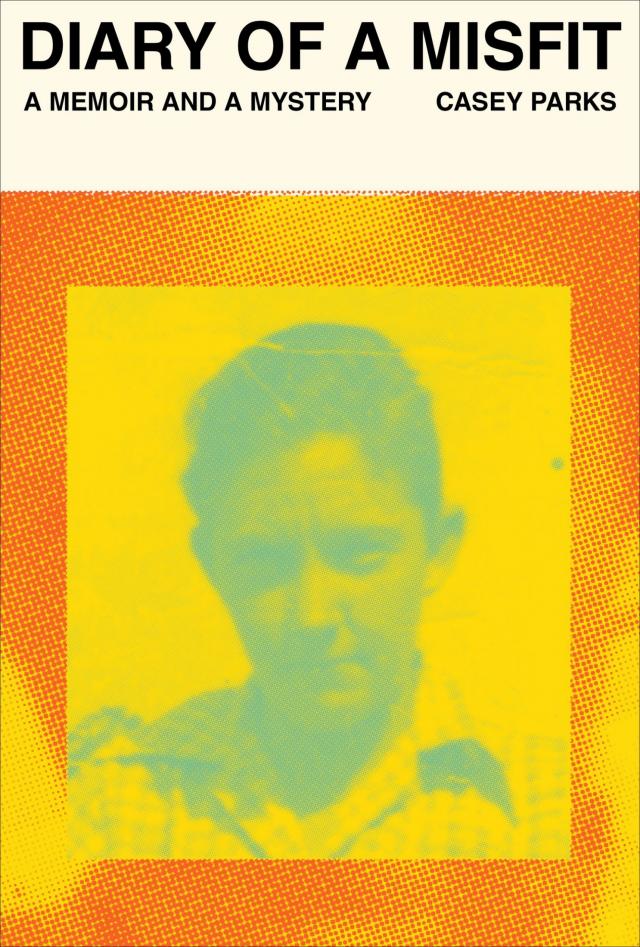


“In Oregon, some trees stay green all year.”
I told her she should come see the evergreens, but she nodded without saying anything. I’d lived in Portland three years already, and my mom had never once offered to visit. I squirmed in my seat, and she turned up the radio, a country station, then we careened along the curves toward my grandma’s house. When we arrived, my mom parked crooked, half on the street, half on the grass, and I stared out for a moment before unbuckling my seatbelt. My grandma’s two-bedroom brick house looked as pristine as it had when I was in college. Her lawn was edged and mowed, the shrubs trimmed straight. She’d left the garage door half-open, and with my window down, I could hear her yelling from the carport.
“Rhonda Jean? Casey? Is that y’all?”
The garage door rose. My grandma surged into the yard with a half-smoked, unlit Virginia Slims in her right hand. She’d turned seventy that year, but she looked exactly as she always had. Her gray hair shot out as if she’d stuck her finger in an electrical socket, and her mouth seemed to be resisting a smile. “Look at you,” she said, surveying my outfit with a grimace as I stepped out of the car. I wore a red plaid shirt and a G-Star Raw jacket I’d spent half my paycheck buying in New York. My mother dug a pack of Capri menthols out of her purse, and my grandma shooed us toward the carport. The yard was too perfect, and her house too pressure-washed clean to stand in front of it smoking. My grandma grabbed my hand and held it as we walked up the driveway past her ancient Crown Victoria.
“Are you going to tell Rufus you’re here, Casey?”
I rolled my eyes, hoping I seemed like a badass brave journalist, but the truth was I’d looked in the hotel mirror that morning and realized I was scared to interview anyone in Louisiana. My haircut was boyish, I still didn’t wear makeup, and the four flannel shirts I’d brought all looked hopelessly gay. On the way into town, my mother and I had stopped at a gas station to use the bathroom, and an attendant had directed me toward the men’s facilities. I’d whispered a correction—“I’m a girl”—then, on my way to the women’s bathroom, I’d realized just how foolish this reporting trip might turn out to be. Who was going to talk to a woman who looked like me about a person who lived like Roy? I wasn’t even sure yet what I wanted to know. All I had to go on was my grandma’s fifty-year-old story and a bleak obituary I’d found on The Monroe News-Star website a few weeks earlier:
DELHI—Roy Delois Hudgins, a yard maintenance worker, died Wednesday. Graveside services are 2 p.m. Sunday at Delhi Masonic Cemetery.
The obituary was dated March 9, 2006. Roy had been alive when my grandmother first told me about him, but I’d waited too long to keep my promise. Now he was dead, and I’d have to find strangers willing to talk about him. But how could I find those strangers? Obituaries are supposed to list the names of the people a person leaves behind. They’re supposed to be long and loving chronicles, with paragraphs that describe everything memorable about a person’s life. Roy had no survivors, the obit suggested. He hadn’t even had a real funeral in a church. The only thing worth remembering about him, the obit seemed to say, was his job, a blue-collar gig someone had gussied up with a fancy title.
My grandma ignored my forced bravado, then motioned toward the house. “Are you hungry?” she asked. She disappeared into the kitchen before I could answer. I looked at my mom and followed her into the carport, a cement square filled with canned Cokes, rusted tools, and the kind of fold-up plastic chairs we used to sit on at church potlucks. My mom’s older sister Cindy stood in the middle of it all, menthol held up like a conductor’s baton waiting to start the show. I hated that my family smoked. I hated the smell, and I hated that my mom spent money on cigarettes when she and my dad owed thousands of dollars in medical bills. My mom and aunt flicked their lighters in unison, then they plopped down in front of two space heaters, their skinny cigarettes mirroring the heaters’ electric red glow. My aunt picked up a remote, and the garage door eased down. She pointed her cigarette at my face.
“You favor me.”
I shook my head in protest. I loved the colloquialism, the funny Southern phrase that meant I resembled her, but I felt sure I didn’t look like anyone in our family. Both my aunt and mother were big women with big hair they molded stiff into styles more Paula Deen than Dolly Parton. They kept their locks cut short but used curling irons and three kinds of spray to spike and arch their hair into poofy, wavy helmets. Their eyes were so dark and deep that they looked like circles of coal nestled under smoky lids. My hair fell and curled without purpose. My eyes were a shallower brown. I was five foot four and so skinny everyone in my family called me “runt.”
Cindy had been the prettiest of my grandma’s four daughters, and perhaps because of that, she’d been married three or four times. I watched her smoke, and I tried to remember the uncles I’d had and lost, but I could only conjure Stanley and Monty. They’d both been old, gregarious men who drank a lot and made the kinds of jokes that always seemed sexual, even if the words were clean. Cindy and Stanley had two kids, Jennifer and Joey, both of whom were just a few years older than I was, but I hadn’t talked to my cousins in years. Jennifer had gotten pregnant when she was fifteen. Joey had gone to prison soon after.
“So,” I said. “What did Roy look like?”
“I can tell you exactly,” Aunt Cindy said. “Roy was short. Very fair-complected. Blond. Had a butch haircut.”
“It was a crew cut,” my mom said. Her voice seemed both louder and more Southern than her usual twang, and I couldn’t tell if she was correcting my aunt or just adding detail. She loved to interrupt people.
“Butch haircut,” Cindy said again. She puffed her menthol, then cleared her throat. “Don’t take this the wrong way. Roy looked like if he were, if she was, a lesbian, she was the male counterpart of that relationship. The dyke. Is that the right word for it?”
My mom looked at me with either pity or apology, I wasn’t sure which. It had been years since she’d last told me I disgusted her, and she scolded strangers if they used the word “faggot,” but she never asked me about my girlfriends. I’d been dating a woman for a year, and no one in my family had ever met her.
“As I got older,” my aunt continued, “I became more aware of different things and different types of sexuality, and my assumption of Roy was he was transgendered. Whether she was forced transgendered, or if it was something that just happened, I don’t know.”
My mom and aunt changed Roy’s pronouns as they talked, sometimes mid-sentence. She looked like a boy who hadn’t gone through puberty, they said. He didn’t have an Adam’s apple. She wore Aqua Velva, a men’s aftershave that came in a blue bottle. Eventually, they dropped pronouns altogether. “The voice was very mild,” my mom said. “Very soft.”
My mom pushed the end of her cigarette into a ceramic seashell ashtray on the table between them. She moved it back and forth, longer, I thought, than she really needed to. She dropped the stub, then she leaned forward. In the 1970s, she said, people in Delhi had called Roy “he-she-it.”
“People were not kind to outsiders back then,” she said. “We were outsiders, too.”
Aunt Cindy shook her head in agreement. “Family issues.”
I knew they had another sister who ran wild, then ran away, but my mom and aunt seemed to be alluding to other, unspoken issues. They smoked and seemed lost for a moment, collectively remembering secrets I didn’t know.
“I worked at the drugstore,” my mom said. “People would come in, and they would let me take their order, but they wouldn’t put their money in my hand. The preacher of the First Baptist Church wouldn’t put his money in my hand because I was a Carter.”
I didn’t say anything, but I wondered what my mom meant. I knew she’d grown up poor, but what was so bad about being a Carter?
Roy, my mom explained, didn’t look down on the Carters. He came into the drugstore every afternoon, and he used a quarter to buy a fifteen-cent lemon-lime soda. He put the money right in my mom’s palm, then he took the change back. Some days, he’d ask for two nickels instead of a dime, and he’d leave her one as a tip.
“He was just good to me. I didn’t have a lot of that.”
I stared at my mom for a few seconds. I wanted to study her the way I did people I wrote about. I wanted to dig into her past and ask her all the probing questions I didn’t mind asking strangers, but I was too nervous to look at her for long. We’d been close when I was young. We’d studied the Bible together, we’d giggled at the checkout stand in Walmart, and she’d helped me get ready for all my middle school dances, but it had been years since we’d done anything like that. I’d walled myself off that first summer after college, and once I moved to Portland, I stopped telling my mother things. I didn’t tell her when a girl broke my heart. I didn’t tell her about the work demotion. I didn’t even tell her which TV shows I liked. I kept up with my dad and brother, but my mom and I went months without talking. I told myself I didn’t call because my mom was often fogged on pills she said doctors prescribed for the dozen or so maladies she cycled through. I couldn’t stand the slow way she talked when she used pills. But that wasn’t the only reason I stayed distant, I knew. I didn’t call even when my dad promised me that my mom was healthy and talking clear.
I stood. I stepped through the door that connected the carport to the kitchen, then I watched my grandmother lift a cast-iron skillet out of the oven. My stomach growled. No one in Oregon made biscuits the way my grandma did. Hers were tangy and soft with a satisfying outer crunch.
The door opened and closed behind me, and a waft of cigarette smoke briefly overpowered the biscuits.
“I think I’ll get on the road soon,” I told my grandma.
“We will,” my mom said. “After you call Rufus.”
* * *
—
THE THERMOMETER OUTSIDE MY grandma’s house had edged above sixty degrees by the time we left, but my mother cranked the heat in her Buick. We listened to the Dixie Chicks for a while, and I stared out the window. The dull expanse of yellow grass and gray-brown trees dragged by. As soon as we were outside the Monroe city limits, my mother turned to me.
“Growing up as a little girl, my uncle Herman was the chief of police. Rufus was his deputy.” She turned the stereo off. “Last night, I called an old friend’s dad. I told him we were going to Delhi, and he asked, ‘Have you called Rufus yet? You need somebody who is somebody to go up there, someone who is good folks to vouch for you so they don’t throw y’all in jail.’ ”
Her voice fell to a near whisper. “I would think I would count as good folks since my uncle was the one who hired Rufus, but apparently because I’m a Carter, I’m still not a good folk yet.”
I turned the radio back on. I didn’t know what my mom meant by “good folk,” and I didn’t care if she was nervous to visit Delhi. She owed me. A few years earlier, I’d discovered that my mom had accrued twenty thousand dollars of debt in my name. She’d started charging the summer before I left for college. The people who made the Who’s Who Among American High School Students book mailed a black MasterCard to my house, and my mom kept it, then swiped it until it stopped working. Afterward, she applied for another card in my name, then another, until she had seven or eight maxed out with plus-size blouses and fancy mops and other purchases she forgot as soon as she made. I didn’t find out about the debt until the year I moved to Portland and tried, unsuccessfully, to open my first bank account. My mom had confessed—or rather, she’d left the house and had my father confess on her behalf—but she’d never tried to pay back what she’d stolen, and I had never pushed her to. Instead, I’d sent half of my newspaper checks to credit card companies, slowly working down her arrears. My mom was only driving me to Delhi as some sort of penance. A few weeks earlier, I’d finally blown up at her about the money. I’d wrecked my car and had no way to finance a new one, so I’d called her late and sobbing. I told her she’d ruined my credit and my life, and she’d stayed silent on the other end as I cried. Later that night, she emailed me a letter she said she planned to get notarized. It was an affidavit of sorts, a note addressed to the police, admitting that my debts were hers. “I am more sorry than you know for this,” she’d written. “I want you to know that even if I go to jail I will work tirelessly to get your name cleared.” I’d called her the next day. I’d told her to delete the letter. I didn’t want her to go to jail, but I did want her to pay me back somehow, so I’d offered a compromise. “I’ll keep paying off the credit cards if you help me do this project about Roy.”
I told myself that I asked my mother to go to Delhi because she could help me find sources. I was scared that strangers there might see me as an outsider or something worse, but it was my mom’s hometown, and I thought her country way of talking might put people at ease. It was unorthodox, I knew, taking one’s mother to an interview. My best friend, an older reporter at the paper, suggested that maybe I’d invited my mom because I wanted to spend time with her, but I protested. I thought of myself as tough then. I didn’t need or want anyone. Of course now, when I watch the grainy videos I taped that weekend, the truth creeps in around the edges. I can see how my twenty-six-year-old self looked at my mom, nervous, goofy-eyed, and hoping for something neither of us knew how to give. I wanted to love my mother. I wanted her to love me, but I didn’t know how to ask for that, so instead, I asked her to drive.
We bumped east on the interstate in near silence. I couldn’t bring myself to tell my mom anything personal, so instead, we rode the forty-five minutes like strangers, only talking to note bad drivers or the three dead armadillos we spotted belly-up one after the other on the gravel-strewn shoulder.
“There it is,” I said finally. “The Delhi exit.”
I held my breath. I’d visited Delhi a few times a year as a kid, and I’d driven past it on the way to and from college, but I couldn’t remember the last time I’d actually stopped in the little town. I hadn’t known how to emotionally prepare myself for this trip, so back in Portland, I’d done what editors always told me to do when starting a new article: I looked up statistics. Only 8 percent of Delhi’s three thousand residents had a college degree, I learned. A third of the town lived in poverty, and the per capita income was $11,000—less than a fourth of the national average.
We veered left toward town. The strip of gas stations could have been any junction, I thought, except horses grazed the fields beside them. We passed a grocery store and a funeral home, then the little community appeared. I counted churches as my mom drove. First Baptist was big, white, and ominous. Its steeple stretched three stories, the only brick in Delhi’s sky. Down the road, stone and glass mosaic narrowed to a point at the Presbyterian sanctuary. The Church of Christ was a dour off-white, stubby and triangular with the town’s thinnest cross nailed to the front. I tallied nearly a dozen others as we meandered through town, the churches only slightly outnumbering the hair salons that dotted the rutted roads. I made a list in the slim reporter’s notebook I’d taken from work. The British u in Glamour Cuts suggested something classier than the shearing one might endure at N’Tangles. I admired the promise of New Attitude Hair Design and the no-frills efficiency of the single-wide trailer with a HAIRCUTS $7 sign taped to the front. Delhi seemed to have only three restaurants, a Pizza Hut, a Sho-Nuff Good Chicken, and a converted gas station called Hot Wings Heaven. My mom pulled her Buick close to the wing shop’s front door. A construction-paper sign promised fifteen flavors—Heavenly Mild, Heavenly Atomic Hot, Heavenly Honey Gold, plus a dozen other heavenly flavors—but a sign noting the store’s hours had been left blank after the colon.
“I’d eat Heavenly Lemon Pepper right now,” my mom said with a sigh.
“I’m a vegetarian,” I told her, though she already knew.
The Main Street tour took two minutes, then my mother told me it was time to talk to Rufus. She wheeled us toward the police station, an unimposing wood-frame house nestled between pecan trees just across the street from the towering First Baptist. My mom pulled a flip phone out of her red corduroy jacket and dialed as she parked.
“We’re here,” she said into the phone. A few minutes later, Rufus strode toward us. He was tall, beefy, and Black—the first African American police chief the town had ever had, my mom told me, though Delhi had long been home to more Black people than white.
“Hello, sir,” I said.
Rufus grabbed my hand to shake it, and his class ring bit into my skin. I couldn’t tell how old he was, maybe in his fifties, maybe sixty-something. He wore slacks, a black tie, and a white button-down shirt with two police department patches sewn on each shoulder. Over that, he had buttoned either a thin bulletproof vest or repurposed fishing attire; I couldn’t tell which. My mom caught my eye, then nodded toward his hat. Rufus had on a blue baseball cap with “Chief Carter” stitched in white on the front. I turned back to her, eyes wide. Rufus was a Carter? Though he was Black, I could see now that Rufus looked remarkably like my grandfather, who was white. They had the same tiny eyes, wide face, and thin lips. I’d read somewhere that most people in Louisiana probably had mixed blood, and I wondered if Rufus and my mom’s father were related. No one in my family had ever mentioned Black relatives, but maybe, I thought, that’s what my mother meant when she said people disliked her because she was a Carter. Maybe they were just racist.
“Chief of police,” he said, dropping my hand. “Rufus. What can I do for you ladies?”
My mom told the chief that I was a journalist working on a story about Roy Hudgins. Chief Carter didn’t say anything, so I told him my grandmother wanted to know if Roy had a family. The chief shook his head no. “She rode a bicycle, but I don’t remember any family.”


