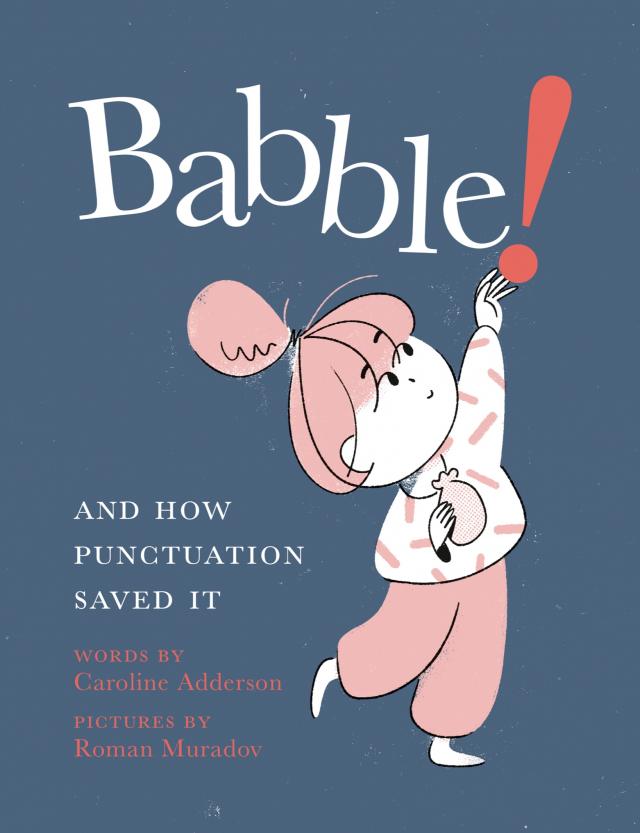
Babble!, page 2


The woman turned to her grandfather. “Soon we will eat, Grandpa.”
The old man smiled, relieved it would soon be dinner and that he would not be on the menu.
The man in the barbecue apron announced to everyone, “I love cooking, my family, and my cat, but not necessarily in that order.”
“Oh, Daddy!” cried his two daughters. “You scared us!”
He hugged his girls and his wife. His cat purred and rubbed against his legs.
The stranger passed the , out to everyone. She said, “These are really useful. Now you can be perfectly clear about what you want to say. You can also do more than two things now, one after another or at the same time.”
“Yes, I see,” someone said. “I can agree, nod, and understand.”
“I can steal a bun, climb a tree to eat it, and shout things down to annoy my sister,” a boy said.
“You can annoy more than one person too,” the stranger told him.
“Yes! I can steal a bun and, laughing, climb a tree to eat it, then shout things down to annoy my sister, father, mother, aunt, uncle, and all my cousins!”
His sister said, “And I can shout back at my smelly, bun stealing, repulsive little brother to get down from that tree right now!”
When they had finished laughing, the stranger showed them more useful things. If they put the , high instead of low, like this ’, then they would not have to brush the beard of their grandpa. They could brush Grandpa’s beard.
They would not have to kiss the cheeks of the baby. They could kiss the baby’s cheeks.
That wasn’t all the ’ could do. Sometimes the villagers’s tongues tripped inside their mouths. But not anymore. Now two words could become one with the help of the ’.
“Aren’t you hungry?”
“Can’t we eat now?”
“Don’t you want to sit beside me?”
It seemed to every single person who lived in the once upon a time village that they had a lot to celebrate.
“Once upon a time it seemed as though we were living in darkness. We didn’t listen to each other. We didn’t understand one another. But now we understand. We communicate. We love!”
Afterword: More Punctuation!
There are more punctuation marks that you can use to express exactly what you want to say. Also, they look quite fancy. You should try them!
PARENTHESES separate explanations within a sentence.
Punctuation (the marks used in writing that clarify meaning) is important for communication.
A DASH can interrupt a sentence.
Without punctuation, it’s hard to underst—
We can’t really communi—
The ELLIPSIS shows that parts of a sentence have been left out or that thoughts or speech have trailed off.
With punctuation, the meaning of a sentence becomes clear and we can avoid confusion, misunderstandings, hurt feelings…and all other forms of miscommunication. Well, usually…
A SEMICOLON connects two related ideas in a sentence, each of which could stand alone.
Some people express themselves clearly; others just babble.
The COLON can be used to make lists.
Here are all the punctuation marks you read about in this book: period, question mark, quotation mark, exclamation point, comma, apostrophe, parentheses, dash, ellipsis, semicolon, and colon.
Caroline Adderson, Babble!