

Blood Game, page 1


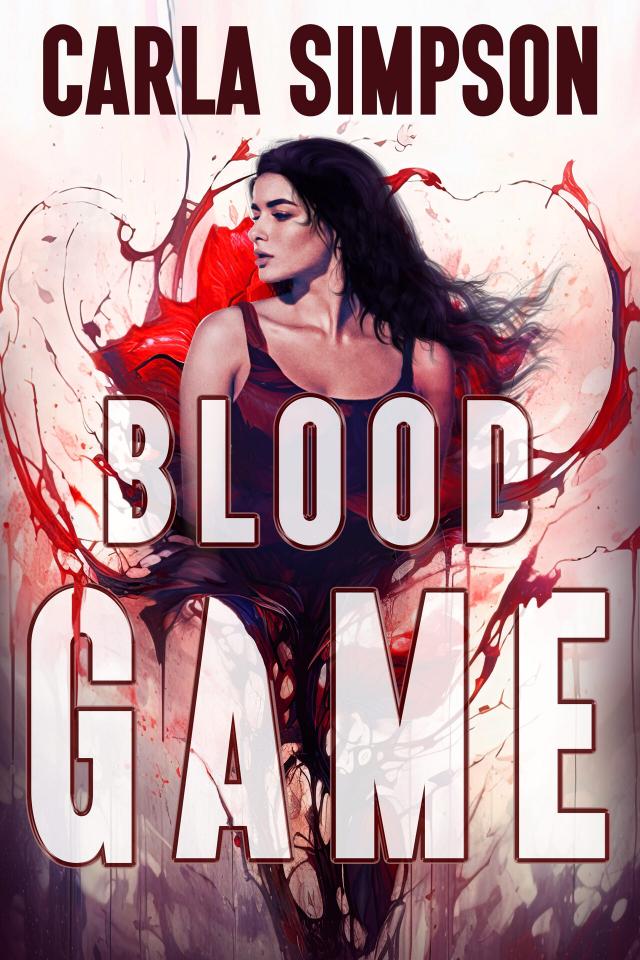
BLOOD GAME
CARLA SIMPSON
All rights reserved.
No part of this publication may be sold, copied, distributed, reproduced or transmitted in any form or by any means, mechanical or digital, including photocopying and recording or by any information storage and retrieval system without the prior written permission of both the publisher, Oliver Heber Books and the author, Carla Simpson, except in the case of brief quotations embodied in critical articles and reviews.
PUBLISHER'S NOTE: This is a work of fiction. Names, characters, places, and incidents either are the product of the author's imagination or are used fictitiously. Any resemblance to actual persons, living or dead, business establishments, events, or locales is entirely coincidental.
Copyright © Carla Simpson
Cover art by Dar Albert at Wicked Smart Designs
Published by Oliver-Heber Books
This title was previously published
0 9 8 7 6 5 4 3 2 1
CONTENTS
Prologue
Chapter 1
Chapter 2
Chapter 3
Chapter 4
Chapter 5
Chapter 6
Chapter 7
Chapter 8
Chapter 9
Chapter 10
Chapter 11
Chapter 12
Chapter 13
Chapter 14
Chapter 15
Chapter 16
Chapter 17
Chapter 18
Chapter 19
Chapter 20
Chapter 21
Chapter 22
Chapter 23
Chapter 24
Chapter 25
Chapter 26
Chapter 27
Chapter 28
Chapter 29
Chapter 30
Chapter 31
Chapter 32
Chapter 33
Chapter 34
Chapter 35
Chapter 36
Chapter 37
Chapter 38
Chapter 39
Chapter 40
Chapter 41
Chapter 42
Chapter 43
Chapter 44
Chapter 45
Chapter 46
Chapter 47
Chapter 48
Chapter 49
Chapter 50
Chapter 51
Author’s Note
Also by Carla Simpson
About the Author
PROLOGUE
CALAIS, FRANCE
Headlights slipped in behind her in the stream of traffic, and glared in the rearview mirror. Close, too close.
Those headlights had followed from Paris, not obvious at first, moving through traffic on the motorway as she moved through traffic, like dozens of other automobiles in the fading daylight. It was there again when she stopped for fuel, then returned to the roadway, slipping back into the traffic.
Hiding.
Now those lights appeared again, the silver Audi briefly silhouetted in the headlights of a passing cargo van. Closer now.
She wasn’t intimidated. She'd sharpened her driving skills on dangerous roads, through dozens of roadblocks and bombed-out streets in Beirut, then Iraq, going after the story. It was her job. It was what she did, in places where few dared go, let alone women journalists.
But this wasn’t Lebanon or Iraq, or Afghanistan. It was the French countryside, and she was after a different story.
She thought of the photograph taken by a young war-time photographer—her father—over seventy years earlier.
France had been a different place then, a country occupied by the German army, determined to destroy anyone who stood in their way during one of the most horrific events in human history.
The photograph, taken in June 1944, was tucked into her notebook, a black-and-white image taken just after the landing at Normandy, like the selfies people took with their cell phones, smiling images taken in front of a church or castle, oblivious to the past, the struggles, the wars.
Was it a diversion from the other photographs Paul Bennett had taken? Of young soldiers with haunted expressions who had faced the horrors of four long years of war, then stormed the beaches of Normandy where so many had died, their names etched on a plaque at one of the memorials, or simply lost forever?
What would historians, centuries from now, think when they discovered those concrete bunkers still in place where the German army had made a last stand? Would mankind have reached a better place a couple of centuries from now, a better understanding that went beyond the greed for power?
Power. History was full of those who had exploited it, killed for it, and had then fallen—the Greeks, Romans, Germans in the last century, and the recent Gulf wars. Old conflicts that reached back into the ancient world, and now terrorists on the streets of cities throughout the world.
She glanced at the rearview mirror again as those headlights suddenly loomed closer and accelerated until the silver sedan was beside her, then suddenly swerved toward her. She swore and tried to steer out of it, the rental car slipping over the edge of the roadway, then felt the tires break loose.
The rental car shot over the embankment, then rolled. Shattered glass and twisted metal exploded in a violent shower, the rental car finally shuddering to a stop.
The wipers flapped like broken wings in the pouring rain on what was left of the shattered windscreen. The steering wheel pinned her as the taste of blood backed into her throat. Pain spiraled through her.
She would have laughed if she could at the irony that after dozens of roadside attacks in the Middle East, hiding from rebels and insurgents in bombed-out buildings and the barren mountains in Afghanistan, she was going to die in a car accident in the French countryside.
Dazed, fighting back darkness at the edge of her vision, she was aware of a shadow that moved through the watery glare of headlights at the edge of the roadway as someone came down the embankment. Then that shadow fell across the shattered windscreen, and a hand reached past her through the gaping driver’s window and grabbed her notebook.
Unable to move, barely able to breathe, blood pumping out onto the rain-soaked upholstery, she stared up at the driver of the silver Audi.
“You...!”
CHAPTER
ONE
EDINBURGH, SCOTLAND
Kris McKenna frowned as her cell phone lit up with an endless stream of messages.
It was just after 12:00 noon, New York time, except she wasn’t in New York.
She’d caught the red-eye out of JFK, the only flight available on short notice, and then information blackout since taking off from London—some technical issue with the plane’s wi-fi, they were told.
Now messages that she hadn’t been able to pick up earlier, were popping through—her publisher, their legal counsel working through the night on damage control, Alec Cameron, red-haired with his bow ties from the London Office, and several calls from Brynn Halliday at Sky News.
She was running on caffeine and two hours’ sleep as she scrolled through the stream of messages, other passengers and flight crews cutting around her.
There were a couple of messages she didn’t recognize and a few more she chose to ignore, as she passed a pizza bar on her way to ground transportation. Images from the midday news that had become too familiar played on the wide-screen.
“In a developing story, eye-witness accounts support earlier reports that another automobile may have been involved in the tragic accident three days ago that took the life of war-time correspondent and Pulitzer Prize-winning author CB Ross in the French countryside.
“Catherine Bennett Ross was known for her work over forty years as one of only a handful of female war correspondents, with a career that spanned the Six-Day war in 1967, the Vietnam conflict, the fall of the Berlin wall, as well as countless assignments in the Middle East, followed by a successful publishing career with top-selling political thrillers after retiring to the Scottish countryside.
“Condolences have been pouring in to her New York publisher from heads of state, members of the military, and those she worked with in a career that spanned four decades and covered some of most pivotal events in modern history. Catherine Bennett Ross, who redefined the role of women in journalism and then went on to win the Pulitzer Prize, dead at the age of sixty-four.”
And she was her friend.
She had pushed it back since first hearing the news—the shock and disbelief, everything on auto-pilot, putting together that first press release; calls back and forth with the London office; bringing in their legal team in spite of the fact that it was the middle of the night when they first heard the news; coordinating the marketing teams that were already gearing up for promotion on that next book, then trying to get a flight out.
A passenger from some other flight bumped into her shoulder, then stepped around as she stared at those images now, like so many times Cate had reported from some foreign location she couldn’t name because of rebel attacks in the area—” CB Ross reporting from Afghanistan,” with a burned-out Humvee and those stark, barren mountains in the background.
“How did you do it?” she had once asked the world-famous correspondent who had become a client with that first book—living out of a suitcase, going to places other people only read about in the middle of some war zone or the next military coup in some other part of the world. Living life on the edge, and sometimes over the edge.
Cate had shrugged in that no-nonsense way she remembered from one of those first conversations,
after hours in the London office when she first came on as a new author.
“You have a job to do. You pull up your big-girl panties and put one foot in front of the other.”
Kris’s hand tightened over the handle of the carry-on as she headed for ground transportation.
One foot in front of the other.
James Morgan scanned the arriving and departing passengers—business types, students, late-season tourists, going on the description and a publicity shot taken a couple years earlier—university education, editor with a prestigious New York and London publisher.
He looked for the stereo-type—the executive suit, heels exchanged for expensive walkers for those midday sprints through Manhattan or London to a local salad bar with dressing on the side; then after-hours drinks with the girls at the latest hotspot or trendy nightclub before heading out to the country for the weekend. But there was just one problem with assumptions. The first three letters of that word said it all.
Kris McKenna could have been just another late-season tourist, or one of those students returning from holiday—the faded jeans, the sweater and denim jacket, sport shoes that looked as if they’d seen some miles, and the canvas bag over her shoulder.
Except for the wave of long auburn hair that brushed her cheek then fell just below her shoulders, glimpsed in one of those publicity shots—the finely carved features that had looked up into the camera, and that dark-blue gaze that had a way of reaching deep into the gut at the same time it said, “go fuck yourself.”
Assumptions. He took another drag on the cigarette, as he watched her cross the terminal toward ground transportation.
It was just a glimpse at the edge of his field of vision, that sudden darting movement near a bank of vending machines and kiosks, as a slender figure in a hooded sweatshirt darted through the congestion of travelers. It was quick and too familiar, and enough to tighten his gut.
Instinct—that all the weeks in hospital then rehab, along with the requisite line-up of painkillers hadn’t dulled—uneasy in crowded places, always looking for that individual that didn’t fit in.
Paranoia? Battle fatigue? PTSD? Everyone had a label for it.
In the crowded airport it wasn’t the movement so much as the way the person moved, slipping out from beside one of those machines, darting among passengers, stopping, looking around, then moving again—cautious, determined, the dark sweatshirt with the hood pulled low, slicing through the crowd on a direct track.
He glanced across the terminal, saw the target that hooded figure made and tossed down his cigarette, already on the move.
The blow came from behind and slammed into the back of Kris’s shoulder. She stumbled and almost went down, a hand snaking around and locking over the strap of her shoulder bag. She held on.
A woman nearby screamed, then someone shouted a warning over the noise and confusion. She felt that moment when her attacker hesitated, a glimpse from the shadow of the hood, then he suddenly let go, cut past her, and disappeared into the surrounding crowd.
A hand closed around her upper arm and she was pulled back to her feet.
“Bloody fucking parasites!”
That hand locked around her upper arm—long fingers, the worn cuff at the sleeve of the leather jacket, and a glimpse of a tattoo.
“They’ve gotten bolder and airport security already has their hands full with everything else. But I doubt that one will bother you again. He’s off in search of some other victim, unless airport security grabs him first.
“Are you all right, then?”
It was faint, that way of ending a question with ‘then’ or ‘aye.’ When in Scotland...
That hand steadied her.
“Are you hurt?”
Kris looked up at the edge in that voice.
She was tall at five feet, ten inches. He was taller, with long dark hair that curled over the collar of the jacket, dark eyes, and lean features, beard-roughened face, good-looking even with the frown.
“They use the crowd to their advantage.” He brushed off the sleeve of her jacket, and settled the strap of her bag back at her shoulder. “It could have been worse. You should have let go.”
“That’s easy for you to say,” Kris fired back, irritated more than anything. “My passport, credit cards, and papers are in that bag.”
She pushed back the irritation. She wasn’t ignorant about street crime or crowded airports. Living in a city like New York, you learned to be careful and alert. But at the moment, she just wanted to get out of the airport.
“Thank you.”
Gratitude? Maybe. But the dismissal was obvious, that blue gaze dropping the temperature around them a good thirty degrees. He reached around her and seized the handle of her carry-on.
She stared after him as he walked off with her bag in tow. It was there in the accent that was pure Scots and slipped through with more than a little irritation, before walking off.
James Morgan.
There was no mistaking that dark gaze, the dark hair, or the resemblance to one of Cate’s friends—Anne Morgan. She was supposed to meet Anne, and they were to drive up together to Inverness.
It was Anne who had found the Tavern for Cate when she made the decision to retire and write that first book.
“Some place quiet, tucked away, green. I’m done with deserts,” Cate had said.
There were several pictures of James Morgan at Anne’s office, his arm draped around her shoulders, the uniform, his hair cut military-short, handsome in a reckless sort of way, far different from the man who suddenly stopped, turned, and gave her a long look.
He was older than the young man in that photograph. There were lines that hadn’t been there before, and a leanness had replaced the muscular build of the twenty-five-year-old who had been into body-building at the time. The reckless expression was gone too, replaced by something else, something dark and closed.
“I’m not after your passport or your credit cards, so you can lose the attitude,” he said by way of explanation.
“Anne had a problem with a client at the last minute. I had to be here anyway taking care of some things, and I’m headed back. It was her idea that we drive up together. She sent you a text.” He shrugged with indifference and headed for the exit.
Kris followed him and her carry-on. “I have a reservation for a rental car.”
He let stopped, let go of the handle of her bag, and headed out the exit.
“Suit yourself.”
She grabbed the handle of the carry-on and followed him out to the line of parked rental cars.
“It probably doesn’t make sense to rent two cars for the same trip,” she conceded. There was that look again, as he hit the remote trunk release of a white economy model in the near parking space.
“No, it doesn’t.”
There was a duffle bag in the trunk, jacket, but no garment bag.
“No uniform?” she commented, with more of an edge than she intended, after that ‘suit yourself’ indifference.
He grabbed her carry-on and threw it into the trunk.
“A uniform makes an easy target.”
Blunt, and another hard reality of the world they lived in.
There had been too many terrorist attacks around the world. And anyone in a military uniform was a particularly inviting target.
“I’m sorry, I didn’t mean...” she started to apologize.
He cut her off. “Aye, you did mean it.”
He knew where the attitude came from—the loss of her brother, the pain of that sort of thing, the helplessness, and the anger—things that couldn’t be undone and had to be lived with.
“We’ll leave it at that.”
He slammed the trunk lid and rounded the car to the driver’s side. He leaned against the roof line of the rental.
“I’m not the enemy. So, let’s try this one more time. You’re welcome for the help back there, although you probably could have taken the bastard down yourself with just a few words.”
Direct shot.
She took a deep breath but held back what she would like to have said.
“The military is what I do,” he continued. “Because there are dangerous people in the world. I don’t get into the politics of it. I let other people do that, even when they fuck it up.”
The anger was there, but carefully controlled. She heard it in the way the accent sharpened around the words.


