


Build-in Book Search

It All Adds Up: From the Dim Past to the Uncertain Future
Saul Bellow
Literature & Fiction / Nonfiction
Saul Bellow's fiction, honored by a Nobel Prize and a Pulitzer, among other awards, has made him a literary giant. Now the man himself and a lifetime of his insightful views on a range of topics spring off the page in this, his first nonfiction collection, which encompasses articles, lectures, essays, travel pieces, and an "Autobiography of Ideas." It All Adds Up is a fascinating journey through literary America over the last forty years, guided by one of the "most gifted chroniclers in the Western World" (The London Times).

Humboldt's Gift
Saul Bellow
Literature & Fiction / Nonfiction
The novel, for which Bellow won the Pulitzer Prize for Fiction in 1976, is a self-described "comic book about death," whose title character is modeled on the self-destructive lyric poet Delmore Schwartz. Charlie Citrine, an intellectual, middle-aged author of award-winning biographies and plays, contemplates two significant figures and philosophies in his life: Von Humboldt Fleisher, a dead poet who had been his mentor, and Rinaldo Cantabile, a very-much-alive minor mafioso who has been the bane of Humboldt's existence. Humboldt had taught Charlie that art is powerful and that one should be true to one's own creative spirit. Rinaldo, Charlie's self-appointed financial adviser, has always urged Charlie to use his art to turn a profit. At the novel's end, Charlie has managed to set his own course.
Collected Stories
Saul Bellow
Literature & Fiction / Nonfiction
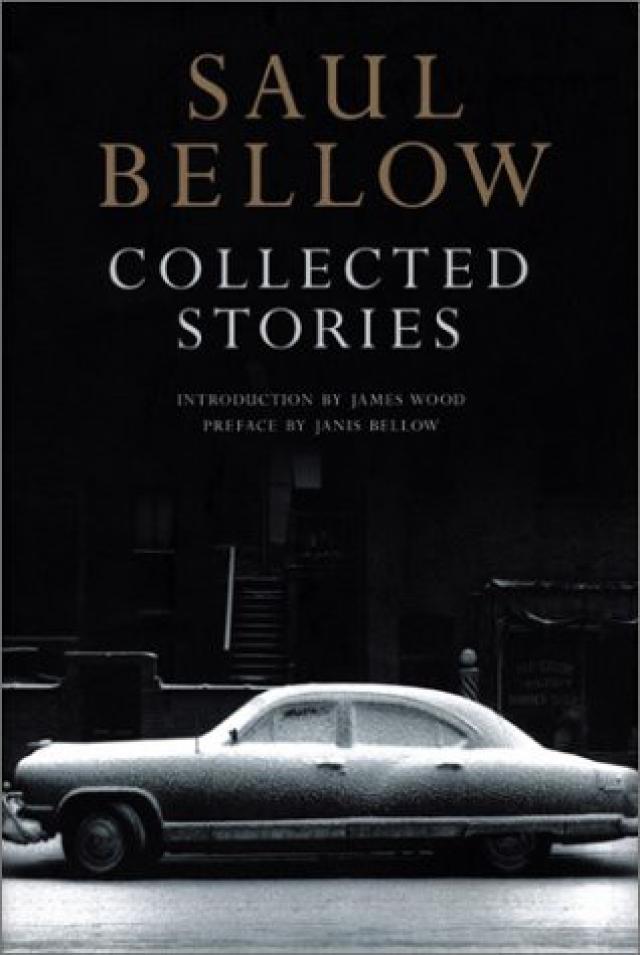
Collects stories featuring such characters as art critic Victor Wulpy, cheeerful and tragic Hattie Waggoner, and death-bed witness Dr. Braun.

Seize the Day
Saul Bellow
Literature & Fiction / Nonfiction
Deftly interweaving humor and pathos, Saul Bellow evokes in the climactic events of one day the full drama of one man's search to affirm his own worth and humanity.

More Die of Heartbreak
Saul Bellow
Literature & Fiction / Nonfiction
Kenneth Trachtenberg, the witty and eccentric narrator of More Die ofHeartbreak, has left his native Paris for the Midwest. He has come to benear his beloved uncle, the world-renowned botanist Benn Crader, self-described "plant visionary." While his studies take him around the world, Benn, a restless spirit, has not been able to satisfy his longings after his first marriage and lives from affair to affair and from "bliss to breakdown." Imagining that a settled existence will end his anguish, Benn ties the knot again, opening the door to a flood of new torments. As Kenneth grapples with his own problems involving his unusual lady-friend Treckie, the two men try to figure out why gifted and intelligent people invariably find themselves "knee-deep in the garbage of a personal life."

Dangling Man
Saul Bellow
Literature & Fiction / Nonfiction
Take a man waiting - waiting between the two worlds of civilian life and the army, suspended between two identities - and you have a man who, perhaps for the first time in his life, is truly free. However, freedom can be a noose around a man's neck.

Letters
Saul Bellow
Literature & Fiction / Nonfiction
A never-before-published collection of letters-an intimate self- portrait as well as the portrait of a century.
Saul Bellow was a dedicated correspondent until a couple of years before his death, and his letters, spanning eight decades, show us a twentieth-century life in all its richness and complexity. Friends, lovers, wives, colleagues, and fans all cross these pages. Some of the finest letters are to Bellow's fellow writers-William Faulkner, John Cheever, Philip Roth, Martin Amis, Ralph Ellison, Cynthia Ozick, and Wright Morris. Intimate, ironical, richly observant, and funny, these letters reveal the influcences at work in the man, and illuminate his enduring legacy-the novels that earned him a Nobel Prize and the admiration of the world over. Saul Bellow: Letters is a major literary event and an important edition to Bellow's incomparable body of work.

Henderson the Rain King
Saul Bellow
Literature & Fiction / Nonfiction
Bellow evokes all the rich colour and exotic customs of a highly imaginary Africa in this comic novel about a middle-aged American millionaire who, seeking a new, more rewarding life, descends upon an African tribe. Henderson's awesome feats of strength and his unbridled passion for life earns him the admiration of the tribe - but it is his gift for making rain that turns him from mere hero into messiah. A hilarious, often ribald story, HENDERSON THE RAIN KING is also a profound look at the forces that drive a man through life.

Herzog
Saul Bellow
Literature & Fiction / Nonfiction
This is the story of Moses Herzog, a great sufferer, joker, mourner, and charmer. Although his life steadily disintegrates around him - he has failed as a writer and teacher, as a father, and has lost the affection of his wife to his best friend - Herzog sees himself as a survivor, both of his private disasters and those of the age. He writes unsent letters to friends and enemies, colleagues and famous people, revealing his wry perception of the world around him, and the innermost secrets of his heart.


Love and Strife (1965-2005)
Part #2 of "The Life of Saul Bellow" series by Zachary Leader
When this second volume of The Life of Saul Bellow opens, Bellow, at forty-nine, is at the pinnacle of American letters - rich, famous, critically acclaimed. The expected trajectory is one of decline: volume 1, rise; volume 2, fall. Bellow never fell, producing some of his greatest fiction (Mr Sammler's Planet, Humboldt's Gift, all his best stories), winning two more National Book Awards, a Pulitzer Prize, and the Nobel Prize. At eighty, he wrote his last story; at eighty-five, he wrote Ravelstein. In this volume, his life away from the desk, including his love life, is if anything more dramatic than in volume 1. In the public sphere, he is embroiled in controversy over foreign affairs, race, religion, education, social policy, the state of culture, the fate of the novel. Bellow's relations with women were often fraught. In the 1960s he was compulsively promiscuous (even as he inveighed against sexual liberation). The women he pursued, the ones he married...

The Dean's December
Saul Bellow
Literature & Fiction / Nonfiction
Dean Corde is a man of position and authority at a Chicago university. He accompanies his wife to Bucharest where her mother, a celebrated figure, lies dying in a state hospital. As he tries to help her grapple with an unfeeling bureaucracy, news filters through to him of problems left behind in Chicago. A student had been been murdered and Corde had directed that charges be pressed against two black youths, but controversy and pressure are mounting against the university administration. Further, a series of articles written by Corde has offended influential Chicagoans whom he had counted as friends. Corde is troubled: at home the centre is not holding firm, in Eastern Europe authority is cruel and dehumanising.

Saul Bellow's Heart
Bellow, Greg
Saul Bellow was easily angered, prone to argument, and palpably vulnerable to criticism, but according to his son, his young father was also emotionally accessible, often soft, and possessed of the ability to laugh at the world's folly and at himself. Part of Greg Bellow's bond with his father was grounded in that softness, in humor, and in the set of egalitarian social values he followed. Saul Bellow's accessibility and lightheartedness waned as he aged, and his social views hardened, although he was, fundamentally, no less vulnerable. His earlier tolerance for opposing viewpoints all but disappeared, and his ability to laugh at himself faded. These changes eroded much of the common ground between Bellow and his son and taxed their relationship so sorely that Greg often worried whether it would survive. But theirs were differences of mind, not of heart.This memoir gives equal weight to the young Saul Bellow—the rebellious, irreverent, and ambitious young writer—who...


Humboldt's Gift (1976 Pulitzer Prize)
Saul Bellow
Literature & Fiction / Nonfiction
ReviewNovel by Saul Bellow, published in 1975. The novel, which won the Nobel Prize for Literature in 1976, is a self-described "comic book about death," whose title character is modeled on the self-destructive lyric poet Delmore Schwartz. Charlie Citrine, an intellectual, middle-aged author of award-winning biographies and plays, contemplates two significant figures and philosophies in his life: Von Humboldt Fleisher, a dead poet who had been his mentor, and Rinaldo Cantabile, a very-much-alive minor mafioso who has been the bane of Humboldt's existence. Humboldt had taught Charlie that art is powerful and that one should be true to one's creative spirit. Rinaldo, Charlie's self-appointed financial adviser, has always urged Charlie to use his art to turn a profit. At the novel's end, Charlie has managed to set his own course. -- __Product DescriptionA chronicle of success and failure, this work is Bellow's tale of the writer's life in America. When Humboldt dies a failure in a seedy New York hotel, Charlie Citrine coping with the tribulations of his own success, begins to realize the significance of his own life.

Humboldt's Gift
Saul Bellow
Literature & Fiction / Nonfiction
ReviewNovel by Saul Bellow, published in 1975. The novel, which won the Nobel Prize for Literature in 1976, is a self-described "comic book about death," whose title character is modeled on the self-destructive lyric poet Delmore Schwartz. Charlie Citrine, an intellectual, middle-aged author of award-winning biographies and plays, contemplates two significant figures and philosophies in his life: Von Humboldt Fleisher, a dead poet who had been his mentor, and Rinaldo Cantabile, a very-much-alive minor mafioso who has been the bane of Humboldt's existence. Humboldt had taught Charlie that art is powerful and that one should be true to one's creative spirit. Rinaldo, Charlie's self-appointed financial adviser, has always urged Charlie to use his art to turn a profit. At the novel's end, Charlie has managed to set his own course. -- The Merriam-Webster Encyclopedia of LiteratureAbout the Author Saul Bellow (1915–2005) wrote thirteen novels and numerous novellas and stories in his lifetime. In 1975 he won the Pulitzer Prize for Humboldt’s Gift, and in 1976 he was awarded the Nobel Prize in Literature. Jeffrey Eugenides is the Pulitzer Prize–winning author of Middlesex and The Virgin Suicides.

The Collected Stories Of Saul Bellow
Bellow, Saul
"Simply the best writer we have." (The New York Times Book Review)Viking's publication of Saul Bellow's most recent novel, Ravelstein, was an event that garnered unanimous critical acclaim and placed its author back in the spotlight as one of America's literary treasures. Now, for the first time ever, here is a collection of shorter works chosen by Bellow himself: favorite stories that follow the arc of his distinguished career. Collected Fiction gathers together stories from Mosby's Memoirs, Him with His Foot in His Mouth, and Something to Remember Me By, as well as an early story that to date has appeared only in Esquire magazine. This volume contains a preface by Bellow's wife, Janis, and an introduction by James Wood and includes celebrated stories such as "Leaving the Yellow House" and "What Kind of Day Did You Have?" and the novella The Bellarosa Connection. Throughout, Bellow's trademark theme of self-awakening, his stunning ability to re-create a bygone Chicago, and his unique comic wisdom are magnificently illustrated. This collection is both a handsome anthology Bellow's avid readers will treasure and a superb introduction to those unacquainted with his genius.Amazon.com ReviewSaul Bellow's Collected Stories, handpicked by the author, display the depth of character and acumen of the Nobel laureate's narrative powers. While he has garnered acclaim as a novelist, Bellow's shorter works prove equally strong. Primarily set in a sepia-toned Chicago, characters (mostly men) deal with family issues, desires, memories, and failings--often arriving at humorous if not comic situations. In the process, these quirky and wholly real characters examine human nature.The narrative is straightforward, with deftly handled shifts in time, and the prose is concise, sometimes pithy, with equal parts humor and grace. In "Looking for Mr. Green," Bellow describes a relief worker sized up by tenants: "They must have realized that he was not a college boy employed afternoons by a bill collector, trying foxily to pass for a relief clerk, recognized that he was an older man who knew himself what need was, who had more than an average seasoning in hardship. It was evident enough if you looked at the marks under his eyes and at the sides of his mouth." This collection should appeal both to those familiar with Bellow's work and to those seeking an introduction. --Michael FerchFrom Publishers WeeklyThis collection of 13 of Bellow's (long) short stories, many of them classics, demonstrates the Nobel Prize winner's formidable literary presence. His characters have prospered in the American century, and now, in their old age, are beginning to doubt its endurance. Bellow likes to take a man at "the top of his field" and, from that perspective, survey the discontents of civilization. Some - like Victor Wulpy in "What Kind of Day Did You Have?" - refuse to retire and take mistresses in their mid-70s. Others, like Willis Mosby, the foreign relations guru writing his mandarin's memoirs in Oaxaca, consider retirement another chance to score points. Bellow's women still rise to the top as they did in the 1950s - by association with men. In "A Theft," Clara Velde, who has successfully formed her own journalism agency, still defines herself in terms of her husbands. Generally, these interior dramas are saturated with the realistic and metaphorical atmosphere of Chicago. Yet the crowning jewel here is "The Bellarosa Connection," in which the unnamed narrator is a retired Philadelphia memory expert who reflects on his friendship with a man still obsessed with his escape from WWII Europe and the legendary showbiz promoter who helped him. Bellow's stories spread rather than march in straight lines, like memory itself, giving a kinesthetic sense of a stained, bamboozled and fundamentally comic culture. A preface by the writer's wife, Janis, an introduction by essayist James Woods and an afterword by Bellow himself, in which he makes a prescient case for short fiction in this time of "noisy frantic monstrous agglomeration," add to the collection's appeal. (Nov. 1). Copyright 2001 Reed Business Information, Inc.


It All Adds Up
Saul Bellow
Literature & Fiction / Nonfiction
Bellow was America's writer, and in this superb collection of nonfiction essays he demonstated his vigilance of and loyalty to his country over a span of 45 years. From his earliest piece, a war report from Spain written for the Partisan Review (1948), to his Novel Prize lecture (1976), to a Forbes article entitled "There Is Simply Too Much To Think About," Bellow was consumed by the idea of America—so great, so accomplished, so magical—destroying its soul.