


Build-in Book Search
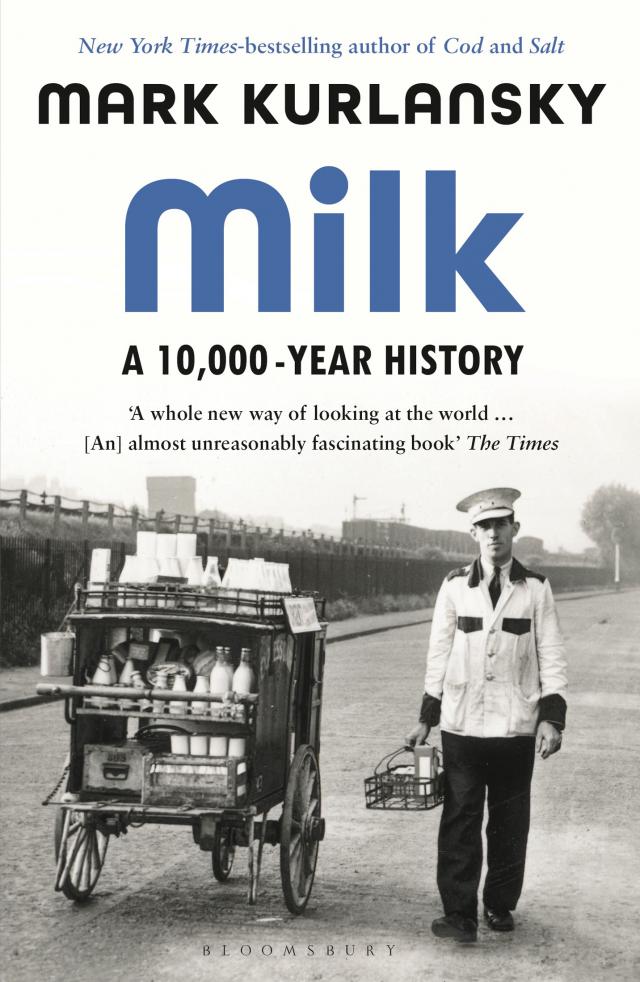
Milk
Mark Kurlansky
Mark Kurlansky's first global food history since the bestselling Cod and Salt; the fascinating cultural, economic and culinary story of milk and all things dairy – with recipes throughoutWhile mother's milk may be the essence of nourishment, it is the milk of other mammals that humans have cultivated ever since the domestication of animals more than 10,000 years ago. Today, milk is a test case in the most pressing issues in food politics, from industrial farming and animal rights to GMOs, the locavore movement and advocates for raw milk, who controversially reject pasteurisation. Profoundly intertwined with human civilisation, milk has a compelling and surprisingly global story to tell, and historian Mark Kurlansky is the perfect person to tell it. Tracing the liquid's diverse history from antiquity to the present, he details its curious and crucial role in cultural evolution, religion, nutrition, politics, and economics.

The Big Oyster
Mark Kurlansky
Before New York City was the Big Apple, it could have been called the Big Oyster. Now award-winning author Mark Kurlansky tells the remarkable story of New York by following the trajectory of one of its most fascinating inhabitants--the oyster, whose influence on the great metropolis remains unparalleled.For centuries New York was famous for its oysters, which until the early 1900s played such a dominant a role in the city's economy, gastronomy, and ecology that the abundant bivalves were Gotham's most celebrated export, a staple food for the wealthy, the poor, and tourists alike, and the primary natural defense against pollution for the city's congested waterways.Filled with cultural, historical, and culinary insight--along with historic recipes, maps, drawings, and photos--this dynamic narrative sweeps readers from the island hunting ground of the Lenape Indians to the death of the oyster beds and the rise of America's environmentalist movement, from the...

Birdseye
Mark Kurlansky
Break out the TV dinners! From the author who gave us Cod, Salt, and other informative bestsellers, the first biography of Clarence Birdseye, the eccentric genius inventor whose fast-freezing process revolutionized the food industry and American agriculture.From the Hardcover edition.

Boogaloo On 2nd Avenue
Mark Kurlansky
It's the boom years of the 1980s, and life is closing in on Nathan Seltzer, who rarely travels outside his suddenly gentrifying Lower East Side neighbourhood. While he tries to decide whether he should cheat on his wife with Karoline, a German pastry chef whose parents may or may not have been Nazis, his father, Harry, is plotting with the 1960s boogaloo star Chow Mein Vega for the comeback of this dance craze. Meanwhile, a homicidal drug addict is terrorizing the neighbourhood. With its ensemble cast of unforgettable characters, Boogaloo on 2nd Avenue is a comedy of cultures about the old and the new, about Latinos, Jews, Sicilians and Germans. It's about struggling to hold onto life in a rapidly changing world, about food and sex and about how our lives are shaped by love and guilt.
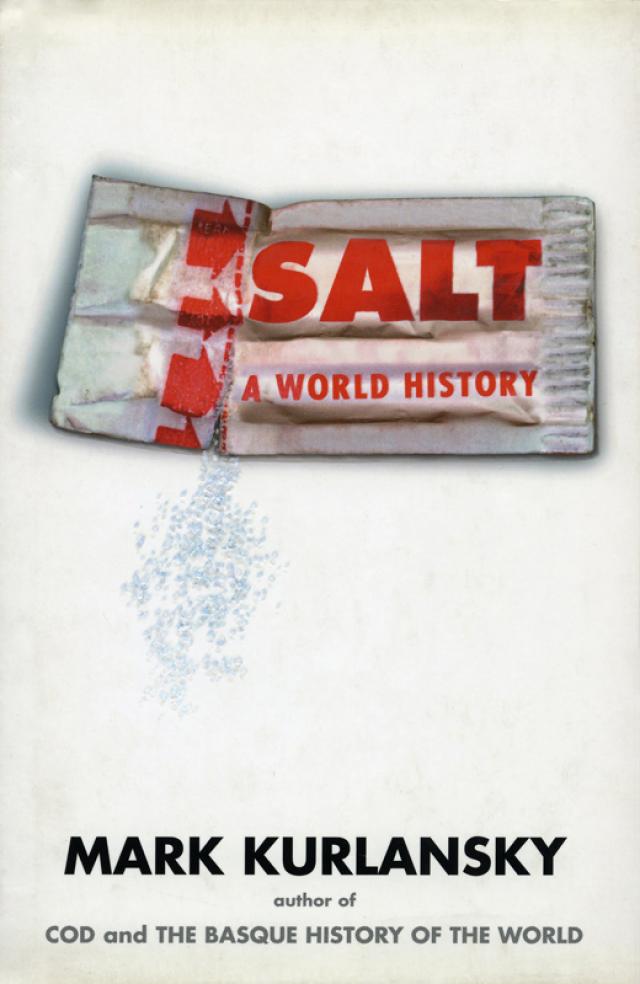
Salt
Mark Kurlansky
Mark Kurlansky, the bestselling author of Cod and The Basque History of the World, here turns his attention to a common household item with a long and intriguing history: salt. The only rock we eat, salt has shaped civilization from the very beginning, and its story is a glittering, often surprising part of the history of humankind. A substance so valuable it served as currency, salt has influenced the establishment of trade routes and cities, provoked and financed wars, secured empires, and inspired revolutions. Populated by colorful characters and filled with an unending series of fascinating details, Kurlansky's kaleidoscopic history is a supremely entertaining, multi-layered masterpiece.
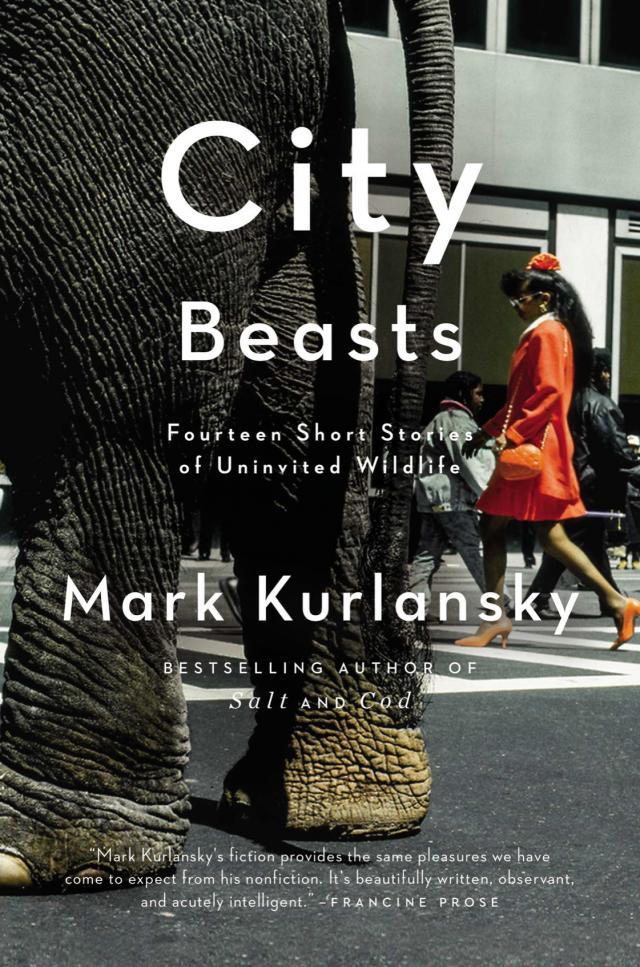
City Beasts
Mark Kurlansky
All-new stories about the urban worlds where animals and humans fight, love, and find common ground, from the nationally bestselling author of Cod and Salt. In these stories, Mark Kurlansky journeys to his familiar haunts like New York's Central Park or Miami's Little Havana but with an original, earthy, and adventurous perspective. From baseball players in the Dominican Republic to Basque separatists in Spain to a restaurant owner in Cuba, from urban coyotes to a murder of crows, Kurlansky travels the worlds of animals and their human counterparts, revealing moving and hilarious truths about our connected existence. In the end, he illuminates how closely our worlds are aligned, how humans really are beasts, susceptible to their basest instincts, their wildest dreams, and their artful survival.

Ready For a Brand New Beat
Mark Kurlansky
Can a song change a nation? In 1964, Marvin Gaye, record producer William “Mickey” Stevenson, and Motown songwriter Ivy Jo Hunter wrote “Dancing in the Street.” The song was recorded at Motown’s Hitsville USA Studio by Martha and the Vandellas, with lead singer Martha Reeves arranging her own vocals. Released on July 31, the song was supposed to be an upbeat dance recording—a precursor to disco, and a song about the joyousness of dance. But events overtook it, and the song became one of the icons of American pop culture. The Beatles had landed in the U.S. in early 1964. By the summer, the sixties were in full swing. The summer of 1964 was the Mississippi Freedom Summer, the Berkeley Free Speech Movement, the beginning of the Vietnam War, the passage of the Civil Rights Act, and the lead-up to a dramatic election. As the country grew more radicalized in those few months, “Dancing in the Street” gained currency as an activist...

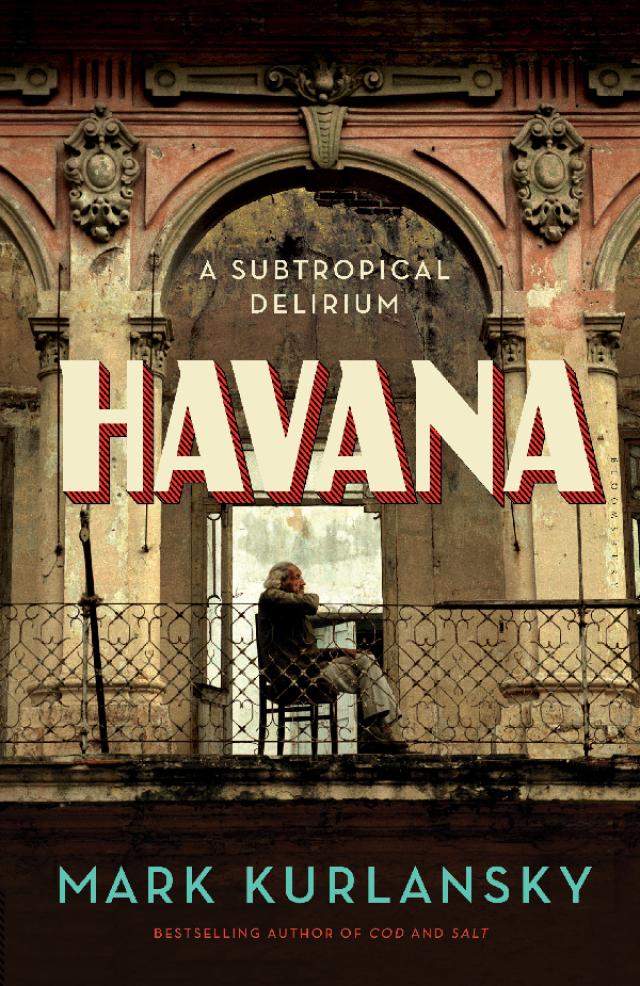
Havana
Mark Kurlansky
A city of tropical heat, sweat, ramshackle beauty, and its very own cadence—a city that always surprises—Havana is brought to pulsing life by New York Times bestselling author Mark Kurlansky.Award-winning author Mark Kurlansky presents an insider's view of Havana: the elegant, tattered city he has come to know over more than thirty years. Part cultural history, part travelogue, with recipes, historic engravings, photographs, and Kurlansky's own pen-and-ink drawings throughout, Havana celebrates the city's singular music, literature, baseball, and food; its five centuries of outstanding, neglected architecture; and its extraordinary blend of cultures. Like all great cities, Havana has a rich history that informs the vibrant place it is today—from the native Taino to Columbus's landing, from Cuba's status as a U.S. protectorate to Batista's dictatorship and Castro's revolution, from Soviet presence to the welcoming of...

Birdseye: The Adventures of a Curious Man
Mark Kurlansky
Break out the TV dinners! From the author who gave us Cod, Salt, and other informative bestsellers, the first biography of Clarence Birdseye, the eccentric genius inventor whose fast-freezing process revolutionized the food industry and American agriculture.ReviewPraise for Birdseye:"In the shadow of America’s great inventors—Edison, Ford and Bell, to name a few—stands an unheralded giant: Clarence Birdseye, the father of the modern “fresh frozen” pea. Wander any supermarket and you’ll find Birdseye’s legacy.... [Kurlansky's] book is a delight—and a quiz bowl team’s treasure-trove. Fabulous factoids abound."—Abigail Meisel, New York Times Book Review"The first book-length biography of Clarence Birdseye…. [An] intriguing book that…coaxes readers to re-examine everyday miracles like frozen food, and to imagine where places with no indigenous produce would be without them."—Janet Maslin, New York Times "There's a particular pleasure in being reminded that the most ordinary things can still be full of magic. Frogs may turn into princes. Lumps of dirt can hide sparkling gems. And having just read Mark Kurlansky's new biography of Clarence Birdseye, I now see the humble fish fillet in a whole new light. For as Kurlansky tells it, when Clarence Birdseye figured out how to pack and freeze haddock...he essentially changed the way we produce, preserve and distribute food forever."—NPR's The Salt"Piecing together the first book-length biography of Birdseye was not easy. It's not just the episodic quality of Birdseye's life but the sparse and spotty nature of the surviving information about him. And there are many myths that surround his life, some perpetuated by the man himself.... [Yet] Kurlansky has pieced together a lively and readable biography about one of America's most unusual innovators."—Andrew F. Smith, Newsday"Best known for his deliciously knowledgeable food histories (Cod, Salt, The Big Oyster), Kurlansky['s]...wide-ranging curiosity matches his subject’s, and his narrative of Birdseye’s life displays great feeling for a fellow adventurer.... [R]eaders will emerge from this breezy book with a fondness for its engagingly eccentric protagonist—and a much better understanding of the intricate interconnection of traditional practices, technical breakthroughs, business deals, and social change that put those frozen peas in our refrigerators."—Wendy Smith, Daily Beast"Kurlansky brings Birdseye to life.... Covering the science behind Birdseye's... inventions along with intimate details of his family life, [he] skillfully weaves a fluid narrative of facts on products, packaging, and marketing into this rags-to-riches portrait of the man whose ingenuity brought revolutionary changes to 20th-century life."—Publishers Weekly (starred)"Yes, the frozen-food guy really was named Clarence Birdseye (1886–1956), and the story of his adventures is another satisfying dish from the remarkable menu of the author of Cod (1997), Salt (2002) and other treats.Kurlansky...places Birdseye in the same category as Thomas Edison: amateurs who got curious about a problem, played around with it (sometimes for years) and eventually figured it out. Birdseye had many more interests than frozen foods, writes the author; he invented, among other things, a kind of light bulb and even a whaling harpoon. He also grew up in a world that seemed to have limitless resources—no worries about plundering the planet. He killed creatures with abandon for decades, many of which he enjoyed eating, including field mice, chipmunks and porcupine. His curiosity also made him fearless. He conducted field research on Rocky Mountain spotted fever (collecting thousands of ticks), and he lived in the frigid Labrador region of Canada (and took his equally fearless wife and their infant). It was in the North that he began to wonder why foods frozen there—naturally—tasted so much better than the frozen foods back home. He discovered, of course, that it was quick-freezing at very cold temperatures that did the trick. He eventually invented the process that produced vast amounts of good frozen food, but then had to wait for the supporting infrastructure (transportation, storage, etc.). Kurlansky tells the exciting tale of Birdseye’s adventures, failures and successes (he became a multi-millionaire) and his family, and he also offers engaging snippets about Velveeta, dehydration and Grape-Nuts.The author notes that Birdseye knew that curiosity is “one essential ingredient” in a fulfilling life; it is a quality that grateful readers also discover in each of Kurlansky’s books."—Kirkus Reviews (starred)"Kurlansky’s narrative gifts shine through every chapter."—BooklistPraise for Mark Kurlansky:The Big Oyster: History on the Half Shell“Part treatise, part miscellany, unfailingly entertaining.”—William Grimes, *The New York Times“Fascinating stuff . . . Kurlansky has a keen eye for odd facts and natural detail.”—The Wall Street Journal*1968: The Year That Rocked the World“Splendid . . . Evocative . . . No one before Kurlansky has managed to evoke so rich a set of experiences in so many different places—and to keep the story humming.”—Michael Kazin, Chicago Tribune“Highly readable . . . A rich perspective . . . Kurlansky is a writer of remarkable talents and interests.”—Walter Truett Anderson, San Francisco ChronicleSalt“Kurlansky finds the world in a grain of salt . . . Fascination and surprise regularly erupt from the detail.”—Edward Rothstein, The New York Times Book Review“Kurlansky continues to prove himself remarkably adept at taking a most unlikely candidate and telling its tale with epic grandeur.”—Merle Rubin, *Los Angeles TimesCod: A Biography of the Fish That Changed the World*“Every once in a while a writer of particular skill takes a fresh, seemingly improbable idea and turns out a book of pure delight. Such is the case of Mark Kurlansky and the codfish.”—David McCullough“An elegant brief history . . . Related with fast brio and wit.”—Anne Mendelson, Los Angeles TimesAbout the AuthorMARK KURLANSKY is the New York Times bestselling author of many books, including The Food of a Younger Land, Cod: A Biography of the Fish That Changed the World, Salt: A World History, 1968: The Year That Rocked the World, and The Big Oyster: History on the Half Shell. He lives in New York City.

Nonviolence: The History of a Dangerous Idea
Mark Kurlansky
In this timely, highly original, and controversial narrative, New York Times bestselling author Mark Kurlansky discusses nonviolence as a distinct entity, a course of action, rather than a mere state of mind. Nonviolence can and should be a technique for overcoming social injustice and ending wars, he asserts, which is why it is the preferred method of those who speak truth to power. Nonviolence is a sweeping yet concise history that moves from ancient Hindu times to present-day conflicts raging in the Middle East and elsewhere. Kurlansky also brings into focus just why nonviolence is a “dangerous” idea, and asks such provocative questions as: Is there such a thing as a “just war”? Could nonviolence have worked against even the most evil regimes in history?Kurlansky draws from history twenty-five provocative lessons on the subject that we can use to effect change today. He shows how, time and again, violence is used to suppress nonviolence and its practitioners–Gandhi and Martin Luther King, for example; that the stated deterrence value of standing national armies and huge weapons arsenals is, at best, negligible; and, encouragingly, that much of the hard work necessary to begin a movement to end war is already complete. It simply needs to be embraced and accelerated.Engaging, scholarly, and brilliantly reasoned, Nonviolence is a work that compels readers to look at history in an entirely new way. This is not just a manifesto for our times but a trailblazing book whose time has come.From the Hardcover edition.About the AuthorMark Kurlansky is the New York Times bestselling and James A. Beard Award—winning author of Cod: A Biography of the Fish That Changed the World; Salt: A World History; 1968: The Year That Rocked the World; The Basque History of the World; and The Big Oyster: History on the Half Shell; as well as the novel Boogaloo on 2nd Avenue and several other books. He lives in New York City.From the Hardcover edition.Excerpt. © Reprinted by permission. All rights reserved.IImperfect Beings"We expect to prevail through the foolishness of preaching." —William Lloyd Garrison, Declaration of Sentiments adopted by the Peace Convention of Boston, 1838The first clue, lesson number one from human history on the subject of nonviolence, is that there is no word for it. The concept has been praised by every major religion. Throughout history there have been practitioners of nonviolence. Yet, while every major language has a word for violence, there is no word to express the idea of nonviolence except that it is not another idea, it is not violence. In Sanskrit, the word for violence is himsa, harm, and the negation of himsa, just as nonviolence is the negation of violence, is ahimsa—not doing harm. But if ahimsa is “not doing harm,” what is it doing?The only possible explanation for the absence of a proactive word to express nonviolence is that not only the political establishments but the cultural and intellectual establishments of all societies have viewed nonviolence as a marginal point of view, a fanciful rejection of one of society’s key components, a repudiation of something important but not a serious force in itself. It is not an authentic concept but simply the abnegation of something else. It has been marginalized because it is one of the rare truly revolutionary ideas, an idea that seeks to completely change the nature of society, a threat to the established order. And it has always been treated as something profoundly dangerous.Advocates of nonviolence—dangerous people—have been there throughout history, questioning the greatness of Caesar and Napo- leon and the Founding Fathers and Roosevelt and Churchill. For every Crusade and Revolution and Civil War there have always been those who argued, with great clarity, that violence not only was immoral but that it was even a less effective means of achieving laudable goals. The case can be made that it was not the American Revolution that secured independence from Britain; it was not the Civil War that freed the slaves; and World War II did not save the Jews. But this possibility has rarely been considered, because the Caesars and Napoleons of history have always used their power to muffle the voices of those who would challenge the necessity of war—and it is these Caesars, as Napoleon observed, who get to write history. And so the ones who have killed become the ones who are revered. But there is another history that manages to survive.It survives, but nonviolence is in fact a marginal rejection of a marginalized concept. Political theorist Hannah Arendt, in her 1969 study On Violence, pointed out that while it can be universally agreed that violence has been one of the primary movers of history, historians and social scientists rarely study the subject of violence. She suggested that this was because violence was such a mainstay of human activity that it was “taken for granted and therefore neglected.” Violence is a fundamental of the human condition, whereas nonviolence is merely a rarified response to that reality. What does this mean? If we lived in a world that had no word for war other than nonpeace, what kind of world would that be? It would not necessarily be a world without war, but it would be a world that regarded war as an aberrant and insignificant activity. The widely held and seldom expressed but implicit viewpoint of most cultures is that violence is real and nonviolence is unreal. But when nonviolence becomes a reality it is a powerful force.Nonviolence is not the same thing as pacifism, for which there are many words. Pacifism is treated almost as a psychological condition. It is a state of mind. Pacifism is passive; but nonviolence is active. Pacifism is harmless and therefore easier to accept than nonviolence, which is dangerous. When Jesus Christ said that a victim should turn the other cheek, he was preaching pacifism. But when he said that an enemy should be won over through the power of love, he was preaching nonviolence. Nonviolence, exactly like violence, is a means of persuasion, a technique for political activism, a recipe for prevailing. It requires a great deal more imagination to devise nonviolent means—boycotts, sit-ins, strikes, street theater, demonstrations—than to use force. And there is not always agreement on what constitutes violence. Some advocates of nonviolence believe that boycotts and embargoes that cause hunger and deprivation are a form of violence. Some believe that using less lethal means of force, rock throwing or rubber bullets, is a form of nonvio- lence. But the central belief is that forms of persuasion that do not use physical force, do not cause suffering, are more effective; and while there is often a moral argument for nonviolence, the core of the belief is political: that nonviolence is more effective than violence, that violence does not work.Mohandas Gandhi invented a word for it, satyagraha, from satya, meaning truth. Satyagraha, according to Gandhi, literally means “holding on to truth” or “truth force.” Interestingly, although Gandhi’s teachings and techniques have had a huge impact on political activists around the world, his word for it, satyagraha, has never caught on.All religions discuss the power of nonviolence and the evil of violence. Hinduism, which claims to be the oldest religion, though its founding date is unknown, as is its founder, does not take a clear stand on nonviolence. This ambiguity is not surprising for an ancient religion that has no central belief or official priests and has a plethora of scriptures, gods, mythologies, and cults. Hindus often repeat the aphorism “Ahimsa paramo dharmah,” nonviolence is the highest law, but this is not an unshakable principle of the religion. Violence is permissible in the Hindu religion, and Indra is a warlike Hindu god. But there are also many writings of Hindu wise men against violence, especially in a book known as the Mahabharata. Hindu sages tended to see nonviolence as an unattainable ideal. Perfect nonviolence would mean not harming any living thing. The sages encouraged vegetarianism to avoid harming animals. The Jainists, followers of a religion admired by Gandhi, keep their mouths masked to insure that they do not accidentally inhale a tiny insect. But Hinduism recognizes that even the strictest vegetarians harm plants, killing them in order to live. A saint, it is said, would live on air, but Hinduism recognizes that this is impossible. Complete ahimsa is not attainable. Gandhi wrote, “Nonviolence is a perfect stage. It is a goal towards which all mankind moves naturally, though unconsciously.” He believed human beings were working toward perfection. Violence was a barbaric retrogressive trait that had not yet been shed. The human being who achieved complete nonviolence, according to Gandhi, would not be a saint. “He only becomes truly a man,” he said.This concept of man as an imperfect being who is obligated to strive for an unattainable perfection runs through most of human thought. The nineteenth-century French founder of the anarchist movement, Pierre-Joseph Proudhon, wrote in his 1853 Philosophie du progrès, “We are born perfectable, but we shall never be per- fect.” The often repeated argument against nonviolence, that it is in our nature to be violent—no doubt why violence deserves its own word—lacks validity in light of the ubiquitous moral argument that it is our obligation to try to be better than we are.Hinduism and Gandhi insist that nonviolence must never come from weakness but from strength, and only the strongest and most disciplined people can hope to achieve it. Those who are incapable of defending themselves without violence, those who lack the spiri- tual strength to match their adversary’s physical brutality, either because of their own weakness or the determined brutality of the enemy, are obligated to use physical violence for defense. In Hinduism, passive submission to brutality is usually considered a sin.Whenever the Chinese denounce the pacifist tendencies in their culture, they usually blame these tendencies on Buddhism. This is because Buddhism is the only important Eastern religion in China that is of foreign origin. Buddha, the sixth-century b.c. founder, was born near the Indian-Nepalese border. If pacifism is a national weakness, many Chinese have contended, surely it is the fault of foreigners. And so Hu Shi, the Columbia University–educated Chinese scholar (1891–1962), said, “Buddhism, which dominated Chinese religious life for twenty centuries, has reinforced the peaceful tendencies of an already too peaceful people.” His implication was that the rejection of violence makes people passive, and many early-twentieth-century Chinese believed their people had become too passive. This ignored the fact that most religions and philosophies that reject violence do not encourage passiveness but activism by other means—nonviolence.Buddhism forbids the taking of life, but there seems to be a wide range of interpretations of this stance. In some countries it means vegetarianism, but in Tibet, perhaps because of a lack of vegetables, it means that animals must be slaughtered “humanely.” To a Tibetan Buddhist, however, this means the opposite of what it means to a Jew. To Jews, humane slaughter is the clean slitting of the animal’s throat and the removal of all blood, whereas in Tibet it means death by suffocation, to avoid the spilling of blood.While the Buddhist interdiction on taking life was frequently interpreted in China as a condemnation of militarism, this was not the case in medieval Japan. In Japan Buddhism developed the “medi- tation school” commonly known as Zen. In ...

Choice Cuts
Mark Kurlansky
"Every once in awhile a writer of particular skills takes a fresh, seemingly improbable idea and turns out a book of pure delight." That's how David McCullough described Mark Kurlansky's Cod: A Biography of the Fish That Changed the World, a work that revealed how a meal can be as important as it is edible. Salt: A World History, its successor, did the same for a seasoning, and confirmed Kurlansky as one of our most erudite and entertaining food authors. Now, the winner of the James Beard Award for Excellence in Food Writing shares a varied selection of "choice cuts" by others, as he leads us on a mouthwatering culinary tour around the world and through history and culture from the fifth century B.C. to the present day.Choice Cuts features more than two hundred pieces, from Cato to Cab Calloway. Here are essays by Plato on the art of cooking . . . Pablo Neruda on french fries . . . Alice B. Toklas on killing a carp . . . M. F. K. Fisher on the virility...

Basque History of the World
Mark Kurlansky
The Basque History of the World is the illuminating story of an ancient and enigmatic people. Signs of their civilization existed well before the arrival of the Romans in 218 B.C., and though theories abound, no one has ever been able to determine their origins. Their ancient tongue, Euskera, is equally mysterious: It is the oldest living European language, and is related to no other language on Earth. Yet despite their obscure origins and small numbers (2.4 million people today), the Basques have had a profound impact on Europe and the world for more than 2,000 years. Never seeking more land, they have nonetheless fiercely defended their own against invaders ranging from the Celts and Visigoths to Napoleon and Franco. They have always been a paradoxical blend of inbred tradition and worldly ambition, preserving their indigenous legal code, cuisine, literatureeven their own hat and shoewhile at the same time striving immodestly to be leaders in the world. They were pioneers of commercial whaling and cod fishing, were among the first Europeans in the Americas, Africa, and Asia during the age of exploration, and were prosperous capitalists when capitalism was a new idea, later leading the Industrial Revolution in southern Europe. Their influence has been felt in every realm, from religion (the charismatic Ignatius Loyola founded the Jesuits in 1534) to sports and commerce. Today, even while clinging to their ancient tribal identity, they are ready for a borderless world: The unique Basque concept of nationhood has never been more relevant, at a time when Basques are enjoying what may be the most important cultural renaissance in their long existence. Mark Kurlansky's passion for the Basque people their heroes and commoners alike-and his exuberant eye for detail shine throughoutThe Basque History of the World. Like his celebrated bookCod, it blends human stories with economic, political, literary, and culinary history into a rich and heroic tale.
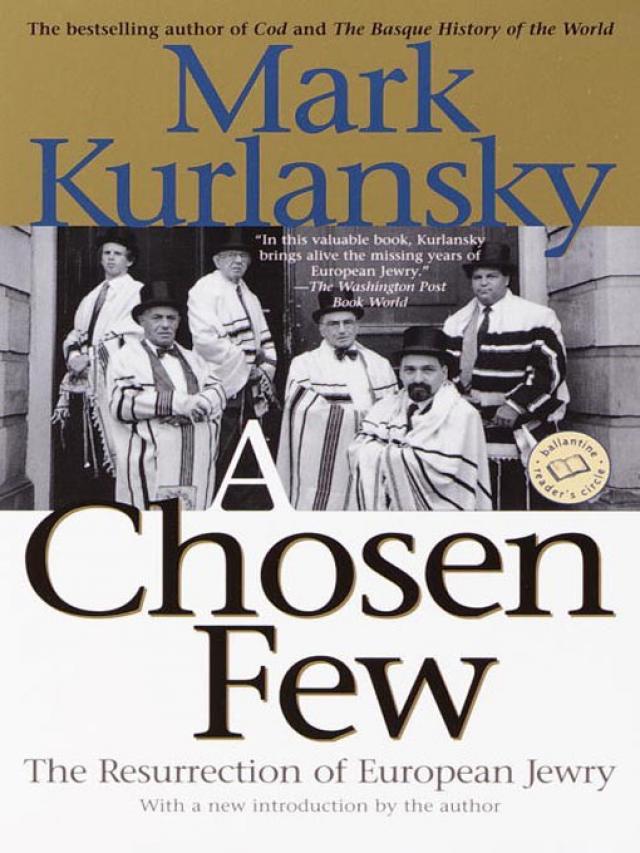
A Chosen Few
Mark Kurlansky
A POWERFUL, DEEPLY MOVING NARRATIVE OF HOPE REBORN IN THE SHADOW OF DESPAIRFifty years after it was bombed to rubble, Berlin is once again a city in which Jews gather for the Passover seder. Paris and Antwerp have recently emerged as important new centers of Jewish culture. Small but proud Jewish communities are revitalizing the ancient centers of Budapest, Prague, and Amsterdam. These brave, determined Jewish men and women have chosen to settle–or remain–in Europe after the devastation of the Holocaust, but they have paid a price. Among the unexpected dangers, they have had to cope with an alarming resurgence of Nazism in Europe, the spread of Arab terrorism, and the impact of the Jewish state on European life.Delving into the intimate stories of European Jews from all walks of life, Kurlansky weaves together a vivid tapestry of individuals sustaining their traditions, and flourishing, in the shadow of history. An inspiring story of a tenacious people who have rebuilt their lives in the face of incomprehensible horror, A Chosen Few is a testament to cultural survival and a celebration of the deep bonds that endure between Jews and European civilization.“Consistently absorbing . . . A Chosen Few investigates the relatively uncharted territory of an encouraging phenomenon.”–Los Angeles Times “I can think of no book that portrays with such intelligence, historical understanding, and journalistic flair what life has been like for Jews determined to build lives in Europe.”–SUSAN MIRON Forward

Battle Fatigue
Mark Kurlansky
Growing up in the years following World War II, Joel Bloom always played soldiers with his friends. But by the time he's eighteen, the Vietnam War is in full swing, and it's not as simple as the war games he played when he was a child. Old enough to be drafted, Joel loves his country, but he knows that fighting in an unjust war isn't something he can do. After trying and failing to be a conscientious objector he leaves for Canada - a decision that will help him avoid the physical conflict of the war, but will create another inside of him that will take much longer to resolve. An insightful and compelling novel that explores one boy's struggle to understand himself and the harsh realities of life during wartime.
Cod
Mark Kurlansky
A delightful romp through history with all its economic forces laid bare, Cod is the biography of a single species of fish, but it may as well be a world history with this humble fish as its recurring main character. Cod, it turns out, is the reason Europeans set sail across the Atlantic, and it is the only reason they could. What did the Vikings eat in icy Greenland and on the five expeditions to America recorded in the Icelandic sagas? Cod, frozen and dried in the frosty air, then broken into pieces and eaten like hardtack. What was the staple of the medieval diet? Cod again, sold salted by the Basques, an enigmatic people with a mysterious, unlimited supply of cod. As we make our way through the centuries of cod history, we also find a delicious legacy of recipes, and the tragic story of environmental failure, of depleted fishing stocks where once their numbers were legendary. In this lovely, thoughtful history, Mark Kurlansky ponders the question: Is the fish that changed...

Cod: A Biography of the Fish That Changed the World
Mark Kurlansky
A delightful romp through history with all its economic forces laid bare, Cod is the biography of a single species of fish, but it may as well be a world history with this humble fish as its recurring main character. Cod, it turns out, is the reason Europeans set sail across the Atlantic, and it is the only reason they could. What did the Vikings eat in icy Greenland and on the five expeditions to America recorded in the Icelandic sagas? Cod--frozen and dried in the frosty air, then broken into pieces and eaten like hardtack. What was the staple of the medieval diet? Cod again, sold salted by the Basques, an enigmatic people with a mysterious, unlimited supply of cod. As we make our way through the centuries of cod history, we also find a delicious legacy of recipes, and the tragic story of environmental failure, of depleted fishing stocks where once their numbers were te fate of the universe. Here--for scientist and layperson alike, for philosopher, science-fiction reader, biologist, and computer expert--is a startlingly complete and rational synthesis of disciplines, and a new, optimistic message about existence.Amazon.com ReviewYou probably enjoy eating codfish, but reading about them? Mark Kurlansky has written a fabulous book--well worth your time--about a fish that probably has mattered more in human history than any other. The cod helped inspire the discovery and exploration of North America. It had a profound impact upon the economic development of New England and eastern Canada from the earliest times. Today, however, overfishing is a constant threat. Kurlansky sprinkles his well-written and occasionally humorous history with interesting asides on the possible origin of the word codpiece and dozens of fish recipes. Sometimes a book on an offbeat or neglected subject really makes the grade. This is one of them. From Library JournalIn this engaging history of a "1000-year fishing spree," Kurlansky (A Continent of Islands: Searching for the Caribbean Destiny, LJ 1/92) traces the relationship of cod fishery to such historical eras and events as medieval Christianity and Christian observances; international conflicts between England and Germany over Icelandic cod; slavery, the molasses trade, and the dismantling of the British Empire; and, the evolution of a sophisticated fishing industry in New England. Kurlansky relates this information in an entertaining style while providing accurate scientific information. The story does not have a happy ending, however. The cod fishery is in trouble, deep trouble, as the Atlantic fish has been fished almost to extinction. Quoting a scientist from the Woods Hole Biological Laboratory, Massachusetts, Kurlansky notes that to forecast the recovery of the cod population is to gamble: "There is only one known calculation: 'When you get to zero, it will produce zero.'" Highly recommended for all general collections.?Mary J. Nickum, Bozeman, Mont.Copyright 1997 Reed Business Information, Inc.