

18 Tiny Deaths, page 21


Lee “expressed the opinion that she was not as hospitably received in the Department of Legal Medicine as she would like to be and was eager to be,” Burwell wrote in a memorandum, “and that she was too much of an honored guest and not enough of a participant.”36
10
MURDER AT HARVARD
IN THE SPRING OF 1946, state lawmakers in Virginia passed Senate Bill 64, which abolished the coroner system and established the office of chief medical examiner to investigate unexplained deaths. To shield the medical examiner from public pressure and political influence, he was under the authority of a five-member independent commission, much like the arrangement Lee widely recommended. Lee wasted no time ensuring that Virginia’s system got off on the right foot by advocating they hire a former Harvard legal medicine fellow as the first chief medical examiner. Two candidates were at the top of her list—Dr. Herbert Lund and Dr. Herbert Breyfogle. They were both young, brilliant, and well qualified for the job.
A third candidate, Dr. Russell Fisher, had received his medical education at the Medical College of Virginia. MCV president Dr. William Sanger asked Moritz to take Fisher in Harvard’s fellowship program with the thought that he may return to Virginia as medical examiner one day. Lee felt that while Fisher was intelligent and capable, he would not be ready for such a pivotal role for a few more years because he had not yet finished his pathology training.1 Lee shared her views with Sanger and Colonel Woodson, superintendent of the Virginia State Police, both members of the commission overseeing the medical examiner’s office. In a unanimous decision, the commission appointed Breyfogle as Virginia’s first chief medical examiner.
The law that established the office of chief medical examiner also authorized the creation of a Department of Legal Medicine at the Medical College of Virginia. Breyfogle was appointed an assistant professor, and operation of the new department commenced in 1948.2
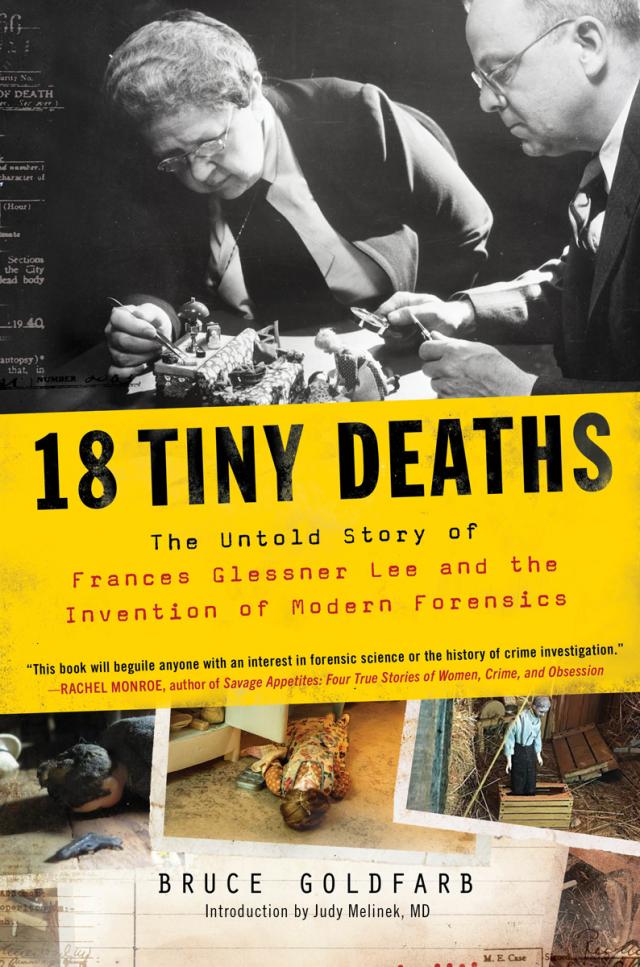
It didn’t take long for newspaper reporters to hear about the scientific homicide seminars for police officers at Harvard and the unusual crime scene models used for instruction. The odd combination of murder and dollhouses was ready-made for feature stories. The Boston Globe, Providence Sunday Journal, and many other newspapers did stories about the Harvard Department of Legal Medicine and the heroic exploits of a new generation of scientific medical examiners.
These stories tended to cast Lee as a peripheral figure if she was mentioned at all—a wealthy matron who made morbid dollhouses—and understated her role as a leader in the field and a driving force behind the Department of Legal Medicine. Lee was willing to accept this self-effacement if it made a useful hook for a story and helped spread the word about legal medicine. Moritz apologized to Lee that she was kept anonymous and not given credit for her pioneering work.
“As for my ‘complete anonymity’ is concerned, it doesn’t exist,” she told Moritz. “I have had all kinds of write-ups from the beginning. Let’s put all our efforts into bringing the subject of legal medicine before the public and making it both understood and valued as well as popular. It really doesn’t matter to any but a few who is backing it, and those few know, so let’s call it a day.”3
The biggest score to date happened in the spring of 1946 when Lee was approached for a story in Life magazine. Life was the country’s preeminent pictorial news weekly with a circulation of about 13 million readers. The large-format magazine was known for its superior photography and was anxious to feature the Nutshell Studies of Unexplained Death.
A Life photographer spent several days at Harvard shooting the dioramas. The magazine wanted to present the Nutshells to its readers as they were to students in the seminar, with the brief preliminary report assigned to each diorama. There was one problem: the magazine wanted the answers behind each scene.
“LIFE is still very much interested in getting a story, but feels the ‘solutions’ are indispensable,” magazine staffer Jeff Wylie told Lee. “I explained that you had said we would be free to draw our own conclusions and I told the editors that I thought you would confirm correct deductions that we might make. The editors now, in the cantankerous way that editors have, want to know why—if you will confirm our guesses—you can’t agree to give us the full solutions. In other words, LIFE doesn’t want to play a guessing game.”4
Participating in the story was an opportunity to bring legal medicine to a huge national public audience. But if everybody knew the solutions, the value of the Nutshells for teaching would drop to zero. Lee compromised. She allowed Life to use witness statements but not the complete report used during the homicide seminar. She let the magazine reveal some clues but withheld the solutions.
The Nutshells made their national debut in the June 3, 1946, issue of Life. An un-bylined feature ran on three pages in the front of the magazine, in a prime spot as the first photo feature after the letters to the editor. Lee was mentioned as the founder of the Department of Legal Medicine but not shown in a photo. There were photos of four of the Nutshells: Living Room, Dark Bathroom, Two Rooms, and Striped Bedroom. The only photograph of people was four men looking at the Barn.5
Troopers who had attended the Harvard seminar were pleased to report back to Lee how they applied the training to investigations. After one seminar, Lieutenant R. F. Borkenstein of the Indiana State Police Laboratory told Lee about a recent case involving a man who had been found immersed in water for about three months, his body so badly decomposed that the local police and coroner had abandoned the possibility of identifying the man through fingerprints.
Having learned about skin slippage and degloving—in which the epidermis separates from the underlying layer of the skin—at the homicide seminar, Borkenstein thought to look inside the gloves the decedent was wearing when he was found. The gloves had been discarded along with the dead man’s clothing but had not yet been destroyed. Inside the gloves was skin with legible fingerprints, leading to the identification of the decedent.
“The Coroner, an undertaker, was not familiar with the fact that the skin from the hands separates under these conditions,” Borkenstein told Lee. “The cause of death will probably never be known as no autopsy was done. I am lighting a torch to carry against this condition, and hope that something will come of it in the future.”6
Knowledge imparted at the homicide seminars was propagated when students returned home. A Delaware trooper presented a training session based on his experiences at Harvard, including the observation of an autopsy. One of his trainees, based on this secondhand information, interrupted a coroner’s physician who was about to begin a postmortem examination by opening the decedent’s skull.7 “That’s wrong,” the trooper told the doctor. “The abdomen should be opened before the skull. That’s how they do it at Harvard.” Sawing the skull can damage veins in the membrane surrounding the brain, obscuring the signs of intracranial bleeding. Opening the abdomen first allows the blood vessels of the head and neck to drain into the torso, so any blood on the surface of the brain wasn’t caused by the saw.
The coroner’s physician did not take kindly to the unsolicited advice and walked away. A supervisor called the trooper into his office to explain himself. “I thought you had us take a course because you wanted us to learn something and then put that to use?” the trooper said. “There is a right way and a wrong way, and that was the wrong way.”8
April 16, 1947
In the homicide seminar during the first week of April 1947, Moritz presented a session on how he and the Boston medical examiner’s staff recovered and identified the 493 victims of the Cocoanut Grove fire and the chemical analysis for fumes that may have been responsible for many of the deaths.9 J. H. Arnette, a chemist with the Texas State Police laboratory, was in attendance to hear Moritz’s presentation. One week after his return to Texas City, a cargo ship in the city’s port loaded with two thousand tons of fertilizer exploded. Arnette, having just attended the seminar, knew exactly how to begin the process of recovering and identifying the casualties. He set up a command center at the scene to centralize the recovery of remains and obtained tags to identify victims before they were removed from the scene.10
At least 581 people were killed, including all but one of the twenty-eight-member Texas City Volunteer Fire Department. More than sixty victims were never identified, and scores of victims were never found. It was the worst industrial accident in American history, and without the influence of Lee’s seminar, the aftermath would have been overwhelming for the local law enforcement.11
Eighteen men went through fellowship study at Harvard’s Department of Legal Medicine during its first decade of existence. Of those eighteen, half were still working in the field as medical examiners by 1947—in Massachusetts, Virginia, and Vermont. The remainder had returned to general pathology or were working in other fields.12
By this time, medical examiners had replaced coroners in ten states.13 Some progress had been made toward Lee’s goal, but three out of four Americans still lived under the jurisdiction of coroners.
The Department of Legal Medicine, through the efforts of Moritz and Lee, had been actively involved in efforts to reform laws in Massachusetts, Rhode Island, Vermont, Maine, Connecticut, New York, Ohio, Louisiana, Oklahoma, Michigan, North Carolina, California, Colorado, and Iowa.14 With the assistance of Moritz and his Harvard group, legal medicine programs had begun at the University of Washington, University of Cincinnati, University of Colorado, Medical College of Virginia, and University of California, Los Angeles.15
Still, the Department of Legal Medicine was far from its goal of serving as a resource for investigations throughout Massachusetts, much less as an institute of forensic medicine with a national scope. Statistically, considering the fifty thousand deaths every year in Massachusetts at the time, there should have been about ten thousand cases meriting an investigation by a competent medical examiner. About half of those cases, or around five thousand a year, would require a forensic autopsy. But members of the Department of Legal Medicine were involved in only fourteen hundred investigations in 1947. They performed 385 autopsies, including 121 for Suffolk County medical examiners and 204 for investigations conducted by the state Department of Public Safety. This volume of autopsies was barely enough for medical examiners to maintain proficiency in the procedure.
Lee told Alan Gregg of the Rockefeller Foundation that she had doubts about Moritz’s commitment to legal medicine and hinted at dialing back her financial support for the department. “She thinks [Moritz’s] heart is still in pathology and always will be,” Gregg noted in his diary. “Mrs. Lee intimates rather directly that the next major financial contribution from her is more likely to be in her will than anywhere else. It is her hope that Harvard will ‘do as much for the police as it has for the businessman,’ and, quite understandably, she feels that the recent state of affairs is somewhat remote from that objective.”16
While the Department of Legal Medicine was performing short of expectations, Lee’s homicide seminars had been consistently successful. Two groups of around thirty students were trained every year. By 1949, the seminars had been attended by officers from nineteen states and two Canadian provinces, special agents of the FBI, and the U.S. Army Military Police.17
Lee ran the homicide seminar entirely by herself, with no financial or administrative help from Harvard. Cara Conklin, her personal secretary, handled all the correspondence. Lee arranged for the speakers, most of them affiliated with the Department of Legal Medicine, and paid the travel expenses of those from out of town. She spent a week in Boston before each seminar to personally oversee arrangements for the classroom and the banquet. Lee treated everybody to the elegant dinner at the Ritz-Carlton, provided cigarettes and matches, paid for the diplomas and lapel pins, and personally covered all the expenses related to the homicide seminars. Meanwhile, the proceeds from the seminar in the form of registration fees went to the Department of Legal Medicine, which Lee was also still supporting financially.
Despite its success, not everybody at Harvard was supportive of the police homicide seminar. There were some who thought cops were out of place on an Ivy League campus. Dr. George Minot, corecipient of the 1934 Nobel Prize for his pioneering work on pernicious anemia, dashed off his thoughts in a letter to Burwell. “Why should Harvard Medical School have anything to do with courses for training policemen or their associates?” Minot said to Burwell. “It seems that the Medical School is to become involved in giving courses or instruction to individuals who haven’t the slightest idea of ever getting any degree. There is, of course, no question that well trained individuals in so-called police laboratories are well worthwhile but I am simply asking myself why should Harvard have anything to do with this anyhow.”18
Lee believed that police work was not beneath the Ivy League and used her influence to ensure that the homicide seminar remained at Harvard. She also began inviting female police officers to the homicide seminar in 1949. The first women to attend, in April 1949, were also among the first female troopers of the Connecticut State Police: Evelyn J. Briggs and Kathryn B. Haggerty. After that point, every seminar included at least two female students.
Lee went out of her way to make sure that the women felt welcome at the homicide seminar. While female police officers weren’t unheard of at the time, they were sufficiently rare for male students to think the women were secretaries or had blundered into the wrong room. “We were informed by some of the male members of the group that our entrance on the first day had been somewhat disconcerting to them,” said state trooper Lucy E. Boland, who was among the second group of women to attend the homicide seminar in October 1949. “They were startled when Captain Lee introduced us as State Policewomen.”19
Boland described an incident during a laboratory exercise in which students observed the effect of poisons on mice. After assuring Lee that she had no fear of mice, Boland was startled by a sudden movement out of her peripheral vision and jumped back, bumping into Lee. “I was embarrassed because of the fact that I had bumped into her, but ashamed of my retreat after having boasted that I was not afraid,” Boland said. “Captain Lee immediately put me at my ease, however, when she told me that she has no fear of mice, but that frogs petrify her, since she never knows where they are going.”
Interacting with female police officers was good for the male students at the seminar. During breaks, men flocked around the female officers to talk about how they were faring in police work. “Few of the States represented at Harvard had ever had any contact with policewomen and were amazed to find that Connecticut is so healthily supplied,” Boland said. “Many of them said that they have been fighting for years to have women added to their departments, without success, but felt that, after talking to us, they could go back to their superintendents, commissioners, etc with added ammunition for the fight.”20
February 9, 1948
A larger goal, introducing legal medicine to the general public, remained elusive. Lee had another ambitious idea: a dramatic theatrical film about the Department of Legal Medicine. Through a friend in the New York City publishing world, Lee got the ear of Samuel Marx, a story editor in charge of the screenwriting department of Metro-Goldwyn-Mayer Pictures. “We feel that an interesting motion picture of a semi-documentary nature can be made dealing with your work in the field of crime,” Marx told Lee.21 He dispatched a young writer, Alvin Josephy, to Boston.
Back at The Rocks, the police radio kept Lee in touch with her extended law enforcement family during the long, lonely days. “I have listened with increasing interest and appreciation to the Virginia State Police broadcasts until I feel as if each one of you is my personal friend,” she wrote to Major James Nunn, who was the acting state police superintendent while Colonel Woodson was on active duty during the war.22
Lee sent personalized Christmas letters and spoiled her boys in Virginia and New Hampshire with gifts of smoked turkeys, boxes of fresh citrus, and copies of Dr. LeMoyne Snyder’s book, Homicide Investigation: Practical Information for Coroners, Police Officers, and Other Investigators. Snyder, who received his medical education at Harvard, was medicolegal director for the Michigan State Police. He was involved in the formation of the Department of Police Administration at Michigan State University—now the School of Criminal Justice—and the Michigan Crime Laboratory.23
Published in 1944, Homicide Investigation was the standard textbook for police academies and university criminal justice programs for more than three decades. When the first edition was published, Lee wrote to Snyder to praise his text. Snyder replied with flattery. “Your remarks made me feel very good indeed, particularly as you are recognized throughout the country as a real authority on the subject,” he said.24
In 1948, Snyder passed along to Lee an inquiry from a friend, Erle Stanley Gardner, author of the Perry Mason novels. The bestselling author in America at the time, Gardner regularly contributed to major magazines throughout the country. A practicing attorney as well as a writer, Gardner had recently begun a project to reinvestigate cases of people who claimed to have been railroaded by authorities and convicted of murders they did not commit. Gardner enlisted the help of police, investigators, forensic scientists, and other experts in what he called the Court of Last Resort. Gardner ended up writing a feature article on the project for Argosy, a pulp magazine trying to clean up its image by shifting from fiction to true-crime articles.
Sometime later, Gardner read an article in the Los Angeles Times about the homicide seminar for police officers at Harvard and became interested in wrangling a seat for himself in the classroom. The seminar was something new and different and might result in some ideas for his writing. Snyder, a member of Gardner’s expert panel for the Court of Last Resort, introduced the author to Captain Lee.





