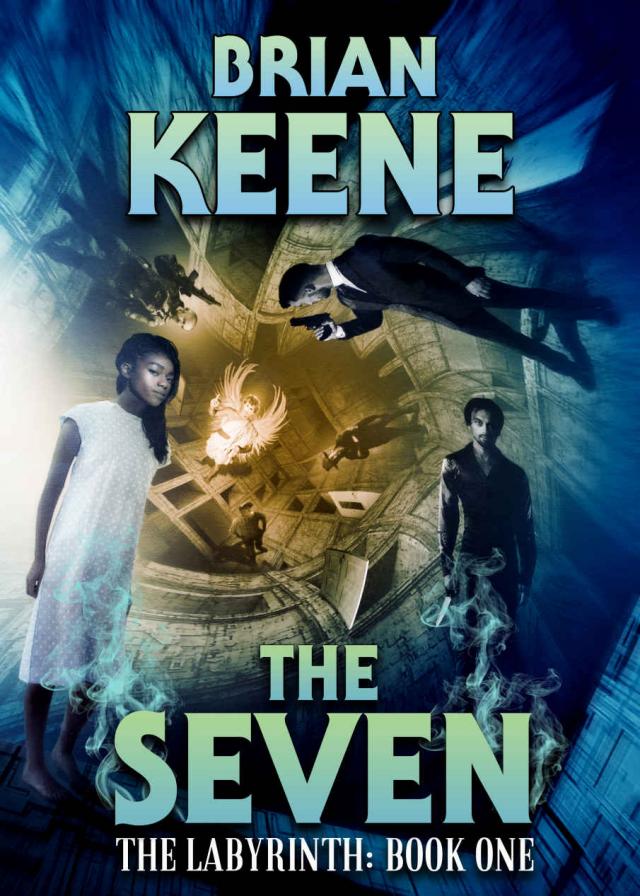
The Seven: The Labyrinth, Book 1, page 1


Praise for Brian Keene
“A virtuoso writer. A true master of the genre.”
Fangoria
“If Brian Keene’s books were music, they would occupy a working-class, hard-earned space between Bruce Springsteen, Eminem, and Johnny Cash.”
John Skipp
“The enormity of Keene’s pulp horror imagination, and his success in bringing the reader over the top with him, is both rare and wonderful.”
Publishers Weekly
“Try Darkness On the Edge of Town by Brian Keene. Excellent short horror novel.”
Stephen King
“Brian Keene writes the best sort of horror—human, honest, and terrifying.”
Christopher Golden
“Brian Keene writes like a force of nature.”
F. Paul Wilson
“(End of the Road) is one of the very best books about the life of a writer that I have ever read.”
Kit Power
Also by Brian Keene
THE LOST LEVEL SERIES
The Lost Level
Return to the Lost Level
Hole In the World
Beneath the Lost Level
* * *
THE LEVI STOLTZFUS SERIES
Dark Hollow
Ghost Walk
A Gathering of Crows
Last of the Albatwitches
Invisible Monsters
* * *
THE EARTHWORM GODS SERIES
Earthworm Gods
Earthworm Gods II: Deluge
Earthworm Gods: Selected Scenes From the End of the World
* * *
THE RISING SERIES
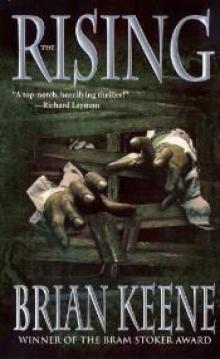
The Rising
City of the Dead
The Rising: Selected Scenes From the End of the World
The Rising: Deliverance
* * *
THE LABYRINTH SERIES
The Seven
Submerged
* * *
THE CLICKERS SERIES (with J.F. Gonzalez)
Clickers II: The Next Wave
Clickers III: Dagon Rising
Clickers vs. Zombies
* * *
THE ROGAN SERIES (with Steven Shrewsbury)
King of the Bastards
Throne of the Bastards
Curse of the Bastards
* * *
THE GOTHIC SERIES
Urban Gothic
Suburban Gothic (with Bryan Smith)
* * *
NON-SERIES
Alone
An Occurrence in Crazy Bear Valley
The Cage
Castaways
The Complex
The Damned Highway (with Nick Mamatas)
Darkness on the Edge of Town
Dead Sea
Dissonant Harmonies (with Bev Vincent)
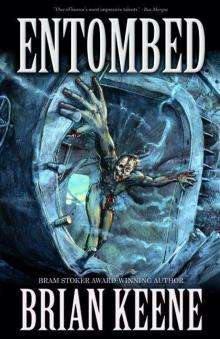
Entombed
Ghoul
The Girl on the Glider
Island of the Dead
Jack’s Magic Beans
A Little Sorrowed Talk
Kill Whitey
Nemesai (with John Urbancik)
Pressure
School’s Out
Scratch
Shades (with Geoff Cooper)
Silverwood: The Door (with Richard Chizmar, Stephen Kozeniewski, Michelle Garza, and Melissa Lason)
Sixty-Five Stirrup Iron Road (with Edward Lee, Jack Ketchum, J.F. Gonzalez, Bryan Smith, Wrath James White, Nate Southard, Ryan Harding, and Shane McKenzie)
Take The Long Way Home
Tequila’s Sunrise
Terminal
Thor: Metal Gods (with Aaron Stewart-Ahn, Jay Edidin, and Yoon Ha Lee)
Urban Gothic
White Fire
With Teeth
* * *
COLLECTIONS
Blood on the Page: The Complete Short Fiction, Vol. 1
All Dark, All the Time: The Complete Short Fiction, Vol. 2
Love Letters From A Nihilist: The Complete Short Fiction, Vol 3
Where We Live and Die
A Little Silver Book of Streetwise Stories
4X4 (with Geoff Cooper, Michael Oliveri, and Michael T. Huyck Jr.)
No Rest For The Wicked
No Rest At All
Fear of Gravity
Unhappy Endings
A Conspiracy of One
The Cruelty of Autumn
Good Things For Bad People
Stories For the Next Pandemic
* * *
NON-FICTION
End of the Road
The Triangle of Belief
Trigger Warnings
Unsafe Spaces
Other Words
Sundancing
Sympathy For the Devil: Best of Hail Saten Vol. 1
Running With the Devil: Best of Hail Saten Vol. 2
The New Fear: Best of Hail Saten Vol. 3
Leader of the Banned: Best of Hail Saten Vol. 4
* * *
GRAPHIC NOVELS
The Last Zombie: Dead New World
The Last Zombie: Inferno
The Last Zombie: Neverland
The Last Zombie: Before the After
The Last Zombie: The End
Dead of Night: Devil-Slayer
He-Man and the Masters of the Universe: Origins of Eternia
A Very DC Halloween
DC House of Horror
Gwendy’s Button Box
* * *
MISCELLANY
A Field Guide To the Thirteen (with Mark Sylva)
Apocrypha
Liber Nigrum Scientia Secreta (with J.F. Gonzalez)
Terminal: The Play (with Roy C. Booth)
* * *
OMNIBUSES
LeHorn’s Hollow
The Last Zombie
* * *
AS EDITOR
Clickers Forever: A Tribute to J.F. Gonzalez
The Drive-In: Multiplex (with Joe R. Lansdale and Christopher Golden)
The Best of Horrorfind
The Best of Horrorfind II
Operation Ice Bat
In Delirium
New Dark Visions 2
New Dawn
The Daughters of Inanna
The Seven
The Labyrinth: Book 1
Brian Keene
This one is for Mark Sylva, Tod Clark, and Stephen McDornell … what a long, strange trip it’s been.
Acknowledgments
Thanks to all the readers who supported this creation monthly on Patreon; pre-readers Mark Sylva, Tod Clark, and Stephen McDornell; Ben Baldwin; Robert Swartwood; Kelan Patrick Burke and Elderlemon Design; Paul Goblirsch, Leigh Haig and Thunderstorm Books; Cassandra Burnham; Mary SanGiovanni; and my sons.
Introduction
If you are new to my work, then you should not buy this book.
I know. It’s daring to put a disclaimer that actively discourages consumers from buying this right at the front of the book. Doing that breaks all the rules and goes against conventional wisdom. But I’m Brian Keene. I’ve been breaking all the rules and going against conventional wisdom since 1967. That was the year I was born, and about eight years later, I discovered comic books, and that discovery is why we are here now.
The first two comic books I ever read were The Defenders #33 and Captain America and The Falcon #196. Both were published by Marvel Comics, and though this was my first introduction to their characters, I was immediately struck by the fact that these two seemingly independent books were actually linked to each other. They took place in a shared universe and referenced other characters and occurrences—not just from previous issues of their own individual series, but from other comic books also published by the company. Understand, the year was 1975, and this type of thing was unheard of at the time. Sure, H.P Lovecraft’s mythos took place in a shared continuity, but Lovecraft’s stuff was impossible to find in rural Pennsylvania in 1975, and even if I’d had access to it, I probably wouldn’t have been allowed to read it at such an early age.
For me, it all started with Marvel Comics. Soon after, I discovered DC Comics, and another shared universe! And after that, I was not only buying new issues from both publishers—I was also riding my bike to the flea market and yard sales on the weekend, snapping up any back issues I could find and valiantly trying to piece together the larger, uber-narrative of the shared universe itself.
A few years later, when then-new horror authors like Stephen King and F. Paul Wilson began dropping hints throughout their various works that their books and stories were also taking place in shared universes, I remember the adults around me expressing surprise at this.
Mrs. Hostetter: “Did you read the new Stephen King book yet?”
Mrs. Ellis: “Oh, yes. And did you notice he referenced Cujo in it? That was neat!”
To them, this was something new and bold, but to me, I thought it was what writers were supposed to do.
Which brings me to the point of this Introduction. It was my explicit intention from Day One that everything I wrote—be it a short story, a novella, a novel, or a comic book—would be set in the same universe. A shared universe, just like those I’d grown up reading. I began writing for publication around 1993. I sold my first story in 1997. I sold my first novel in 2002. All of them were connected in my head.
I’d be lying to you if I said I planned everything out ahead of time. I’ve never been that kind of writer. I work better when I have an opening sentence, a strong understanding of my characters, and a vague idea of what the plot is. Then I tend to make the story up as
My other explicit intention was that I keep things simple for new readers. Yes, everything was going to be connected, but I didn’t want there to be an onus on the reader, or for the shared continuity to become a deterrent to them giving me a try. During his tenure as Editor-In-Chief at Marvel Comics in the 1980s, Jim Shooter had one steadfast rule that he imparted on all the writers and editors. They were to treat each comic they wrote and published as if it was someone’s first. That’s because it was. When I picked up The Defenders #33 and Captain America and The Falcon #196 back in 1975, both of them were serialized chapters in a much larger story. It was literally like coming into the movie halfway through, and then leaving before the film was finished. Despite this, as a reader, I had no problem at all in understanding what was happening, and who these characters were. I wanted the same thing for my own shared universe. If everything was connected, someone who read Castaways shouldn’t be penalized because they hadn’t read The Rising. A person should be able to read Ghost Walk without having read Dark Hollow.
So those were my two goals: ease of access, and everything was connected.
Around the time Earthworm Gods was published (under its 2005 paperback title of The Conqueror Worms) I realized that I should start taking notes on all those connections, because while it might be simple for the reader to figure out, I was having trouble keeping it all straight in my head. One fateful weekend, I was a guest at a convention in Ohio, and I met a guy named Mark Sylva, whom I had previously only interacted with online. Mark showed me a notebook he’d been keeping. In it, he had copious notes that tied all of my stuff together. He’d even found some connections that I—the creator—had completely missed. Flipping through his notes, I was stunned, staggered, and absolutely delighted. And it was then—THEN—that the rest of the mythos came together in my head. That was the moment when this book was born. I wasn’t ready to write the book yet, but I knew, sitting there reading over Mark’s due diligence, that eventually everything would come together in an epic crossover event akin to Marvel Comic’s Secret Wars, DC Comic’s Crisis on Infinite Earths, and Stephen King’s The Dark Tower. And yes, these days, given the success of such storytelling at the box-office, the entire world is aware of the concept of shared universes. But back in 2005? That was still primarily a geek thing, and we didn’t yet rule the Earth.
This book is the first installment of that epic crossover I envisioned all those years ago. It would not have happened without Mark Sylva. And it would not have happened without you, my readers who have steadfastly supported me and voraciously read me all the years since. This is my love letter to you. I hope you enjoy it.
But this Introduction wasn’t written for you, was it? It was written for the people who haven’t yet read my work, and who are deciding to give me a try for the first time, and are holding this book in their hands, debating whether or not to buy it. Hello. I see you there. And while I appreciate your interest, you should know that you’re coming into the movie just as the final act is about to begin. Basically, you’re seeing Avengers: Endgame without having seen any of the other Marvel movies. While I have endeavored throughout this book to provide backstory and context when possible, it would be impossible for me to completely summarize the works that lead into this one. At a bare minimum, such a summary would include The Complex, Darkness On The Edge of Town, The Cage, and all of the books in The Rising series, The Lost Level series, the Earthworm Gods series, the Clickers series (co-written with J.F. Gonzalez), the Levi Stoltzfus series, and Blood on the Page, Love Letters From A Nihilist, and All Dark, All The Time—which are the first three volumes in The Complete Short Fiction of Brian Keene series.
As I said, when opportunity presents itself in the narrative, I recap events from those books and stories within this novel. And I’ve included an Appendix at the end of this book for those readers who wish to learn more. But even with those efforts, there’s still a lot of backstory that doesn’t get summarized here. If you find that daunting, that’s okay. Seriously. No harm, no foul. But if you choose to continue, then welcome aboard. I’m glad to have you here, at the end. Because while long-time readers will certainly see this as the end, for you it is hopefully just the beginning.
Not everything dies. But everything has an ending.
And all endings are really beginnings.
* * *
Brian Keene
Somewhere along the banks of the Susquehanna River
Part 1
The Summoning
1
September 21, 2004, New York, New York
The woman, the boy, and the cat were the last living things beneath the city of the dead.
Frankie awoke in the darkness. Danny stirred next to her on his cot, smacking his lips and yawning. The cat lay between them, purring and twitching in his sleep. The cat’s name was God. Neither Frankie nor Danny had given the cat that name. That had been the work of the cat’s former owner, a homeless man nicknamed Pigpen.
Moving slowly, so as to not disturb her companions, Frankie turned on the flashlight, thankful that the bomb shelter’s stockpiled supplies had included fresh batteries. Rising from her cot, she tiptoed across the room and touched the heavy blast door. The steel felt cool and slightly greasy. The underground shelter was located deep beneath New York City’s vast network of sewer and subway tunnels. It had been built during the Cold War, not far from where, years later, an egocentric, maniacal billionaire industrialist named Darren Ramsey built a supposedly impregnable skyscraper—a skyscraper that she, Danny, and the cat had recently escaped from while pursued by the living dead. But upon their arrival, Frankie had been dismayed to find the bomb shelter in a state of disrepair.
And then things got worse.
Danny’s father, Jim, had set off an explosion in the sewer tunnels outside the refuge. In doing so, he’d sacrificed himself but saved them from the zombies. Remarkably, the reinforced steel door had withstood the blast, but the hatch had twisted in its frame, leaving a gap at the bottom corner. On the first night of their stay, undead rats had burrowed through the wreckage and tried to squeeze in through the crack, intent on devouring her, Danny, and God. They’d successfully fought off the rotting vermin, and then Frankie used a tube of silicone sealant and some boards she found in a storage locker to seal the crack again. Her fix wasn’t a marvel of engineering, but so far, it was enough to keep the smaller zombies out.
She took her hand away from the door and knelt, examining her handiwork. Satisfied that the crack was still sealed, she made her way across the room and rummaged through a cardboard box, producing a package of freeze-dried corn. She tore the wrapper open with her teeth, and heard Danny stir again.
“You hungry, Danny?”
“No.” His voice was hoarse.
She emptied the package into a container and poured a bottle of water over it. They had no way to heat the food, so she sat it aside, waiting for the water to be absorbed by the corn.
“You’ve got to eat, kiddo.”
“I don’t want to eat. I want my daddy.”
The pain in his voice was palpable. Frankie fought back tears.
In the corner, Pigpen’s blood still stained the floor. Tears welled in her eyes. He’d been shot during their trek through the city’s sewers and had died of the wound shortly after the explosion. Immediately following his death, Frankie had cracked his skull with an iron bedpost, ensuring that he wouldn’t get back up again. Destroying the brain was the only way to prevent a dead body from reanimating. Then she’d disposed of the corpse via the shelter’s rear exit. While the front entrance was blocked, buried in tons of rubble from the explosion, the back door was clear. She’d briefly opened the hatch a few times since getting rid of Pigpen’s body, just to empty the coffee can they were using for a toilet.