

Rise of the Dead Prince, page 1


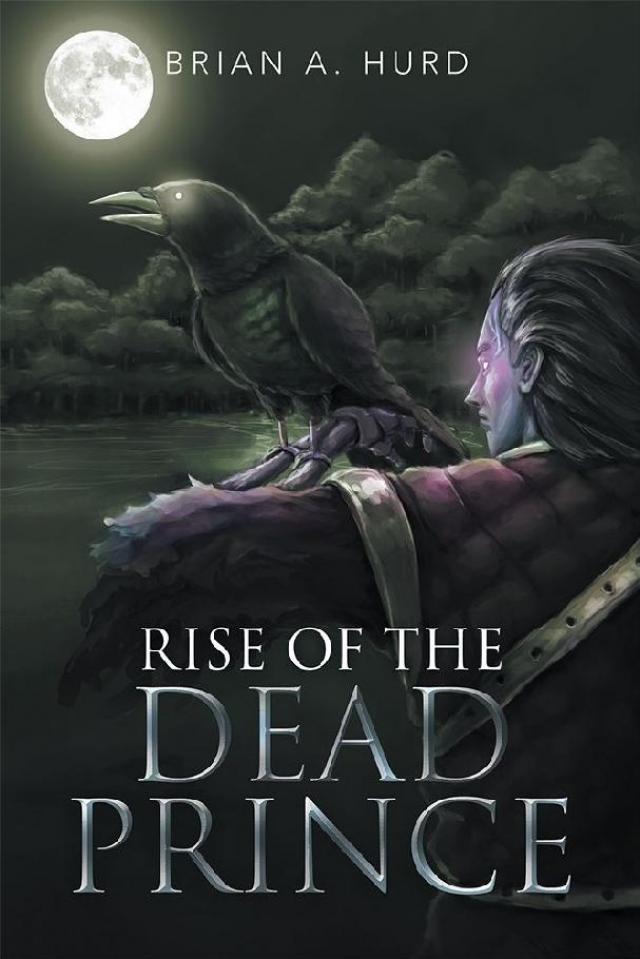
RISE OF THE
DEAD PRINCE
BRIAN A. HURD
Copyright © 2014 by Brian A. Hurd.
Library of Congress Control Number:
2014915574
ISBN:
Hardcover
978-1-4990-6815-3
Softcover
978-1-4990-6816-0
eBook
978-1-4990-6817-7
All rights reserved. No part of this book may be reproduced or transmitted in any form or by any means, electronic or mechanical, including photocopying, recording, or by any information storage and retrieval system, without permission in writing from the copyright owner.
This is a work of fiction. Names, characters, places and incidents either are the product of the author’s imagination or are used fictitiously, and any resemblance to any actual persons, living or dead, events, or locales is entirely coincidental.
Any people depicted in stock imagery provided by Thinkstock are models, and such images are being used for illustrative purposes only.
Certain stock imagery © Thinkstock.
Rev. date: 12/03/2014
Xlibris
1-888-795-4274
www.Xlibris.com
656840
Contents
Prologue
1 The Three Princes
2 The Feast and the Wizard
3 The War Path
4 The Battle of Milco River
5 The Invasion
6 The March and the Raid
7 The Battle for Targov
8 The Greatest Threat
9 The Ride before Dawn
10 The Silence in the West
11 The Curse
12 The Other Side
13 The Last Stage
14 The Awakening
15 The Truth about Death
16 The Hunter and the Farmer
17 The Trial and the Arrow
18 The Next Horror
19 Bones and Banishment
20 The Battle Maiden
21 The Pilgrim’s Progress
22 The Road Alone
23 The World in Gray
24 Magic, Black in Wing and Claw
25 A Time for Heroes
26 The Second Battle for Targov
27 The Dark Road
28 The Black Hand
29 A Jagged Line
30 The Expedition
31 Behind Black Eyes
32 The End of the Line
33 Ley Lines and Loopholes
34 The Darkest Art
35 Riddles of the Risen
36 Sins of the Father
37 The Opening of the Hand
38 In a Weary World
39 Under a Darkened Sky
40 No Place for the Living
41 A Final Lesson
42 When Dead Men Dream
43 Into the Pitch
44 A Lady’s Favor
45 A Dangerous Game
46 The Wager’s Toll
47 A Test of Conviction
48 The Secret of the Source
49 Moment of Truth
50 Those Who Drink the Deep
51 For Glory and Ruin
52 The Light Eternal
53 The House of Beol
54 A Hero’s End
55 The Sun Also Rises
56 The Rise of the Dead Prince
57 Under a Sky so Blue
Epilogue: A Word from the Royal Jester
About The Author
PROLOGUE
Deep in the darkening swamp of Arnovo, the three swiftly moving shadows came to a silent stop. The air had grown colder again. The murk of coming night crept in from all sides, closing like an ominous fist around them. Master Virag held up his gloved hand, causing his two subordinates to instantly freeze in place. All was still, as if the three had suddenly become lifeless statues. Despite the fact that they had been running at speed for over a mile, not even a hound’s ear would have heard a breath from any of them.
Wrapped entirely in black robes with headdresses to match, the shadows of Gunar were no ordinary men. Trained from boyhood in the art of stealth, they were the eyes and ears of the king of Gunar. Their reputation was so great that it was said that no normal man could look upon one of them and hold the image in his mind after he had looked away. The truth was a darker thing, counted in the blood of innumerable innocent bystanders over the centuries. Slowly, Virag lowered his arm.
“Do you see it, boy?” asked the aging master. There was a long pause. The youngest of the three peered into the darkness ahead with his hazel eyes, straining to perceive anything of interest. Like all young shadows, he had not earned a true name yet, but among the brothers, he was known as Imrus.
“I see nothing, master,” the boy admitted at last. Virag nodded imperceptibly in the gloom then turned his head slightly to the other side.
“And what of you, dark one?” he asked the other shadow, a man known among the brothers as Moric. He too was nameless after twenty years as a shadow and would likely remain so for another ten, if he lived that long. Of the three, he was the only one that was not copper complexioned. Rather, his skin was the color of tilled earth, like the people of the deserts in the far West.
“Nothing, master,” replied Moric almost at once. There was a hint of irritation in his deep voice. It was a sign of his growing unrest. Virag had led the mission far beyond its original scope, and Moric knew it. His mind was exceptionally sharp, and it had been apparent to him for some time that they had no business this far into the swamp. Master Virag scoffed and cracked a humorless smile, causing the pristine mask of his stoic face to turn into something nearly human, if only for a moment.
“Of course,” muttered Virag to his junior companions. “When I ask it like that, what else could you say?” A slightly warmer breeze blew in from the west, stirring the leaves on the damp earth and sending a ripple through the silken cloaks of the shadows. “Rather, let me ask, what do you feel ahead?” The two subordinates thought about it for a time, and then the boy spoke.
“I feel the wind, and the unnatural cold deepening,” he said cautiously. Again, the master nodded.
“And you, westerner?” he asked of Moric.
“The same,” he muttered laconically.
“Very well,” said Virag, “then let me tell you what these old eyes see and what these aching bones feel.” The master drew a pristine dagger from his sash and pointed forward with it. It was an ancient gesture that meant one thing only. Stealth had failed, and it was time for blood. On the hilt of the master’s blade was the shape of a silver rose. It glinted faintly in the low light. The keen weapon had been presented to him in the secret chamber of the king on the day of his naming and by the king himself. The name Virag meant “flower” in the ancient Gunar tongue, deemed appropriate at the time because of a mission of great import that had brought two traitors to justice based on a conversation held in the royal gardens. It was said that the master had heard every word, and without disturbing a single petal nor leaving a single footprint in the loam. He was a true elite among the shadows, perhaps the greatest of them, and now he had resorted to the blade; it was a measure that meant dishonor and often death. The master let the others take in his words and the action that had followed.
“On the horizon, beyond sight of this glowing moon, there is nothingness. These eyes of mine see it, only because of what is not there. These bones of mine, which I have trusted for years beyond your measure of life, feel something unmistakable and damning. There are eyes upon us, eyes that give no sound and leave no trace.”
The tension struck the younger shadows, and their bodies stiffened. With strained senses, they waited in the dark. When the breeze had passed, they moved toward each other, back to back, covering all angles with their sight.
Something stirred. Quick as a blink, Moric drew his dagger and hurled it with a whistle through the night air. It struck a tree and stood buried there. The others moved to face it, circling around to Moric’s sides. With two silent strides forward, they saw that which was dangling below the blade’s edge, leaking thick dark blood. It was a serpent, twitching and coiling, its muscles contracting and releasing from the point driven through its head. Another dishonor, for the blades of shadows were meant only for the hearts and throats of men. Moric scoffed in disgust, but the master did not make any sign of rebuke. Imrus stood wide-eyed with dagger in hand, relieved that it had not been his blade that now protruded from the thin bark of the cypress before them.
“It is my shame,” muttered the dark-skinned man. Virag answered at once.
“It will not be reported,” he said curtly. There was urgency in his voice, and his stare had returned to the original direction. His eyes narrowed, and he let out a deep sigh. “Ready your bird, boy, and give this message as I state it.” Imrus drew out a pigeon from his inner pocket and unraveled the strip of rare papyrus on its leg. With a fine-pointed quill in his other hand, he prepared to take down the master’s words and translate them into the coded language of the shadow order.
“The southern border is quiet. The Va
“Our path lies ahead. Fear not to let your blade fly. We deal with shadows as deadly as ourselves,” said the older man. With that, the master launched forward to a run, and the others followed.
For perhaps another half mile, they sped on until at last Virag raised his hand again. This time, they all saw what the master shadow had. Ahead there was a wall of black, unlike anything known to any man of Gunar. Nothing could be perceived beyond it.
“Magic,” muttered Moric in his deep voice. He gripped his blade tightly. Virag gave the signal, and the three men crept stealthily forward until they came to the border of the nothingness. Standing at the edge, the master put his arm forward blade first. It vanished into the pitch. Drawing it back at once, the old man stifled a cry of pain. He dropped the blade into the mud, and the others came forward to see what had happened. With wide eyes, they saw what had become of the master’s arm. It was like that of a man grown decrepit by eighty years or more, bony and venous, the spindly fingers trembling with infirmity.
Suddenly, coldness seeped into all of them. The ground began to freeze over, the pungent puddles and mud hardening with frost and newly formed ice. A quiet thrumming filled the air above them, coupled with a slight crackling. The shadows looked in all directions frantically. The master stooped and took up his dagger with his left hand, the ruined one dangling at his side limply.
“Name yourself, demon,” intoned Virag around his agony. What followed was a rasping laughter that came from all around, passing through the shadow men and turning their insides into quivering water.
“Dogs of Gunar,” came a voice like death itself. “Prepare yourselves and despair. Your deaths will not be gentle.” With that, a strand of pure pitch lashed out from the darkness and snared the elder shadow around the throat. He fell to the frosted earth, grasping with his good arm and letting out a stifled scream. His subordinates watched on in horror, for no torture known to them could cause a master shadow to succumb to pain.
“Can you taste the dark?” rasped the icy voice. Suddenly, more strands, a dozen or more, enveloped the old master completely like tendrils. Virag managed a whisper, even as his clothing and flesh were being stripped away.
“Moric … Your bird,” coughed the master, forcing the words even as the blood streamed from his mouth. Fighting the tremors in his hands, the dark man fumbled into his inner pocket. The ends of the umbral bindings sharpened to points and then plunged into Virag, groping and curling around in his body like probing needles. Again the old man cried out hoarsely. He was tasting the dark.
Taken by the heat of the moment, Imrus flew into action, charging to the master and slashing wildly at the strands. The blade passed into the darkness as if it were water, making only the slightest ripple as it did so. The icy laughter filled the air again, and the tendrils tightened. Meanwhile, Moric struggled to keep his hands steady as he hastily scrawled on the strip of papyrus. With every shudder and writhing twitch of the master, the two remaining shadows felt the cold taking them ever deeper into fear.
“We go to the fire,” wrote Moric, “Send no more. A master of death lurks in Arnovo.” As the dark-skinned man finished his message and hastily attached it, the darkness enveloped him as well, causing him to grip the bird tightly and pouring pure pain through his body. He fell to the ground screaming, leaving Imrus to watch on in horror.
“Do it!” Moric managed to shriek to the boy, and at once, Imrus understood. Reaching into another pocket, he withdrew the final resort. It was a large cylinder sealed tightly with a cap, and he ripped it open. The young shadow looked at it only for the briefest moment and then began to cast the liquid inside around them, dousing the master and Moric as he did so. With the final contents, he poured the liquid on his head and then jumped forward toward the master, dagger in hand. Virag had gone limp in the embrace of the strands, but the occasional twitches told that he was still alive.
All the while, the laughter of the ethereal voice continued, completely indifferent to the boy’s actions. Imrus took one more look at the master and then plunged his dagger into the old man’s chest, ending his torture. He moved to do the same for Moric, who was being dragged from side to side like a doll as he writhed on the frigid ground. Imrus went to cut the man’s throat, but a sudden strand from the pitch snared his hand at the wrist and snapped it like a twig. The boy did not cry out, but then the strand pulled tighter and snapped his arm as well, causing him to gasp. With a desperate lunge toward Moric, Imrus saw the bird in his hand. Hoping against hope that it had not been crushed, the boy pried the bird from Moric’s hand and threw it into the air. To his surprise, it began to flutter and take flight.
There was only one thing left to do. Fighting the agony in his fettered arm, the boy drew a flintstone from his robe, and seeing the dagger where it lay, he struck it as hard as he could manage. It only took one spark, and then the ground exploded into an instant blaze. The bodies of the shadows were suddenly engulfed in blue flame, eating away their clothing in mere seconds. Honor demanded that their corpses should never be identifiable.
“Such resolve …,” said the cold voice, “should not be without reward.”
A thousand needles of darkness shot out at once through the flames, and the boy was pierced by them all. The flames were as nothing compared with the anguish he felt in that moment, and it was a moment that lingered on for a time beyond the measure of mere cruelty. As Moric’s body went still, thoroughly mangled, the boy saw one last image with his dying eyes.
It was of a pigeon, falling to the ground, dead as a stone.
1
The Three Princes
Meier awoke with a start. He was damp with an uncomfortable perspiration. Throwing his sheets aside in disgust, he moved to pull off his bed shirt. He paused when the shirt had reached his shoulders, and then with a sigh, he reversed the act and pulled it back down over his chest. He hated being naked more than he hated being hot.
It was early. The glow of dawn shone through his north-facing window like a swelling tide. Meier estimated that it was three hours before his normal waking time. He turned to face his pillow then yawned widely. He weighed the options. He could return to sleep or try to, or he could start to face the day. Either prospect was unpleasant. The warmth of the indentation in his mattress repulsed him, and so he rolled once over, but there was no other perch to be found on his bed. He wanted nothing more than to be both cool and unconscious simultaneously.
With a grunt of antipathy, Meier swung his legs violently over the side of the bed, dragging the still lingering sheets onto the floor as he did so. His bare feet touched the cool stone of the floor, and immediately he felt better. The perspiration died down, and he suddenly found himself stretching. With another sigh and yawn, he reluctantly resolved to get up and get dressed. As the thought sunk in, his mind turned to the reason for all of this discomfort. He had been dreaming. Every detail had been swept away; but when he pressed his mind, he was able to come up with an image or two, colored with a general sense of foreboding. It was not overly unusual, yet the fact remained that whatever it was had woke him up. With a snort of frustration, Meier dismissed the whole thing and began the arduous fight to put his pants on.
After a series of yawns that seemed to plague him every few seconds, Meier was finally dressed. He crossed the room and stood before the mirror. With a pale hand, he pulled the dark hair from his eyes and swept it back across his overlarge forehead. He moved close to the image and examined the bags under his violet eyes. He had turned eighteen years the month before, and already he was feeling the weight of what they called “adulthood.”
“I look terrible,” he muttered candidly to the reflection. A moment later, his chagrin faded, and he tiredly sniggered at the comment. Another yawn fought its way up, but this one Meier forced down with a deep breath. They had become nearly as bad as the hiccups. One more wide stretch had Meier ready to depart. In a gesture of mock gusto, he clapped loudly. The report bounced off the walls of his stone chamber loudly enough to make him wince.


