Led Zeppelin, page 13


“His ideas were fresh, and they excited me,” Robert said.
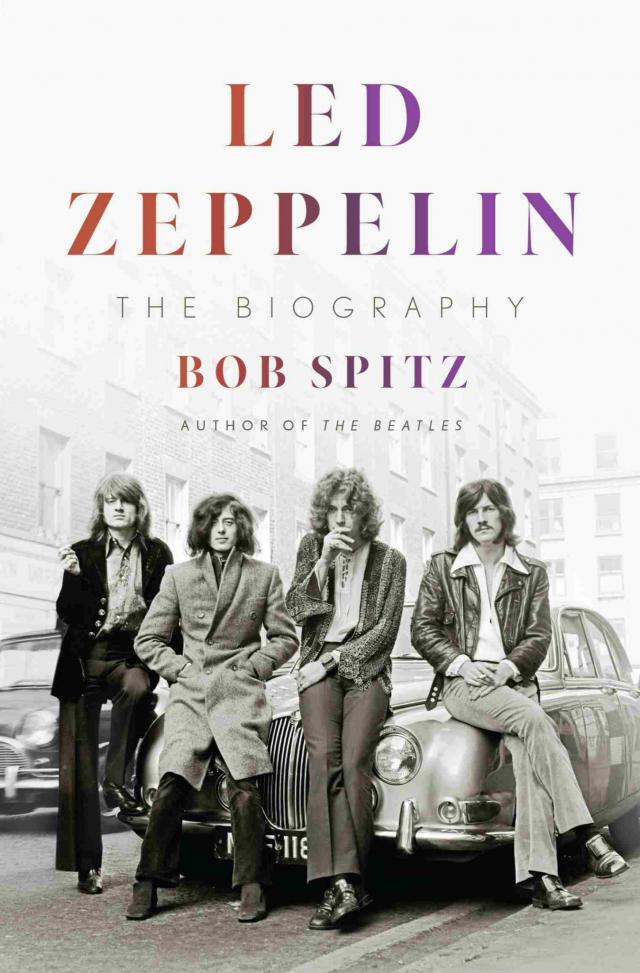
Conversation eventually turned to the group Jimmy intended to form. There was already a bass player in place. Chris Dreja had announced his decision not to join, so Jimmy was leaning toward John Paul Jones, his friend from session work with a prodigious list of credits and a reputation for being a musician’s musician. They had bumped into each other while working on an album, No Introduction Necessary, with newcomer Keith De Groot. “During a break, [John Paul] asked me if I could use a bass player,” Jimmy recalled. It was a surprise, but not without precedent. Jones, like Page, suffered from the session man’s malaise and ached to play in a band where he could express himself freely. “I was making a fortune [playing sessions],” John Paul recalled, “but I wasn’t enjoying it anymore.” Nothing concrete was decided at the time, but sometime later his wife, Mo, noticed an article in Disc reporting on Jimmy’s intention to form a band out of the old Yardbirds. “She prompted me to phone him up,” John Paul said, and on July 19, 1968, the day before the Band of Joy performance in Walsall, they made it official.
“Jimmy told me about John Paul Jones,” Robert noted, “and I told him about Bonzo. I said I’d never seen another drummer anywhere near as dynamic.”
Jimmy had already sounded out other drummers. He’d been interested in B. J. Wilson, whom he had met while playing on the Joe Cocker session, but he was contractually bound to Procol Harum. Clem Cattini, Jimmy’s frequent sessionmate, couldn’t be torn away from the windfall of steady studio work. “We definitely approached Aynsley Dunbar,” Peter Grant said. Dunbar had the right kind of pedigree, having played with John Mayall’s Bluesbreakers and the Jeff Beck Group, but he considered the Yardbirds “old news . . . a step backwards, not forwards,” and was headed to a gig with Frank Zappa in the States before forming his own band. This drummer friend of Robert’s—Bonzo, Plant had called him—Jimmy remembered the incredible sound he’d delivered on the Band of Joy demo. It was enormously attractive to him.
“When I saw what a thrasher Bonzo was,” Jimmy said, “I knew he’d be incredible. He was into exactly the same sort of stuff as I was.”
Jimmy’s excitement was contagious. Robert said, “I hitched back from Oxford and chased after John, got him on the side, and said, ‘Mate, you’ve got to join the Yardbirds.’ ”
The Yardbirds? Really? John Bonham wasn’t impressed. He had a steady gig with Tim Rose, an American singer-songwriter who’d been part of the American Big Three with Cass Elliot (as opposed to the band from Liverpool with the same name) and now performed almost exclusively in England. Besides, Bonham was being courted by both Joe Cocker and Chris Farlowe. What did he want with a group of has-beens like the Yardbirds?
Jimmy Page wasn’t deterred. On July 31, 1968, he popped into a Tim Rose show at the Country Club, a cabaret in West Hempstead. He’d been around great drummers throughout his professional life, but he wasn’t prepared for the sound John Bonham put out. It was enormous, explosive, but a controlled explosion. This guy was unbelievable, the best drummer Jimmy had ever encountered. At one point, John stepped out for a five-minute drum solo, and Jimmy almost came out of his socks. “I’d never seen anyone quite like Bonzo,” he recalled. “That was it, it was immediate. I knew that he was going to be perfect.”
[2]
Perfect is a fanciful conceit.
Bands, especially rock ’n roll bands, are a stew of personalities and egos that have to blend in order to jell. A perfect ensemble is a tricky recipe to pull off. One did not have to look further than the Yardbirds to appreciate the pitfalls. A single malcontent or rebel can disrupt a band’s chemistry—say, a blues purist or a super-talented head case. Most bands tried to stem the risk by forming with mates or, at least, musicians from the general vicinity. It increased the odds that the stew would coalesce.
Jimmy Page threw caution to the wind by reaching into the deepest, darkest Midlands to complete his band. “He might as easily have gone to Albania,” says a native of Birmingham. “The Midlands is a world unto itself.”
In England, according to an article in The Guardian, ex-Brummies complain that “coming from the Midlands is tantamount to coming from nowhere in particular.” It’s purgatory—that ill-defined area between the so-called North-South divide, regarded somewhat like the vast, fly-over American Midwest. Folks from the Midlands, where Robert Plant and John Bonham hailed from, saw themselves as individuals, neither high-strung, pompous elitists like those in the South nor northern inbred, dry-humored yobs. The Midlands even had a dialect all its own, with a riot of cadences that swooped and varied, producing a lilting, singsong effect. And its own slang, which could drive a listener mad. You went to the dentist if you had a tuff ache. Thirsty? Have a kipper tie. And if you were hungry, yid be off to get yer snap. Of course, not getting yer snap could make you a bit yampy, and you might even get a cob on.
Birmingham, or Brum, the key city of the Midlands, had a discernible Brummie accent. But if you crossed the little bridge at Sedgley Bank, a few miles out of town, you were suddenly in the West Midlands, known as the Black Country, Robert Plant’s neck of the woods, where the accent became thick and muddy, like molasses. Think Cajun, and you have a pretty good idea of its reedy twang. Brummies like John Bonham referred to Black Country folk as yam-yams for the way they consistently say “you am.” Ask them how they were—or “Ow b’ist?”—and they’d respond, “Bay too bah.” “You’d need an interpreter or subtitles,” says Kevyn Gammond. Across England there was prejudice against both Midlands accents. As snooty Mrs. Elton observed in Jane Austen’s Emma, “I always say there is something direful in that sound.”
Jimmy Page and John Paul Jones might have had trouble communicating with their new bandmates, were it not for the common language of music. London was considered to be the music capital of the UK, but the Midlands, where Robert and John cut their teeth, was a hotbed of rock ’n roll. The Spencer Davis Group, the Moody Blues, and the Move had already made their marks, and the club scene was as vibrant as anyplace on earth. The Brum circuit seemed endless. There was music every night at the Bournbrook Hotel, the Ridgeway Georgian, the Adelphi West Bromwich, the Ritz Kings Heath, the Silver Beat Club, the Crazy E, the Elbow Room, the Carlton Ballroom, the Cedar Club, the Surf Stop . . . endless. Pubs like the Swan and the Bull’s Head in Yardley had bands three or four nights a week, as did the Black Horse at Northfield, the Selly Park Tavern, and the Morgue under the King’s Head. A tradition of all-nighters lit up the Birmingham Town Hall, with the first act going on at 7:30 p.m. and the last unplugging as the sun rose the next morning. “You could actually survive, even make a living, playing music in the Midlands,” says Dave Pegg, a Brummie who went on to play bass for Fairport Convention and Jethro Tull. “Everybody had the opportunity to play.”
“There were so many bands breaking out of the circuit,” recalled Glenn Hughes, who played with Trapeze and later Deep Purple. “That whole Midlands scene was five sets a night, playing whatever was in the charts.”
There was less, much less, opportunity in Kidderminster, not far from the Welsh border, where Robert Plant grew up in the early 1950s. Historian Nikolaus Pevsner, in his weighty The Buildings of England: Worcestershire, dismissed Kidderminster as a town “uncommonly devoid of visual pleasure and architectural interest.” In the postwar years, housing was still mostly primitive, many with a loo situated somewhere in the garden, along with a tin tub where children were bathed. Underneath the rustic surface, however, there was a core of pride that ran deep. Near-full employment boosted morale in Kidderminster, where a profusion of factories spewed an industrial fog so thick you could flick it with the back of your hand. Thriving iron forges churned out the essential train parts that kept the railroads running. “Furnaces everywhere, all open, white molten metal,” said Mac Poole, a Black Country drummer, “men with no teeth, wearing leather aprons.” And carpet mills droned round the clock, with weavers and dyers shouldering twelve-hour shifts to produce the Wilton and Axminster rugs that were famous worldwide.
Industry boomed, but music came to Kidderminster in time-released doses. In 1956, when Robert was eight years old, skiffle took the town by storm, and an entire generation of postwar babies caught the crest of a wave they would ultimately ride into adolescence. At the Kidderminster Central or the Empire or the Futress or the Grand, all local cinemas that showed cartoons on Saturday mornings, bands like the Seven Valley Skiffle Group and the Downville Saints would play punked-out versions of folk songs in the intermission, and theaters full of eight- and ten-year-olds would dance on their seats.
Robert soon graduated from Lonnie Donegan to Gene Vincent and Eddie Cochran, who rocked the Worcester Gaumont, where he also saw Love Me Tender and Blackboard Jungle. Trad bands led by Chris Barber and Monty Sunshine appeared at Kidderminster’s Town Hall but were upstaged by local lights like Roger LaVern, who played the tinny Farfisa organ riff on the smash hit “Telstar” and a singer named Peter Wynn, who, along with Billy Fury and Marty Wilde, was part of Larry Parnes’s famous rock ’n roll heartthrob stable.
Listening to pop music in the Plant residence was akin to a declaration of war. Robert monopolized a red-and-cream Dansette Conquest record player that accommodated discs of every rpm known to man—78, 45, 33 ⅓, even 16 ⅔. He’d gotten it as a present for Christmas in 1960, along with a copy of Johnny Burnette’s “Dreamin’,” which, in retrospect, his parents probably realized was the beginning of the end. Once he got his hands on that machine, school and everything else took a back seat to rock ’n roll. Plant happened to be bright, a very good student; he was one of the few boys enrolled at the junior school who advanced to Stourbridge Grammar, having passed the eleven-plus exam. However, once he heard a wop bop-a-loo bop and I get-a so lonely baby, I get-a so lonely, all bets were off. He got that cosmic itch.
“I used to do Elvis impersonations behind the curtains in my living room,” he recalled. He too tuned in to Radio Luxembourg whenever the heavens cooperated. When he heard “I Like It Like That” coming over the airwaves, he just had to imitate Chris Kenner’s cajoling delivery—over and over and over. It “horrified” his parents. “They cut the plug off the record player and said it was the devil’s music,” he recalled. They had expectations for him, a good, steady job with a collar and tie. Rock ’n roll, they were convinced, sent their son spiraling down the wrong path, the path to ruin. It got so bad, they considered him “beyond parental control.” Music, Robert’s music, was a constant source of hostilities.
Robert started hanging out in the coffee bars that had sprung up across the West Midlands—the Bongo Hut, the Coventry Jive Caf, even the Worcester Cross Teen Youth Club, all of which had . . . jukeboxes. What a way to hear Link Wray’s “Rumble” or Duane Eddy’s “Forty Miles of Bad Road.” And those purely English, primitive Joe Meek productions—“Just Like Eddie” by Heinz, Danny Rivers’s “Can’t You Hear My Heart,” “Be Mine” by Lance Fortune. Those records lit a fire. “I got in with this crew, which upset my parents a bit,” Robert said, “and the cleft between Mum and Dad and Robert got a bit wider and wider.”
It was about this time, mid-1963, that rock ’n roll, real rock ’n roll, came to the Black Country. The fifteen-year-old Plant sat through an all-star bill at the Wolverhampton Gaumont that showcased the Rattles, Mickie Most, Bo Diddley, Little Richard, the Everly Brothers, and the Rolling Stones, one after the other in red-hot twenty-minute spots that sent him into a revelatory swoon. “I was sweating with excitement,” he recalled years later. R&B acts especially excited him. Robert was already deep into the Miracles and the satin-voiced Smokey Robinson. Now he dug deeper, darker. He steeped himself in the visceral interpretations of Solomon Burke, Patti LaBelle, the Lafayettes, Arthur Alexander, the Jive Five, and their brethren. And deeper. As they had Brian Jones, Mick and Keith, Eric Clapton, and Jimmy Page, the R&B stylists led Plant to explore the roots of blues.
More package tours came through the Black Country, this time caravans full of the blues greats, the heirs to Robert Johnson and Charley Patton—Big Joe Williams, Muddy Waters, Jimmy Witherspoon, Sonny Boy Williamson, Buddy Guy, and Lightnin’ Hopkins, who’d hammered bottlecaps into the soles of his shoes and did a boogie shuffle to accompany his snake-bit Texas guitar playing. Robert flew out of that show and into Long’s record shop around the corner from Kidderminster Town Hall to buy Preachin’ the Blues, an anthology that featured Memphis Slim, Jimmy Reed, and John Lee Hooker. Not too long afterward, he ordered The Blues Volume 1; Folk Festival of the Blues, with Muddy Waters, Howlin’ Wolf, and Buddy Guy; and Ray Charles albums, records that took four weeks to arrive.
“I always got a shiver every time I saw Sonny Boy Williamson,” Robert said. “Sonny Boy really did it for me, that control that he had, and the tales I’ve heard about him since. . . . He’d have a really good time, and he was really coarse. He was everything I wanted to be at the age of seventy.”
Bands like the Shadows and Johnny Kidd & the Pirates, perhaps even the Yardbirds—bands that had only yesterday meant so much—became unlistenable, “insipid dross,” in Robert’s opinion.
“All of a sudden,” said Dave Pegg, who experienced the same revelation, “you didn’t play any of that shit anymore.”
“With the blues, you could actually express yourself, rather than just copy,” Robert explained. “Only when I began singing blues was I able to use the medium to express what was inside me, my hopes and fears.”
Expressing himself was never a problem. He had a voice that sounded like no one else’s, with a range that projected from here to there. Shortly after adolescence arrived in earnest, Robert emerged from behind the living room drapes to sing in public, initially playing washboard with the Delta Blues Band, fronted by a mentor, Perry Foster.
“When I was fifteen,” Robert said, “I fell immediately under his spell.”
Foster came off as “a real white bluesman” who played like Big Joe Williams on an eight-string guitar, one of those battleships favored by jazz cats to facilitate an open, major-thirds tuning that gave the music a funkier sound. With Robert Plant, throughout 1963 and 1964, Foster established a residency at the Seven Stars Blues Club in Stourbridge, fronting a band of rotating musicians, much as Alexis Korner and Cyril Davies had done in London, that attracted a bohemian contingent from the local art college. “We used to wail away on ‘Got My Mojo Working,’ ” Robert recalled. Or Buddy Guy tunes, which brought in the Jamaican crowd from West Brum.
Even so, it wasn’t a cozy, brotherly scene. Pubs like the Ivy Bush in Smethwick, on the outskirts of the Black Country, issued an edict to the musicians: “We don’t serve blackies in here.” And there were posters tacked to poles around the streets: if you want a nigger for a neighbour—vote labour.
None of this deterred Robert Plant. He continued to mine the influences of rhythm and blues for a tone and fluency that suited his voice. Onstage he oozed confidence and presence. “Robert was on another level, very dynamic,” said Bill Bonham, a onetime bandmate. “I’d never seen anything like him.” He was unnaturally flexible, able to dance and gyrate; an observer from those days called him “the Rubber Man.” But he lacked the right backing to show it off. His first group was a brassy affair called the Tennessee Teens, which echoed The Who and metamorphosed into Listen—which was the Tennessee Teens, only splashier and louder, with a set that included “Hold On, I’m Coming,” but powered through a fuzz box. Listen was good enough to attract a professional manager, Mike Dolan, who smartened up the band in “secondhand gangster suits” and scored a few gigs at prestigious clubs in London, where they even cut a single for CBS Records, a cover of the Young Rascals’ “You Better Run,” with Clem Cattini on drums and Kiki Dee singing backup, that failed to catch.
Those bands gave way to the Crawling King Snakes, which played rock ’n roll with an R&B edge. At the time, the influence of British bands, as opposed to long-established American attractions, was getting heavier in Kidderminster. On Thursday nights throughout the early 1960s, the spartan Town Hall was the unlikely epicenter of the ascendant big beat. Kids would queue all the way down Vicar Street, right through town, for a proper rave-up. Eight hundred overheated teenagers jammed into an auditorium meant to hold half that number. All the great acts came through—the Stones, The Who, the Animals, the Yardbirds. Their impact spurred the emergence of gifted local bands with the goods to stand on their own. In addition to the King Snakes, with Robert at the helm, a local trio from Stourbridge called Chicken Shack caught fire, as did the Shakedown Sound, whose lead singer, Jess Roden, was a stylist in the Stevie Winwood mold. Another Kidderminster band, Clifford T. Ward with the Secrets, even managed to make an album, produced by none other than Jimmy Page.
“We all started to get regular gigs,” says Kevyn Gammond, the Shakedown’s lead guitar player. “We played in pubs like the Ship & Rainbow in Wolverhampton, making practically nothing, pocket change. A gig in Scotland might bring thirty quid, but it was a four- or five-hour drive and you’d wind up sleeping in the van.”