

The Velvet Badge, page 1


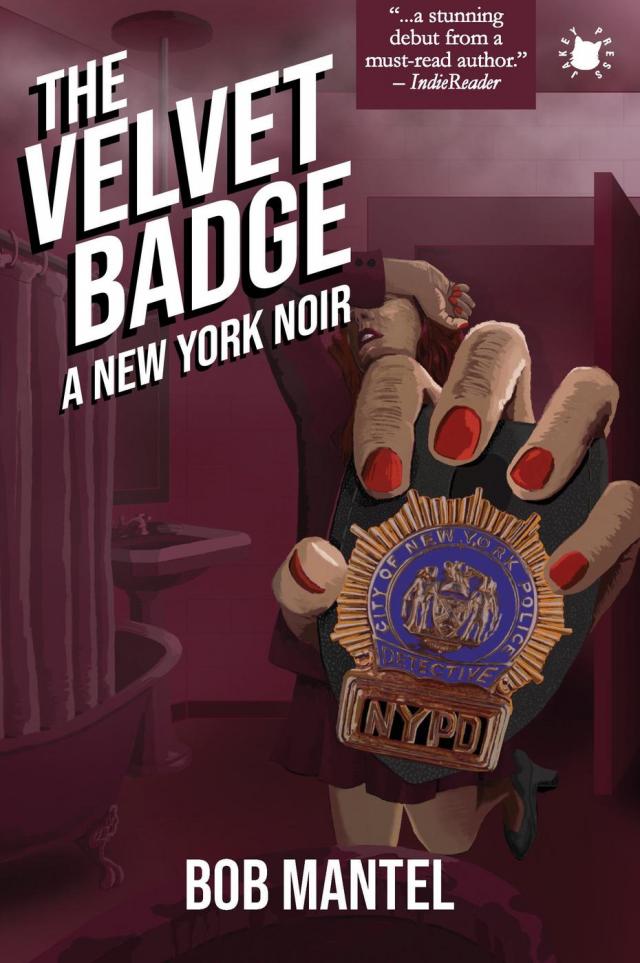
The Velvet Badge: A New York Noir
Bob Mantel
Published by Jakey Press, New York, 2022.
This is a work of fiction. Similarities to real people, places, or events are entirely coincidental.
THE VELVET BADGE: A NEW YORK NOIR
First edition. November 29, 2022.
Copyright © 2022 Bob Mantel.
ISBN: 979-8215438466
Written by Bob Mantel.
Table of Contents
Title Page
Copyright Page
Dedication
Chapter 1 Donny Damon and The New Frontier
Chapter 2 Hojotojo
Chapter 3 Physiology and Biophysics of the Heart
Chapter 4 Reading the Riot Act
Chapter 5 Daisy and the Chipmunks
Chapter 6 Holding the Bag
Chapter 7 To Those Who Wait
Your Hit Parade
About the Author
For EMD, TFS, BEG and Jupes. With special thanks to JKK, BIF and WFM. And to Joyce's Ulysses, the great crippler of young adults.
Chapter 1 Donny Damon and The New Frontier
Master, we would see a sign.
—Matthew 12:38
Faced with life’s deep dish pie of pain, Donny Damon always ordered his slices á la mode. It was a habit he’d acquired from his old man Harry, who’d been born in a land where the streets were paved with gold, days before the Blizzard of ’88 paralyzed the East Coast, and who did little to hang his hat on until 1923, when Harding’s sudden death out west landed brine-faced Coolidge in the Oval Office.
Silent Cal’s pronouncement that “the chief business of the American people is business” was a turning point for Harry Damon, inspiring the colorless street pug to scrape together whatever cash he could, marry the first woman he could fast-talk in front of an altar and make a go of “Damon Truss & Convalescent Supply” on New York’s Lower East Side. The driving force behind this enterprise’s success was the 35-year-old’s decision to have his child bride strut her fine, precocious stuff behind the shop’s plate-glass window, wearing little beyond a leg cast, neck brace and strategically placed Ace bandages. Since such a display was an insult to community standards, it drew the smutty-minded, bogus lame and halt to his establishment from a twelve-block radius and kept its cash register ringing for as long as Olivia Damon continued her risqué showcase.
Harry’s missus gave the act the hook during FDR’s first administration and would eventually divorce her husband claiming alienation of affection. But by then the small business owner hardly even remembered being married and had gone all in on racketeering practices that expanded Damon Truss ten-fold during the Great Depression. By the time the Japanese bombed Pearl Harbor, he was piloting a regional wheelchair powerhouse while also heading a body bag monopoly in New York, Connecticut, and New Jersey. Damon’s stranglehold on these markets, however, couldn’t and didn’t last. America’s entry into World War II gave Feds the excuse they’d been waiting for to nationalize his enterprises rather than let Harry spend the next several years dodging profiteering charges.
Being put out to early pasture may have caught the wheelchair king off guard, but it couldn’t keep him and his enormous wad of buyout cash down for long. Within a few months, Mr. Damon was steering his Studebaker President north along the mighty Hudson to a sleepy river town founded by the Dutch and re-christened by the Brits to honor the neatly trimmed juniper bushes surrounding its village green. Or so the story went.
The actual name change to “Carvéd Hedge” dated only from the 1920s, when those eponymous hedges were first planted. Back then, local politicians and the chamber of commerce decided that a little fudged history would attract new business, along with a better class of people, and make the dusty old place a village to be proud of instead of the shoulder-shrug whistlestop it had been sliding into for decades. This effort hadn’t made much of a difference. But every once in a while, a resident would surprise the neighbors, show some talent or initiative and put the community’s general mediocrity to shame.
Sharpie Bev Boslegovich, for example, parleyed her ability to recognize a born patsy when she saw one into a thriving local real-estate business. So when Harry Damon turned his big sedan onto Main Street in 1942, he couldn’t even put the damn thing in park before “Hiya, handsome! Lookin’ to settle down?” came winging his way from under a mop of Shirley Temple curls.
Since sparkplug Bev believed in telling people what they wanted to hear, she gave a twist to her town’s Jazz Age creation myth that a mark like Damon would be powerless to resist. Namely (“Turn left at this corner!”) that an eyesore property, sitting idle on her books for months, had once been the home of a profligate Tory (“You know, before the Revolution.”) who spent the bulk of his fortune developing a topiary wonderland of trees, bushes and shrubs that a small army of gardeners had stripped, clipped, bent, and chiseled into a stunning array of geometric and animal-shaped confections.
Not a word of this was true, of course, but Bev understood Damon had journeyed to her little piece of heaven on earth because he was in the market for prestige as much as a home. To hear her tell it, the property she was hawking was the true inspiration behind the name of the village that tripped so lightly off her tongue. “Why else would they call it Carvéd Hedge?” Bev demanded as much as wondered.
Moved by the realtor’s aggressive eloquence, Damon’s gullibility made him believe wholeheartedly that the unruly mess he was looking at was precisely the spot where a vital breathing European artform had jumped species and taken root in Colonial America. This despite the fact that the “estate,” as Bev called it, was nothing more than a derelict saltbox with a sagging catslide roof, centered on a half-acre lot and thick with oversized, misfit verdure that, if you wanted to believe in it hard enough, at one time might conceivably have served some decorative function.
Boslegovich sealed the deal when she told him, “There are some things you just can’t put a price on.” Damon barely flinched when she quoted a ridiculously high ask and bought the place for cash. “None of that buying-on-time crap for me,” he crowed. It was the maraschino cherry topping a forced retirement that had already started to melt.
The former black marketeer celebrated the purchase by telling his second wife they’d be pulling up stakes and moving by the end of the month. Almost 30 and with no other prospects, sweet-faced Noreen had gladly sold her soul for a meal ticket. Harry’s unexpected good news promised more of the same away from all her friends. “Sounds great, hon,” she told him over a scared-rabbit smile that escaped her husband’s notice. Both partners hoped things would work out for the best. But it soon became apparent that most of the couple’s landmark-status home would have to be demolished, while the few rooms they lived in remained damp and buggy, even with the lights kept on all night.
Harry found comfort in Bev’s assurance that the citizens of Carvéd Hedge would embrace him once the estate’s restoration work was finally complete. But his enthusiasm wilted as progress slowed amid soaring costs that also triggered migraines and stomach problems.
To help get things moving again, Damon decided to restore the topiary designs himself despite his lack of any relevant experience or being in the least bit handy. One hour into this task, he had plummeted from a jerry-rigged work platform and nearly gutted himself on a pair of oversized hedge clippers. These setbacks convinced Harry to invite the local jack-of-all-trades to come out and lend a hand.
It was a less-than-inspired choice even though Eddie Simonson worked cheap, as advertised, and claimed a suspiciously broad range of expertise. Noreen looked on, polishing her nails in the Studebaker that, unlike her prestige country address, didn’t suffer from a silverfish problem, when Eddie’s rusted-out Model A drove up, towing a grimy wagon that had “No Task Too Tough” emblazoned on its sides in big blue and yellow letters.
The handyman’s hardscrabble life and pineapple complexion from youthful acne had made him mad at the world and “set in his ways.” So perhaps Harry shouldn’t have been all that surprised when the complicated trimming instructions for his bushes, trees and shrubs failed to register with Eddie, whose only comment was, "You're shittin' me, right?"
The remark sent Damon’s blood-pressure soaring, off the charts. You could almost hear the WHAP! when frustration blew his fuses, knocked him off his feet and made him curl in a spastic heap, gurgling like an emptying drain as his eyes rolled backward in their sockets.
Noreen and the foreman tossed him in the car then roared to County General where a team of crack MDs immediately knew he had suffered a stroke, though their normal focus was tractor accidents and suicides. How severe, they couldn’t say. But not to worry, his case was “in God’s hands.”
The departure of Harry and his handlers left Eddie in charge of the estate. He had no intention of following Harry’s instructions. Instead, he wondered why the transplanted city dweller would get all fancy on him when a little bare-bones cutting was all that was needed.
That being so, the handyman took a machete from the back of his truck. Rather than restore Harry’s topiary to its fictional glory, he hacked and slashed until all that remained of Harry’s plants stood barely a foot high, with the look and feel of rusty steel wool. He stacked the cuttings he had taken into one big pile then set them alight with kerosene, completing an outrage that would take years to heal, if the mutilated greenery survived at all.
Small wonder then that most Carvéd Hedge residents only let Simonson near their properties to mow
THERE WAS A TIME IN America when anything fancier than a trip to the john meant dressing for the occasion. So when a grocer took a break from visiting his wife for a smoke outside County General, it was only natural that he did so in freshly shined shoes, double-breasted suit and Harry Truman-style floral necktie. The tradesman drew deeply on his Lucky, looking out onto a warm, clear, late September afternoon, "How’s it goin’?" he asked the familiar face that joined him but got no answer. “Doc?” he pressed.
Baylor Tunney, M.D. stripped and tossed his own dead butt then trudged back upstairs. The stroke had turned his patient into an old man with virtually no hope of recovery. There was little they could do for Harry Damon except keep him warm and change him regularly.
Thanksgiving Eve found the doctor and grocer smoking out front again while a nurse and hospital chaplain steered Damon and wife onto oil-stained pavement, amid fading autumn sunlight and the smell of burning leaves. “Whoa, there, big fellah!" the padre cautioned, rasping Harry’s brain like a bottle brush as he bumped his wheelchair off the low curb.
“I got it,” Mrs. Damon said, helping her spouse with the passenger door. His face still looked like it had been split by an ax. She drove home along quiet country roads, passing vegetable, flower and apple cider stands, praying her husband’s sculpted-shrub obsession had atrophied during his hospital stay. Harry clucked unpleasantly throughout their journey. Once they arrived, he scratched at the window like a dog that’s gotta go. Knowing this was not a good sign, she teased “C’mon dummy!” then stood him on his feet and helped him grip his cane. A lolling tongue slurred Damon’s speech as he stutter-stepped out toward the back amid lengthening shadows.
His damaged brain first thought his wife had bought him to the wrong address. All he could see were sprays of brown scrub, around a piece of incinerated lawn that stank. As darkness fell, Damon grasped that the scene spread out before him showed the sad remains of his topiary dreams. The realization hung on him like a lead suit until he noticed the soft glow of lamps coming from his stumpy home. It was those lamps, tended by his wife, that helped something like faith start to grow inside him.
The current situation certainly seemed hopeless, but Harry’s bushes, trees and shrubs would grow back someday. The trick, he knew, despite his impairment, was in the waiting. And if Damon couldn’t manage to hang around himself, the part of his brain that continued to function told him in no uncertain terms, “Bet the sure thing. Pass the topiary torch to a new generation!”
It was tough getting started, but soon he was inching his numbed feet forward, putting his long-term topiary survival plan into preliminary action. The stroke victim stalked his prey, soundlessly entering the house through a heavy back door that realtor Bev claimed had been fashioned by craftsmen wearing three-corner hats. Noreen sat cross-legged on a kitchen stool, clutching a copy of “LIFE” while Charlie McCarthy cracked wise on the Philco.
She didn’t sense his approach, or his pitiless stare as distance closed between them. She had buttered some toast and made a nice cup of tea when hubby’s unzipped lunge caught her off guard. Harry bent her double while the desperate woman threw her beverage at his face. As she aimed, the cup she’d bought at Woolworth’s snapped its flimsy handle, dumping hot Lipton’s into the toaster precisely when Damon thread his needle. Grabbing that juiced appliance, Noreen sparked like a roman candle while the unbroken circuit kept Harry deep inside her.
It was the ride of both their lives. Once the fireworks were over, the husband slid off her, an idiot’s grin on his face, while the wife had literally been shocked into pregnancy with severe burns that forced her to go through the rest of her life without any feeling in her hands.
Bandages from the wrists down notwithstanding, the staff at County General thought God would never allow this unusual conception to impact the health of the couple’s bundle of joy. Noreen wasn’t buying any of that nonsense for a second, but convention at that time being what it was, she had little choice but to bring the pregnancy to term then watch in increasing despair as her son began his stunted march to maturity.
By the time little Donny Damon had weathered a dozen summers, Fifties-era America was nearing the end of its love affair with conformity, and the fair-haired lad, built like a stick with a nose like a tire iron, had grown surly and indifferent by turns because of an upbringing that alternated between neglect and savage beatings. While his father’s condition slightly improved over time, he remained largely incapable of the little heart-to-hearts with his first born that can mean so much. Instead, he’d mumble or grunt, then violently shake the boy who would howl in pain as harsh topiary lessons increasingly became the focus of his life.
Boslegovich thought she would die laughing when rumors of this abuse reached her office. And she was genuinely sorry to see it end a few weeks before the young man’s eighteenth birthday when a registered letter sent him “Greetings” from the President of the United States and Donny’s family put him on a chrome-sided Greyhound, bound for the deep South, along with other Army inductees. “Don’t come back,” his mother pleaded. “Don’t give him the satisfaction.” Her son gave her a broken little smile and she knew in her heart somehow that he’d be safe.
Having snatched her boy from a fate worse than death, Noreen decided not to rock boats in the saltbox home that was finally up to code. Harry, meanwhile, who would never see Donny again, accepted this setback for what it was, but couldn’t figure out why the plants on his estate remained stubbornly dwarfed (it was because Noreen snuck out at night every two weeks to dock them) and began haunting the local high school’s parking lot looking for a suitable replacement for Donny with a distant look in his eyes and matching pairs of sharpened hedge clippers in a canvas carry bag.
Meanwhile, men carrying live ammo cleared Donny to enter Alabama’s Fort McClellan, where his first months in uniform were totally uneventful. Things livened up a few weeks before his hitch was up after Private Damon, “Dis-MISSED!” from parade, somehow managed to march straight into a telephone pole that was hard as a rock. This misadventure smashed three teeth, cracked six others and drove wooden splinters sharp as porcupine quills deep across his chin, lips, nose and lower forehead. Deadening his pain with expired anesthetics, the camp dentist cleared Donny’s facial forest before capping his damaged choppers, then sent him back to his squad “good as new.”
His troubles began after Damon stormed the mess hall next day craving fruit salad. The famished grunt had no way of knowing that this gloppy sweet treat arrived in five-gallon drums or that they had been opened with considerably less than military precision. He just loaded enough of the stuff on his tray to satisfy an entire platoon and walked back to barracks where he soon got way more than he’d bargained for.
Tiny metal shards (technically “flange,” several micro-centimeters long) had somehow dropped into the opened cans and lay camouflaged in the salad’s syrupy mix of peach, pear, and pineapple chunks, grapes, and Red number 4-dyed cherries. This dangerous razor-sharp debris made no impression whatever on Donny when it burrowed into his gums and, reaching critical mass, fused as he chewed with dental work less than 24 hours old.
What happened next would become urban legend. You couldn’t say Donny fully understood that his teeth were on the fritz, but he did become aware, sometime after sunset, of a slight, strangely comforting ringing in the ears, when the overdose of sugar he’d consumed kept him close to the latrine. “It’ll pass,” he decided but would be proved cruelly wrong.
“Vigah” was the first word Damon’s dental work received, a cryptic message that came in loud and clear between bursts of static. “Q-ber (something or other)” quickly followed and after a short lull, during which shuffling papers could be clearly heard, a broken chorus of competing advice, Ivy League epithets and preliminary TOP SECRET reports broke loose in Donny’s head.
Its effects were initially hard to gauge, since no clarification regarding its origins was forthcoming, save a random clink of ice cubes, something exquisite being poured into Waterford crystal and, off to the side, a belch reserved for the chronically dyspeptic (Secretary of State Dean Rusk seemed the most likely culprit). Then came a swift return to center stage (“Yes, Mr. President.”) and the haunting squeak of a patrician rocking chair, beating time for this flashpoint of history like a slow, one-minute-to-midnight metronome.


