The Tooth and the Nail, page 21


Ballinger soon abandoned the conventional detective formula, and concentrated on creating more innovative thrillers. The Wife of the Red-Haired Woman alternated between first-person and third-person narration. Moreover, it portrays a situation, in which the second husband is murdered by the first. At the end of the beautifully plotted story Ballinger reveals the racial background of the first-person narrator, the detective pursuing a murderer; he is black. The plot of The Tooth and the Nail revolves around false money and faking a murder. The protagonist is a magician, Luis Montana alias Lewis Mountain, who is pursuing his wife’s murderer, Ballard Temple Humphries. Behind the crime there is a plan to counterfeit money. The alternating narrative tells about a murder trial, in which the identity of the accused is kept hidden from the reader. At the end, the reader learns that the avenger has faked a murder, by leaving in Humphries’s cellar, in the central oven, signs of an apparent crime--a tooth and a nail along other items. Thus Lewis has successfully framed his opponent and gets his revenge. In Germany, the title of the book was rendered in 1957 as Die grosse I’llusion (the grand illusion), missing much of the irony of the whole story – "life for life, eye for eye, tooth for tooth, hand for hand”. Also in the courtroom thriller with lesbian undertones, Not I, Said the Vixen (1965), Ballinger used multi-leveled narration. Cyrus March is a LA lawyer, who falls in love with his seductive client, accused of shooting another woman. The text on the front cover of Fawcett Gold Medal Book says, that "Even on the witness stand, the one thing she dared not deny was her own overwhelming sensuality".
In the 1960s, Ballinger participated in the spy boom producing a new series characters, CIA operative Joaquain Hawks, a James Bond-like secret agent, who operated mainly in Southeast Asia. He is featured in a series mostly "Spy" in the title. Hawks made his entrance in the novel The Chinese Mask (1965). Ballinger depicts carefully everyday life in China, Hawks sees dreams of his ancestors, and plays a Chinese circus performer. The resourceful, strong and handsome Hawks is half Spanish and half Nez Perce Indian, a linguist and smooth killer. Hawks continued his adventures in four other books, up until The Spy in the Java Sea (1966). Interestingly, one of the minor themes of The Spy in the Jungle (1965) is religious--not ideological--tolerance. Hawks shows some knowledge of the Swedish philosopher and mystic Emanuel Swedenborg and Islam, and in Hanoi a Buddhist monk gives him a lecture on myths.
Ballinger’s later novels include 49 Days Of Death (1969), a suspense story of reincarnation based on The Tibetan Book of the Dead. The Corsican (1974), published in the wake of Mario Puzo’s Godfather (1969) and the resulting films, told about the growth of a Union Corse ‘family’ in Corsica and Marseilles, covering the three-decade span between 1943 and 1973. Bryce Patch, the chief of security at a large electronic company, was the hero of Heist Me Higher (1969).
In the 1950s, Ballinger made his breakthrough as a script writer. He wrote for The Mice (with Joseph Stefano), Alfred Hitchcock Presents (1955-61), I, Spy, Cannon, M. Squad, Ironside, and Mickey Spillane’s Mike Hammer, and The Outer Limits (1963-64)--more than 150 television scripts in total. I, Spy, starring Bill Cosby and Robert Culp, was the first weekly network television drama to present an African American as a star. Part of the success of the series was that the stars adlibbed much of their dialogue. The first episode was set in Hong Kong, but a critic for The New York Times noted that "the setting was the real star." Ballinger’s television plays included The Hero, Road Hog, Dry Run, The Day of the Bullet, Escape to Sonoita (with James A. Howard), and Deathmate. The action film Operation CIA (1965), starring the young Burt Reynolds as a CIA agent, was set in Saigon. It was one of the early movies dealing with the politics and spies of Vietnam war. In The Strangler (1963), directed by Burt Topper, a hospital laboratory technician Leo Kroll (Victor Buono) creates frenzy in Boston when he murders nurses who help his mother (Ellen Corby). When Leo tells her about the last murder, she suffers a fatal heart attack. Finally Leo’s fetish for dolls betrays him to the police, and he kills himself by jumping through a window.
Bibliography
The Body in the Bed (Harper, 1948, hc)
The Body Beautiful (Harper, 1949, hc)
Portrait in Smoke (Harper, 1950, hc)
The Darkening Door (Harper, 1952, hc)
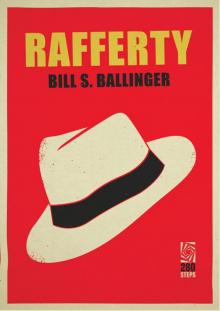
Rafferty (Harper, 1953, hc)
The Black, Black Hearse (St. Martin’s, 1955, hc) as Frederic Freyer
The Tooth and the Nail (Harper, 1955, hc)
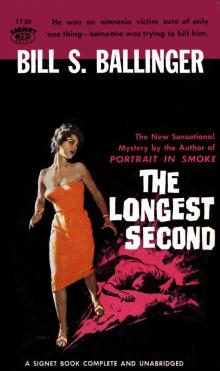
The Longest Second (Harper, 1957, hc)
The Wife of the Red-Haired Man (Harper, 1957, hc)
Beacon in the Night (Harper, 1958, hc)
Formula for Murder (Signet, 1958, pb)
The Doom-Maker (Dutton, 1959, hc) as B.X. Sanborn
The Fourth of Forever (Harper, 1963, hc)
The Chinese Mask (Signet, 1965, pb)
Not I, Said the Vixen (Fawcett, 1965, pb)
The Spy in Bangkok (Signet, 1965, pb)
The Spy in the Jungle (Signet, 1965, pb)
The Heir Hunters (Harper, 1966, hc)
The Spy at Angkor Wat (Signet, 1966, pb)
The Spy in the Java Sea (Signet, 1966, pb)
The Source of Fear (Signet, 1968, pb)
The 49 Days of Death (Sherbourne, 1969, hc)
Heist Me Higher (Signet, 1969, pb)
The Lopsided Man (Pyramid, 1969, pb)
The Corsican (Dodd Mead, 1971, hc)
The Law (Warner, 1975, pb) TV tie-in
The Ultimate Warrior (Warner, 1975, pb) Movie novelization, based on screenplay by Robert Clouse
Table of Contents
Prologue
One
Two
Three
Four
Five
Six
Seven
Eight
Nine
Ten
Eleven
Twelve
Thirteen
Fourteen
Fifteen
Sixteen
Seventeen
Eighteen
Nineteen
Twenty
Twenty-one
Twenty-two
Twenty-three
Twenty-four
Twenty-five
About bill S. Ballinger
Bibliography
Bill S. Ballinger, The Tooth and the Nail