

The Most Dangerous Man in America, page 1


Copyright
Copyright © 2018 Bill Minutaglio and Steven L. Davis
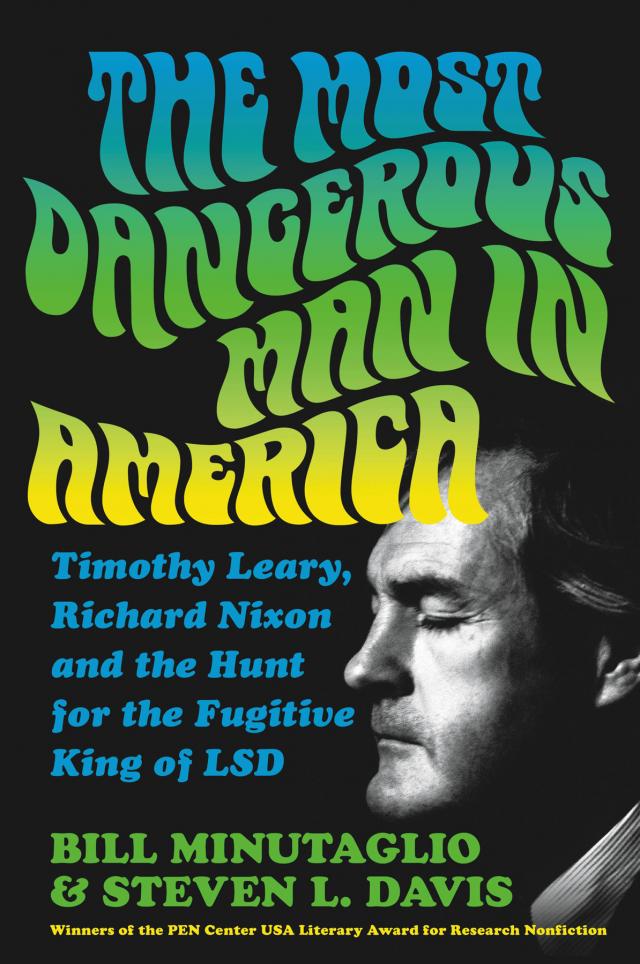
Cover design by Roberto de Vicq de Cumptich. Cover photograph by Getty Images. Cover copyright © 2018 by Hachette Book Group, Inc.
Hachette Book Group supports the right to free expression and the value of copyright. The purpose of copyright is to encourage writers and artists to produce the creative works that enrich our culture.
The scanning, uploading, and distribution of this book without permission is a theft of the authors’ intellectual property. If you would like permission to use material from the book (other than for review purposes), please contact permissions@hbgusa.com. Thank you for your support of the authors’ rights.
Twelve
Hachette Book Group
1290 Avenue of the Americas, New York, NY 10104
twelvebooks.com
twitter.com/twelvebooks
First Edition: January 2018
Twelve is an imprint of Grand Central Publishing. The Twelve name and logo are trademarks of Hachette Book Group, Inc.
The publisher is not responsible for websites (or their content) that are not owned by the publisher.
The Hachette Speakers Bureau provides a wide range of authors for speaking events. To find out more, go to www.hachettespeakersbureau.com or call (866) 376-6591.
Library of Congress Cataloging-in-Publication Data
Names: Minutaglio, Bill, author. | Davis, Steven L., author.
Title: The most dangerous man in America : Timothy Leary, Richard Nixon & the hunt for the fugitive king of LSD / Bill Minutaglio and Steven L. Davis.
Other titles: Timothy Leary, Richard Nixon and the hunt for the fugitive king of LSD
Description: New York : Twelve, [2018]
Identifiers: LCCN 2017032575| ISBN 9781455563586 (hardcover) | ISBN 9781478923664 (trade pbk.) | ISBN 9781455563609 (ebook)
Subjects: LCSH: Leary, Timothy, 1920–1996—Travel—Foreign countries. | Fugitives from justice—United States—Biography. | Escapes—California—San Luis Obispo County. | Psychologists— United States—Biography. | Radicalism—United States—History— 20th century. | Counterculture—History—20th century. | LSD (Drug)—History—20th century. | United States—Politics and government—1969–1974.
Classification: LCC HV8658.L43 M56 2018 | DDC 150.92 [B] —dc23
LC record available at https://lccn.loc.gov/2017032575
ISBNs: 978-1-4555-6358-6 (hardcover), 978-1-4555-6360-9 (ebook)
E3-20171102-JV-PC
Contents
COVER
TITLE PAGE
COPYRIGHT
DEDICATION
EPIGRAPH
AUTHORS’ NOTE
PRELUDE: Some Bad Guy
PART I: YOU SAY YOU WANT A REVOLUTION
WE THROW AWAY THE KEY
THE GREAT FEAR
PURPLE LIZARDS
ARES, GOD OF WAR
MADMAN
WARGASM
YOU GOTTA PITCH
LOVE REVOLUTIONARIES
ARE YOU SLEEPING WITH HIM?
HOW DO YOU FEEL ABOUT OFFING PIGS?
JUJU EYEBALLS
THEY CAN CARRY GUNS
ACID IS GROOVY
I’M NINO
DYNAMITE AND HAIR DYE
BE FREE, PRISON GUARDS
SUPPORT YOUR LOCAL UNDERGROUND
YOU’RE TOO HOT
ARMED AND DANGEROUS
PLAYING HOUSE
DOPE AND DYNAMITE
A GOOD TEST FOR YOUR DISGUISE
PART II: THE SHELTERING SKY
THE BADDEST MOTHERFUCKER
GINSENG WINE
I’LL BEAT HIM TO DEATH WITH A MARSHMALLOW
INTERRACIAL HARMONY
DEAD PIGS AND DIRTY DISHES
GENIAL GENIUS
UNLEASHED ANGELS
DRUG-SNIFFING DOGS
WE BURY PEOPLE
GET THIS MOTHERFUCKER OUT OF THE COUNTRY
PAY THESE MOTHERS OFF
MOTHERFUCKERS EVERYWHERE
THAT’S WHAT THEY HATE TO SEE
ESCALATE THE VIOLENCE
THE FIRST LESSON A REVOLUTIONARY LEARNS
HE DROPPED FROM THE SKIES
A PLANET OF PURITY
YOU’RE REALLY BUSTED THIS TIME
TWO THOUSAND LIGHT YEARS FROM HOME
HIS MIND HAS BEEN BLOWN BY ACID
SUPREME SERVANTS
VOODOO TAPES
IN THE MIDDLE OF THIS SHIT
A VANISHING PINPRICK
REVOLUTION WITHOUT REVELATION
PART III: HIGH ON A MOUNTAIN
I’LL SHOW YOU EUROPE
GOLDFINGER
I’LL PAY ALL THE BILLS
KIDS SAY THE DARNDEST THINGS
SQUARE IN THE PUSS
WAR ON DRUGS
BRING US DR. LEARY
SOME KARMIC MISTAKE
THE POPE OF DOPE
PHANTASMAGORIA
AT LEAST HE’S OUR HITLER
THEY SAY IT’S YOUR BIRTHDAY
A VICTORY FOR LOVE
I OWN TIMOTHY LEARY
THE WORLD CHANGED FOREVER
ALWAYS ERR IN EXCESS
HE JUST ISN’T WELL SCREWED ON
HE HAS DESTROYED MORE LIVES
THE GODDESS LAKSHMI
GARDEN PARTY
HE HAS TAKEN LEAVE OF HIS SENSES
PART IV: HAPPYLAND
PEACE WITH HONOR
PURPLE HAZE
SUPER BOWL
AGENT BURKE
THE KING’S NEPHEW
LEARY HIGH AGAIN
A QUIET HIJACKING
MAKE THEM STOP
A FREE MAN
EPILOGUE
POST-CREDITS
PHOTOS
ACKNOWLEDGMENTS
ABOUT THE AUTHORS
ALSO BY BILL MINUTAGLIO AND STEVEN L. DAVIS
A NOTE ON SOURCES / BIBLIOGRAPHY / ENDNOTES
MISSION STATEMENT
NEWSLETTERS
For Michael Horowitz and Robert Barker, for saving the archives.
For Rosemary, Joanna, and everyone who shared their stories.
Richard Nixon famously called Timothy Leary “the most dangerous man in America.”
—NEW YORK TIMES
When Nixon called me that, I was thrilled. The president of the United States, whom many Americans and the rest of the world thought was a crazed, psychotic danger, for him to be calling me that… that’s my Nobel Prize, that’s my bumper sticker, that’s my trophy on the wall.
—TIMOTHY LEARY
If Richard Nixon is not sincere, he is the most dangerous man in America.
—DR. MARTIN LUTHER KING JR.
AUTHORS’ NOTE
Timothy Leary met with one of us many years ago on a humid, rainy day in Houston. It was a time when he was trying desperately to uncover what had been done to him during his life as a fugitive running from the president of the United States.
As he sipped some beers and curled up in a creaky wooden chair in one of the oldest bars in the city, he said he was having little success getting to the deeply hidden truths that might detail how he was once hunted by Richard Nixon’s FBI and CIA as “the most dangerous man in America.”
In several subsequent conversations, Leary began to look forward, predicting, accurately, that the world would be connected via computers and that space exploration and travel might become more commonplace. But still, he remained achingly wistful about the massive secrets he’d never fathom while he was alive—the specifics of how, in one burst of time, he had been at the utter mercy of bomb-throwing revolutionaries, gun-toting militants, an international arms smuggler, secret agents on four continents, and even the occupant of the Oval Office.
This book is not a biography of Timothy Leary. Its goal is to finally reveal a dramatic, hidden piece of modern American history—a madly careening, twenty-eight-month global hunt for one man.
Thousands of freshly available and unexamined primary resources were used: court documents, personal letters, criminal files, secret government cables, internal paperwork from foreign governments, and audiotapes recorded clandestinely at the White House. Hundreds of boxes of archival material from New York, California, Washington, Texas, the District of Columbia, Algeria, Afghanistan, and Switzerland were consulted, many for the first time. Key foot soldiers in the hunt for Leary gave their first interviews.
News accounts translated from sources in Europe unearthed fresh details. Previously sealed FBI documents—publicly available for the first time—were used to construct the chronology and conversations. The once-elusive facts behind Leary’s life on the lam were also finally corralled with help from Leary’s longtime personal archivist—and the New York Public Library curator who oversaw the unveiling of Leary’s personal papers. This book is built on primary sources and firsthand accounts. Strict attention is paid to exact dialogue and quotes from Leary, Nixon, and others. Interior thoughts and monologue derived from memoirs and primary sources are presented in italics. A complete list of endnotes is available on our websites.
In the end, a startling truth emerged: Timothy Leary and Richard Nixon had much more in common than they ever knew. Each led an outsize, prolific life. Each saw truth as a cosmically malleable enterprise.
Each man thought the other was leading America to hell.
—Bill Minutaglio and Steven L. Davis
PRELUDE
Some Bad Guy
July 23, 1971
It is high summer in Washington, DC, another blistering day, and President Richard Nixon is stepping from the Oval Office into the adjoining Cabinet Room. He can see the Rose Garden outside, but he orders the drapes drawn shut. He is feeling surrounded by enemies:
Anti-war radicals are bombing the Capitol and other government buildings. Black Panther militants are calling for Nixon’s execution. There are explosions and fires in cities around the nation. Even worse, as far as Nixon is concerned, are the attacks from the Democrats and the media that threaten to undermine his reelection campaign.
He has decided to strike back, to wage war and do it hard.
Today he is putting the final touches on the creation of a top secret White House counterespionage team, an elite group of loyalists who have sworn to destroy Nixon’s political enemies. The president is thrilled with one of its chief operatives—an ex-FBI agent named G. Gordon Liddy.
Inside the Cabinet Room, Nixon’s aides and trusted cabinet officers file in behind him. The president takes his seat in a leather chair taller than the others. Only Nixon knows that two microphones are hidden underneath the wooden table, with wires that run to a voice-activated recorder hidden inside a locker in the basement.
Today the president is disturbed by the latest polls. Although he has declared a war on drugs, the American people say he is at his weakest when it comes to fighting the counterculture.
“We got to keep talking about it, we got to keep hitting it,” he tells the others. Nixon is growing testy, musing aloud about those enemies, like the Democrats and Teddy Kennedy, being friends with “the hopheads”—with pot smokers. Why can’t people understand him or appreciate what he’s doing for America?
“I have done a lot… but it doesn’t seem to get through,” Nixon says glumly.
Treasury Secretary John Connally speaks up in his thick-as-molasses Texas drawl, suggesting that Nixon hasn’t picked one clear “drug enemy” that he can target.
“You are not identified vis-à-vis an identifiable character or an identifiable incident, something that stays in the minds of people,” explains Connally.
“Some bad guy!” adds a suddenly intrigued Nixon.
Connally suggests that Nixon needs to find a single figurehead to crucify as the poster child for the drug problem in the United States. Someone who is “head of the drug business in this country,” Connally adds.
“That’s right!” responds Nixon, his mood brightening. “That would be something quite dramatic.”
Several of Nixon’s aides begin chattering at once, talking over one another. Everyone agrees that Nixon needs to find an identifiable villain, like the notorious Mafia warlords Carlo Gambino or Lucky Luciano, whom he can turn into the face of the enemy.
Someone Nixon can capture and hold aloft as a symbol.
“We’ve got to find a way to identify him,” Nixon says as more shouting erupts. “Good guy against bad guy!”
Connally interjects again: “Well, there is this guy, the guy who went to Algeria,” he drawls.
“Leary, Leary, Leary… Timothy Leary, Timothy Leary!” Nixon and his aides begin shouting.
The room convulses in excited laughter.
Nixon bellows triumphantly to the others:
“Well, we’ve got room in the prisons for him!”
PART I
YOU SAY YOU WANT A REVOLUTION
Fourteen Months Earlier
John… people used to say to me… “Did the Buddha use drugs? Did the Buddha go on television?” I’d say, “Ahh—he would’ve. He would’ve.”
—TIMOTHY LEARY, IN CONVERSATION WITH JOHN LENNON
WE THROW AWAY THE KEY
Morning, May 13, 1970
Inmate 26358 is behind a wire cage, swaying with the movement of a California prison bus curling along the Pacific Coast Highway. It’s Wednesday, Dr. Timothy Leary’s eighty-fourth day of captivity, and he is being reassigned to a new prison home. He’s carrying all his possessions in a small cardboard box—two packs of Bugler roll-your-own cigarette tobacco, two ballpoint pens, and rubber shower shoes that are a good-bye present from a murderer he met in another state facility.
He is turning fifty in a few months and he’s hard of hearing but with a full head of wavy, silver-threaded hair. Lean and tan, he has the rakish good looks of an aging tennis pro at a country club, albeit one with a genius IQ, who can quote Socrates and the Bhagavad Gita while lecturing on the seven levels of consciousness or the physiological nature of a woman’s orgasm. The other prisoners on the bus—killers, thieves, and rapists on their way to Folsom or San Quentin—know his reputation. He is the godfather of the psychedelic 1960s, the High Priest of LSD who advised young people to “Turn on, tune in, drop out.”
The black-and-white prison bus rattles past Ventura, and Leary tries to glimpse the whitecaps of the Pacific Ocean from behind the grimy windows. He sees a group of wetsuit-clad surfers paddling out to catch some waves. At a stoplight in Santa Barbara, he glances over and sees a man in a convertible with a beautiful woman riding shotgun, her long hair blowing in the breeze. Leary sighs and looks away.
A few hours earlier, at 3 a.m., he had been immersed in a sultry dream: I’m in an exquisite house in Santa Monica, the ocean lapping outside. There is a naked woman lowering herself onto a fur rug in front of a fireplace. Some bluesy Janis Joplin music is oozing from a stereo. The reclining woman whispers to me in a velvety, druggy voice: “All I want is to feel good… just keep me high.” It was getting good, much better, until the guards suddenly barked at him in midslumber and told him to gather his shit for the trip to his new prison.
At Pismo Beach the bus chugs through the mountains and when the road opens again, Leary can see the city of San Luis Obispo ahead, surrounded by soft green hills. Soon they are passing the sprawling Cal Poly university campus, just reopening after California governor Ronald Reagan shut it down for four days following nationwide student protests.
Suddenly, another prisoner on the bus is shouting and pointing. Leary and the others turn to look. The con is gesturing toward Poly Mountain, with its fifty-foot-tall concrete P overlooking the university. Next to the giant P, some renegade students have added two new letters. Now the hillside spells out POT. The prisoners laugh and cheer.
Two miles past the campus, the California Men’s Colony–West comes into view. Clusters of simple white wooden barracks are spread out against the foothills, dotted with blooming trees. As they draw closer, Leary sees a group of old inmates playing shuffleboard while others waddle across cracked tennis courts. In the distance, out on the stark prison golf course, another prisoner is taking a practice swing before launching a drive.
CMC-West is a minimum-security facility, designed for older men who pose little threat of violence. The perimeter is patrolled at night by gun trucks with sharpshooters inside, but the only physical barrier to the outside world is a twelve-foot-tall chain-link fence, topped by three looping strands of barbed wire. Leary has been trying to get himself transferred here ever since he got sentenced. When he took the standard prison personality test that would help authorities determine where to assign him, Leary knew exactly how to reply in order to seem as docile as possible. He had designed many of the test questions himself in his earlier incarnation as a nationally respected psychologist.
As the bus lurches to the drop-off zone, one of the prisoners suddenly shouts at Leary:
“Hey, man, this is the end of the line. The Department of Correction sent you here to die.”
Leary lets the words wash over him.
He is already studying the prison layout.
In Washington, Richard Nixon’s White House is anxious for any new FBI leads about the wave of extraordinary bombings splintering the nation. Even as Leary’s bus ferried him up the California coast, a massive dynamite attack rocked the police station in Des Moines, Iowa, shattering windows and setting nearby cars on fire. In Salt Lake City, Utah, a homemade bomb blew apart the entrance to the local National Guard building.
Meanwhile, agents are still pursuing suspects from a bloody tragedy in New York City. Revolutionaries calling themselves “the Weathermen” had been working on a nail bomb, plotting to detonate it during a military dance at Fort Dix in New Jersey. Instead, the bomb exploded in their hands, reducing a four-story townhouse in Greenwich Village to rubble. Three of the radicals were killed. Two women emerged from the smoking ruin, bloody and dazed. Taken in by unsuspecting neighbors, they showered and were given clothes—and then they vanished.


