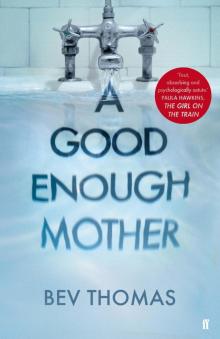
The Family Retreat, page 24


I’m calling out instructions as I get to them. Waving them away from the car. ‘The engine. Turn it off.’ And Philip runs back to turn the key. There is a sudden deathly quiet as it cuts out. They lay them gently down on a grassy verge, some way from the car. I can see they are not moving. Apart from their too pale faces, they look asleep. Peaceful.
Philip is on the phone. Helen is all over them. Her hands on their cheeks, pressing them. Pulling at their hands. She looks up at me. A look of unbearable unremitting pain.
I drop to the grass in between the children. My hands are shaking as I press two fingers to Oliver’s neck; with my other hand, I reach for Lexie’s wrist. Little Lexie in her pink tutu. The small sparkly tiara now fallen from her head, and tangled up in the side of her hair. Helen carefully picks it out, gently unravelling the hair.
There is a still, empty silence. The terrible weight of it. Without looking up, I can see Helen’s face. Pinched and pale. Desperate. Philip holds the phone to my cheek.
I search again. My two fingers of each hand on each of their necks. I wait. I try again. I sit very still.
‘Unconscious,’ I say into the phone. ‘I have a pulse. For both. Faint.’
Helen drops forwards. The sound of a heaving sob. Once only. And then she lifts her head up.
He puts the phone on speaker, but also repeats the instructions carefully.
There’s the screech of the gulls as I work on the bodies of the two children. I move with a quickness. I use my coat as a pillow, and Helen does the same. ‘Tilt her head back,’ I say, ‘like this,’ as I rest Ollie’s head and move his chin upwards. Helen does as I say.
Philip is on the phone. Directing the ambulance. He explains about the gate. The narrow track. ‘You’ll have to drive across the field,’ he says. We hear the scream of the siren in the distance. They are close.
The ambulance arrives in a flash of efficiency. Did they break the gate to get through, I wonder? Or did they have some implement to cut the lock? Either way, their arrival is calm and measured. Stretchers appear. Tank of oxygen. Face masks. A cannula for each. A drip. An injection. Proficient and wordless they each focus on one of the children. They check them over. Lifting eyelids. Checking pulses. Temperature. Heart rate. Helen has to move away. But she sits still, on the grass, her head bowed, her hands clasped together, as if in prayer. It’s only when I speak to one of the paramedics that my voice starts to break. When I tell her about James. She glances over, then nods.
They both wake several minutes later. It’s Ollie who opens his eyes first. Several gluey blinks before he is able to focus. Then Lexie too. They are dizzy and confused, but riotously and most gloriously alive. Ollie struggles to sit up, but, disoriented, he slumps back down. And after blinking several times, when Lexie’s eyes can finally focus on her mother’s face, she starts to cry. Helen is now sitting between the two of them, pressing their hands against her face; the three of them are crying together. I look away, biting at my lip.
One of the paramedics walks to the bonnet of the car. Then shakes her head to her colleague. It’s a few minutes later that one of them gives the all-clear for them to be taken. ‘Dorchester General,’ she says, when I ask.
As they are carried inside the ambulance, Helen turns to me. Pulling me to her in a fierce and brief hug.
As she pulls away, I tell her I’ll meet her there. She nods, then turns and climbs into the back of the vehicle.
In the moments after the ambulance screams off into the distance. In the moments before the police arrive. I whirl about. And in my rage, I grab the farm rifle. I’ve never held a gun before. I am surprised by its heaviness. I lift it onto my shoulder, and aim it at James. Even though the contents of his head, a strange pink and red mush, are covering the windscreen, I have a sudden urge for all of him to be destroyed. To make him disappear. To obliterate everything that’s left of him.
‘Put it down.’ Philip’s voice is calm, but firm. I don’t move. ‘Put. It. Down,’ he says again.
I stare back at him for a moment. Then let the barrel swing down towards the floor. Slowly, he lifts the rifle from my hands and drops it onto the grass.
He steps forwards, but I don’t want his comfort. I want my rage. My face burns with a white-hot heat.
I run along to the cliff edge, to the place that drops down to Dancing Ledge, and I fall to my knees. I take a deep breath and roar out into the ocean. I do it again. Over and over, deep guttural yells that I hurl over the cliff. The sounds of my voice getting lost in the scream of the circling gulls.
TWENTY-THREE
On the way to the hospital, my hands are shaking as I call Rob. I have a need to tell the story, to keep picking over the small horrifying details. The smell of the fumes. The mess on the windscreen. Their bodies huddled together by the window. I find myself going over and over it. I repeat the same words. As if trying to find a way to believe it myself. I know this is shock. And I know this is what I need to do; the repetition, the recall – but it makes no difference. There is no dilution, no absorption of the news. It sits steadfast, intact, like a blob of glue on blotting paper.
As Philip takes the turn-off towards the hospital, I ask about my father. ‘Is he OK?’ I say. Rob is reassuring, and tells me everything is fine. But I notice he doesn’t offer any further information. He doesn’t tell me about the complaint made by the waitress. Or about the events of their journey home. When I hear all about it later, I am so grateful he decided to keep it all from me at a time when my head was so full. My mind still trying to press the full horror of the events to memory, like knuckles kneading bread. Rob said nothing, because he knew there was no room for anything else. I also receive no communication from my mother, so he must have told her to refrain from calling too. And afterwards, I can’t help wondering how this landed. The news that the bigger tragedy was happening somewhere else. That I was caught up in a much more pressing drama than her own.
In the hospital car park, Philip delicately broaches the subject of my father. And the incident at the restaurant. ‘I don’t want to interfere,’ he says, ‘or step out of line – but I’m assuming this was out of character?’
I nod.
We sit for a moment in silence. His hands are drawn neatly in his lap.
‘Has he had mood swings in the past – erratic phases? Highs and lows?’
I shake my head. ‘Lows, yes. But nothing like this.’
And I close my eyes, mortified all over again when I think about the wine cellar.
I tell Philip a little about my father’s depression. ‘It was something we got used to,’ I say, ‘over the years. But this version of him. This exuberance. These past few months – it’s so unlike him . . .’ and my voice trails off.
If anything, when I think about the shape of him in my life, I feel absence. Not just the retreat of his depression, but also a more general emotional distance, a difficulty staying rooted in the present, like an untethered tent lifting gently in the wind.
I look out across the car park. My eyes fall upon a father pushing a child in a buggy. The child drops a toy, and immediately starts to cry out and kick her legs. The father is on his phone, then he looks round, and rushes back to retrieve it, crouching down in front of the buggy as he places it carefully in her hands.
I turn to look at Philip.
‘Is he having a breakdown? Is that what this is?’
‘I don’t know,’ he says. ‘Maybe. I wouldn’t like to speculate. But it sounds like it would be good for him to see a doctor, when he gets back to Oxford. I have a colleague there,’ he says. ‘I can call her, if you like?’
‘Thank you,’ I nod, ‘but if it is – what do we do? How can we help him?’ I have so many questions.
Philip reaches a hand over and he rests it on my arm. It feels calm, steadying.
‘Let’s wait and see,’ he says. ‘And for all those questions, there are so many different answers. Some psychiatrists favour a very biological model, chemical imbalances in the brain,’ he says and then dips his head. ‘I myself prefer to see any psychological imbalance as something more relational. More a response, a defence against reality, if you like. A way of retreating from a situation that is too hard to manage.’
And perhaps in response to the confusion on my face, he says it doesn’t have to be a specific trigger, ‘more often, it’s something more intangible; like old age. An escape from life.’ He tells me that working in addiction and rehab, he has found diagnostic language unhelpful. Limiting to patients. He says it sometimes made him unpopular with his colleagues, ‘but I think the question to always ask is why this? Why now?’
I think about some of my father’s baffling and random behaviour; the weekend away, his distraction, the way he was the day Sam got lost, his exuberance at talking to the walkers, the birthday party. These odd incidents start to shuffle together in a line, like reluctant children.
We sit for a moment in silence.
I look back at this man’s face. His kindness. His care.
‘I know you have to go,’ he says gently, patting my arm, ‘but we can talk more, when you have time. I’ll call my colleague. She’s excellent.’
‘Thank you,’ I nod as I reach for the door handle. And then, just before I go, he says something about Helen and the children and about strength and courage, and it makes me cry.
I open the door, and turn back towards him. ‘Your patients were so lucky to have you,’ I say.
*
They are on the ICU of the children’s ward. They have a large four-bedded room near the nurses’ station. There are two policewomen, one policeman and Julie, a family liaison officer. I see very little of Helen: she is back and forth with the kids as they undergo various tests. Sometimes they are wheeled away. Other times the curtains are screeched around the bedside as doctors and nurses gather around. I give a statement to one of the policewomen, about what happened at the farmhouse when we got back and about what I saw when I arrived at Dancing Ledge. I tell them I picked up the rifle. ‘I wasn’t thinking,’ I say, ‘about the prints. That I shouldn’t touch anything—’
As a clinician, life in hospital is fast-paced and speedy. But for a carer or relative of a patient, time slows right down. The bedside is a series of visits and tasks as the patient is on the conveyor belt for different kinds of treatment, while relatives sit, stirring around in a kind of soupy daze. It’s a terminal of waiting and transition. Of immobility and hope and expectation. Every so often, I go down for snacks and drinks from the shop in the entrance hall, and I leave the purchases on the spare bed for them while I sit in the waiting room next door.
At around 6 p.m., Helen appears at the door and says she needs to go with Ollie for another scan. ‘Could you maybe take Lexie down to the café?’ She looks suddenly stricken. ‘I don’t want to leave her on her own on the ward, even with the nurses,’ and she’s twisting her hands together in panic. I see then, how the terror of the life she has led is something she has internalised. Something that’s become so familiar, it’s now a part of her. Something she will live with for a long time to come.
Lexie has her bag of colouring books and pens and holds tightly onto my hand in the lift. I get hot chocolate for her and a coffee for me. We sit at a table by the window. She watches as a heavily pregnant woman walks past us to the till.
‘My mummy had a baby in her tummy. But it died when she fell down the stairs.’
I hold my breath. There is no emotion on her face. Her voice is flat, matter of fact.
But in the chilly silence, I feel it on my face. The fear in my bones. The quiet hidden secrets of another person’s life.
I think about what to say, but Lexie’s interest has moved on. She is opening one of her colouring books and picking up her pens.
‘Shall we do one together?’ she says, tapping a felt tip on the page. ‘I like this one with the rabbits.’
*
An hour later, I am back in the waiting area. It reminds me of that summer with Gemma. The sticky heat of the ward. The hours spent by her bedside. Watching her pale face in the bed. My mother puffing up her pillows when Gemma took the long agonising walk to the toilet. Then carefully arranging the fruit in a bowl, as if preparing for a still life drawing class. The specialist eating disorder unit imbued a very particular juxtaposition of frenzied activity, alongside sloth and inertia. But by the time Gemma came in, she had no energy for the relentless regime of running on the spot and push-ups that I saw from the other girls. She was too tired for any of that by then.
I spent hours on plastic chairs in the canteen, making bargains and pacts about people on the ward. Things I had to do. Smile twice at the nurse with the ponytail. Read the boy a story in bed number six. If the girl in bed ten gets better, that will help us. Then how I made sense of random events in the cafeteria. If six people order a baked potato in the next hour . . . if I clear the plates on the table by the window . . . if I smile at the cashier . . . if . . . if . . . if. Small scenarios and tasks I set up and linked to Gemma getting better. If they came true, ‘. . . and she smiled back!’ I was elated. A small lift. Like an internal fist-bump. And for all the times the targets were not reached, which was most of the time, I simply let them fall away, casting them aside, while I set up new ones. It was, I understood now, a way of managing my deep fear. A way of trying to make order out of chaos. A way of trying to gain control over something that was rapidly running away from me.
At about 8.30 p.m., Helen steps out to join me in the corridor. ‘They’re watching cartoons,’ and she sips at a bottle of water. ‘Tests are all looking good. No lasting damage. They will have more checks. But so far, so good.’
I feel the sinking. The sudden collapse of relief. My body gives over to it. A slump in my chair.
‘Earlier, they were so sleepy. But now they’ve just seen the doctor, and they’re bouncing off the walls. I had to put the telly on to calm them down,’ she laughs loudly. An explosion of joy. And then, all of a sudden, she drops her head down, and is sobbing hard. She leans forwards, elbows on her knees, making a shelf for her head with her hands as the tears flow down her cheeks. I cry too. My hand resting gently on her back.
Neither of us speaks. There are no words.
After a while, she sits up. ‘I must go back,’ she says, wiping her face. ‘I’ve given some information to the police, all the basics – but I have a full interview tomorrow morning At eleven. I’m allowed someone with me. Can you come?’
She asks if Rob can bring the kids in. ‘It would be great for Ollie and Lexie. They can play together. Some normality,’ she says.
‘What do they know?’
‘They know he’s dead.’
I nod.
‘I don’t yet know what Ollie saw. What he understands. What either of them understand. But they will know it wasn’t good—’ She falters for a moment. ‘I can’t lie. But I can’t tell the truth. At least not yet. It’s a truth I can’t believe myself—’
I reach for her hand.
‘In spite of everything,’ she says, ‘he was still their dad. They were frightened of him sometimes. But they loved him. They are grieving. And I must honour that.’
*
When I finally get back home, the kids are fast asleep. Rob hugs me. He looks pale and stunned, like he’s been run over by a truck. We go upstairs to the kids’ bedroom, and stand by their tiny little beds. Sam, with his hands flung up above his head. Ruby, small and neat and curled up like a ball. We look at each other, then we stand there for a very long time, holding each other and staring at our children with a kind of wonder and gratitude.
TWENTY-FOUR
In the morning, we set off early and I pick up a few things for Helen in Dorchester, while Rob and the kids take a trip to Pound-land, emerging with bags of dressing-up stuff and a mountain of plastic toys that he stuffs in the boot. All three of them are flushed and giddy with the excitement of the purchases.
Helen tells me they slept well. ‘I was peering at them most of the night. But then I dropped off at around four,’ she says.
She tells me they’re allowed to go to the grassy play area in the hospital grounds, ‘but I think they should stay on the ward,’ she says, ‘just for today,’ and I nod. I can’t imagine how she will let them out of her sight again, and as we take the lift up to the fourth floor to get coffee from the canteen, it’s as if she’s read my mind.
‘It will take time,’ she says. ‘Even though the threat is over for us, I have to believe the world is a safe place – even though our house wasn’t. At the moment, it’s too soon. It’s all mixed up.’ She breathes out deeply. ‘It’s such a relief Rob and the kids are with them.’
We sit at a table by the window. It overlooks the car park. We watch for a moment, the comings and goings of people. Staff in uniforms hurrying back and forth with brisk efficiency. Then others, moving trance-like in hunched, hollowed-out shapes. And huddles of families each wrapped tight in their own private torments.
Helen fiddles with a sachet of sugar.
‘It needed it to be a secret. For you not to know it was me,’ she explains. ‘I decided the plan was safer if no one knew. Of course, in the end,’ she shrugs, ‘it was neither here nor there.’
I nod.
‘But also – I needed your clarity. Your knowledge. Your experience. And I needed it to be uncontaminated by any emotion. It was a forensic decision. If you knew it was me, it would have changed things.’
‘I know. I understand.’
She pauses, shaking the sugar.
‘It might have affected your willingness to help—’
She waves her hand to silence me.