

Faith's Reckoning, page 1
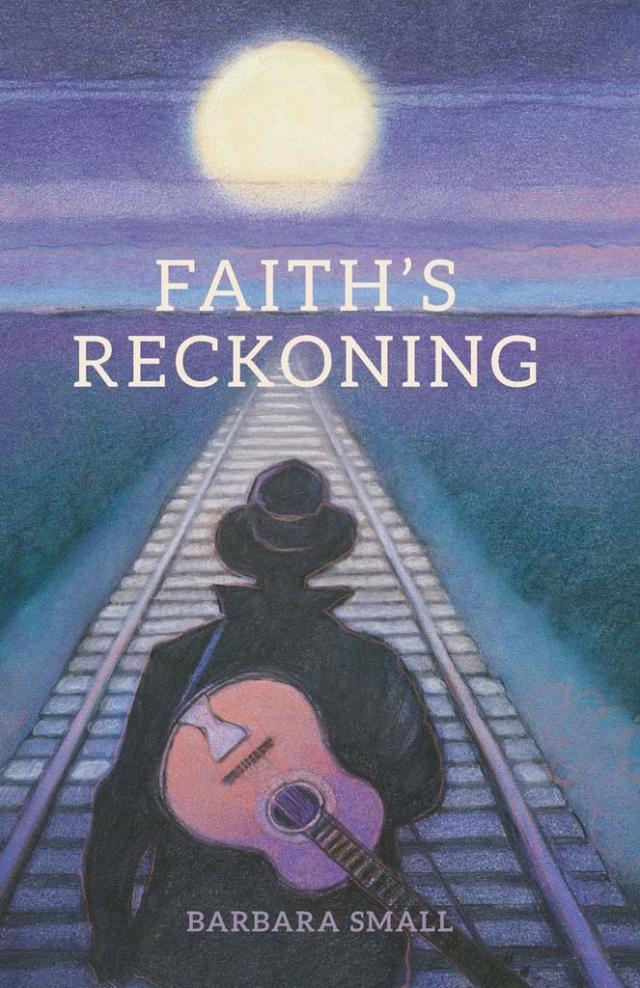


Praise for Faith’s Reckoning
“A warm sense of humanity pervades this novel. Faith’s Reckoning is a tender story of redemption and atonement infused with the author’s love of her characters. Immersed in the culture of the South this multigenerational story is both a tale of the awakening of individual conscience and reparation, as well as a genuine introduction to the early struggles of the civil rights movement. The influence of the Blues is beautifully woven through the storyline proving the reconciling and healing power of music.”
Joe Kulin, Former Publisher of Parabola Magazine
“Faith’s Reckoning is a courageous gem of historical fiction, revealing little known but important aspects of the history of racism and social injustice in the Deep South, spanning the time of the 1930’s to the 1990’s. I am grateful to learn about the vital role that Black Pullman Porters played in the early days of the civil rights movement, something my education never taught me. As a writer and Southerner myself, I appreciate the author’s authentic Southern voice, and the gift of her storytelling ways. I relish her vivid descriptions of trains and rails, Mississippi back roads, sweltering summer nights, grits and tamales, and the powerful presence of Delta Blues music dancing through the pages. Most of all, I love her characters, and how they set up house in one’s heart, and linger in one’s mind, long after their stories end. Reading Faith’s Reckoning now, when issues of racism and social injustice need our full attention and care, can become an act of faith in itself, part of the greater recognition and awareness so needed for our time.”
Lucinda Herring, author of Reimagining Death: Stories and Practical Wisdom for Home Funerals and Green Burials, North Atlantic Books
“Soulful and evocative, the story of Faith’s Reckoning is told with a Southern voice that rings with authenticity and compassion for the characters who must survive in the Jim Crow landscape. We see how vastly different these worlds are from the perspectives of a Black family and a White family whose lives are intricately intertwined. Beautifully researched, this novel takes us on a momentous, transformative journey in its quest for justice and healing.”
Susan S. Scott, author of Healing With Nature,
Skyhorse Publishing
“BREAKING NEWS. SCREAMING HEADLINES. Urgent commentaries. The daily shock of racial violence, institutional racism, ubiquitous inequities floods our awareness, immerses us. Yet, the intensity of affect has a strange distancing effect, inuring us to the horror. The very “nowness,” the standstill of time, freezes out the real story, like a photograph. The power of the novel form is that, when well written, the depth of story emerges. Faith’s Reckoning is such a novel. It frees time from the now by alternating the telling from the 1930s and the 1990s. It takes time to allow us to get to know and to feel the full fabric of the characters against the backdrop of genuine history. We are drawn into the intimacy of White and Black families and the entanglements that kindle the violence of events rending this intimacy, forcing us to feel deeply. There is no distance. And in this way, we can begin to understand our deep complicity in realities that continue to haunt us. Is there an answer? Barbara Small’s deeply moving story makes a persuasive case for the much-needed healing medicine: the power of truth, the power of music, and most of all, the power of love.”
Russell A. Lockhart, PhD, author of Words As Eggs and Psyche Speaks, The Lockhart Press
“Faith’s Reckoning is a moral, educational, and thoroughly enjoyable novel about men and women courageous enough to face our country’s history of slavery and racism. Deeply felt and engrossing, it moves deftly back and forth in time to build the story of hard lives in the Depression-era south, the generations that follow, and how one woman measures up to the difficult challenge of making reparations for the wrongs of others and a society. An uplifting celebration of human goodness and possibility.”
Tad Crawford, author of A Floating Life and On Wine-Dark Seas, Arcade Publishing.
Coyote Moon Paperbacks ™
An imprint of Babs Small Publications, LLC
Copyright © 2023 by Barbara Small
All rights reserved. No part of this book may be reproduced or used in any manner without the prior written permission of the copyright owner, except for the use of brief quotations in a book review.
To request permissions, contact the publisher at babsmallpublications.com/contact
Library of Congress Control Number: 2023902624
ISBN: 979-8-9877834-0-5 (paperback)
ISBN: 979-8-9877834-1-2 (eBook)
First paperback edition March 2023
Cover illustration Gary Kelley
Book Design Jeanne Juneau
Photograph Susan S. Scott
Printed by IngramSpark in the USA for
Coyote Moon Paperbacks ™
Langley, WA
Babsmallpublications. com
This is a work of fiction. All characters are fictional except those who depict historical figures.
To the enslaved African people, on whose backs this country was built, and to all their descendants.
Preface
The challenge of historical fiction is to create characters who animate the lives of actual public figures. I tried to portray these public figures as accurately as possible and to imagine their conversations based on my sense of the intentions underlying their actions. The conversations in this book are imaginary and do not represent known quotations. Creative license was used to present historic events that are factual in essence though imaginary in detail.
Another difficult navigation is the appropriate use of language regarding racial identification. Because language has been weaponized to denigrate people of color, a heightened sensitivity is needed to prevent repeating the injury. African Americans or Black Americans have been addressed by a variety of terms specific to historic period, geography, and whether the term was self-imposed or intended to insult. The word Black was introduced in the early 1900s but was primarily used in activist political circles. Not until the 1960s did the civil rights movement bring it into wider cultural use. Negro was the governmental/institutional term. Census forms used Negro as a racial identifier through the 1960s, transitioning to Black in the 1970s. Colored was a term prevalent in the segregated South and was used to identify, as well as insult. More recently, journalistic publications have chosen to capitalize all racial identifiers.
I have used the racial identifiers that were common to the time, places, and people speaking in the book, evolving to the use of Black as the characters themselves change. I have taken care not to use the most offensive terms even when the speaker intended to malign. Those words are not mine to use. I have opted to capitalize all racial identifiers.
Barbara Small
Contents
LOUISIANA 1998
MISSISSIPPI 1930
LOUISIANA & MISSISSIPPI 1998
MISSISSIPPI 1930
MISSISSIPPI 1998
MISSISSIPPI 1931
MISSISSIPPI 1931
MISSISSIPPI 1998
MISSISSIPPI 1932
MISSISSIPPI 1932
MISSISSIPPI 1998
MISSISSIPPI 1932
MISSISSIPPI 1933
TEXAS 1998, NEW YEAR’S EVE
MISSISSIPPI 1934
MISSISSIPPI 1937
WASHINGTON D.C. 1941
ALABAMA 1941
MISSISSIPPI 1999
MISSISSIPPI 1942
MISSISSIPPI 1999
MISSISSIPPI 1999
MISSISSIPPI 1999
MISSISSIPPI 1999
ACKNOWLEDGMENTS
About the Author
LOUISIANA 1998
Shawls of Spanish moss draped the trees lining old Highway 12. Sylvia turned on the car radio for company as the black Louisiana night closed in around her. She washed down a bite of fried catfish and hushpuppy with thick chicory flavored coffee and scanned for a station through the crackling oblivion of radio static. Pitch black is a state of utter darkness, devoid of all light and color. And the swamps of Louisiana on a moonless night are just that. Pitch black and full of ghost stories.
Sylvia remembered crossing this same terrain in the back seat of a Chevy coupe as a child, huddled beneath a blanket with her sister and brother. She felt transported back to that time, the specter of Clarence Boudreaux shimmering across her memory. Her father Phil, master of the tall tale, was conjuring the story of the Boudreaux brothers’ recent prison break. Clarence was the eldest of the dim-witted clan, and the biggest, which made him the most dangerous. At six foot five inches and two hundred and fifty pounds, he could squeeze the life out of a child with one arm. And his hands could crush your skull like an overripe melon. With a chest length beard, coal black eyes and tobacco-stained teeth, it might have killed you just to look at him.
Phil eased the bench seat back a notch, and let the story unwind slowly. His long arms draped over the steering wheel in full extension; dark hairs curled from beneath his cuffs. He turned on the radio and let it play for a while, then turned the volume down and dialed it between stations, disguising his voice amidst the scratchy reception to simulate a public service announcement.
“Clarence and Pierre Boudreaux have escaped into the bayou near the Southwest Louisiana State prison. They were last seen around six p.m. near the town of Basile.”
From the rearview mirror Phil watched his three children wiggle closer, clutching the blanket under their chins. His wife Grace sat contentedly by his side, listening with rapt attention to the story he told. She longed for more of these momen
“Anyone back there hungry?” he asked. “There’s a town just down the road where we can stop for burgers and shakes.”
He pointed to the highway sign as they passed it: Baton Rouge, ninety-five miles; Basile, ten miles. Empty stomachs and the promise of a chocolate milk shake were too powerful to resist. Without even pausing, three little voices chirped, “Yes!” in unison.
Only moments later did the children register that they were headed to the very place where Clarence and Pierre had just vanished.
Sylvia was snatched back to reality by the thump thump of her right rear tire going flat. She groaned and tried to remember the last time she had checked the air pressure in the spare. She had made up her mind to take this trip at the last minute, after pondering the news about her Aunt Faith. She had barely managed to arrange coverage for her workshops back in Austin, much less get the car in for maintenance.
Sylvia Barbarino worked as a juvenile justice attorney for the great state of Texas, as it liked to call itself. She was General Counsel at the Texas Juvenile Probation Commission (TJPC) and served as a bridge between legislators, prosecutors, social workers, public defenders, and the marked child. Her job was to provide a voice for youthful offenders, to make the case for their redemption in a less than perfect justice system. Her boss was none too happy about covering two weeks of meetings and training workshops while Sylvia was in Mississippi.
Fortunately, the site visit at Last Chance House in Austin had gone well and Sylvia had reassured her boss she would be back before the new facility opened in October. ‘Chance House’ was her baby, a joint project of TJPC and the Texas Youth Commission. The new secure detention center was controversial, taking select students from the Giddings State School and placing them in a neighborhood community. Dozens of people had invested heart and soul in making this happen and she made it clear she was available for any questions while she was away. Her cell phone buzzed again, relentlessly reminding her of the three messages awaiting her.
Sylvia eased her blue Miata onto the shoulder of the highway and groped beneath the seat with her left hand until she located the flashlight. She flipped the switch on the handle and a bright light dispelled a narrow shaft of the darkness. She opened the door and stepped out into the thick warmth of the August night. She swung the flashlight back and forth like a blind man’s cane guiding her to the trunk of the car. Sylvia easily accessed the spare from beneath her single suitcase. It bounced briskly when she dropped it to the ground. “Thank you,” she sighed.
The jack and lug wrench were where she expected, and she could feel her heart rate slow to a normal rhythm again. She estimated this should be a fifteen-minute job. The lights from a passing car helped illuminate her task. Her white cotton blouse and expensive jeans would be sullied by the grease and tar of the road, but emergencies seldom allowed for a change of clothes. She propped the flashlight beneath the car, stretched the long lank of her five-foot eleven-inch frame on the uninviting gravel, placed the jack under the right rear axle and became an efficient machine. Jack placed, raised to a snug fit, lug nuts loosened, axle lifted, and wheel removed in less than ten minutes. She popped the spare tire onto the hub and was tightening the last nut when a semi rattled by, dangerously close. Sylvia jumped up and back, away from the road, and found herself lost in the darkness. Something ensnared her right ankle, and she jerked her leg forward instinctively. A ripping sound met her ears as the densely tangled kudzu vine released its hold on her. She quickly lowered the jack, tightened the lug nuts one last time, and dumped the tools into the trunk. Safe within the car, she stopped to catch her breath.
She turned the key in the ignition. The engine turned over and she felt the reassuring clunk as she pressed the driver’s door lock, relieved she had secured the convertible top of the Miata after dinner at the Pappadeaux in Beaumont. She reached into the front pocket of her leather satchel and retrieved a piece of gum. The sweet taste and her ferocious chewing calmed her as she pulled back onto the highway. She glided down the road on four secure tires and a well-oiled faith in her ability to meet whatever awaited her. She would try to make Baton Rouge tonight, giving her plenty of time to get to Jackson by Friday, still two days away. She thought about driving down to New Orleans in the morning. Maybe strong coffee and sweet beignets would make her task more palatable, make it easier to read over the Will again.
Sylvia had not spent any real time with her Aunt Faith in six years although they still exchanged letters. Faith had always been so vibrant that Sylvia could not believe she was sick. But worse than that, Faith had known for months and had not called Sylvia until now. Time was running out and Sylvia had nothing to say about it. The forever-adventuring Faith was living this time as she had always lived, savoring it with fierce independence. She had called Sylvia the week before to ask her to be the executor of her Will. Sylvia remembered the conversation on that Sunday morning.
“Sylvia?” searched the voice on the phone.
“Aunt Faith?” Sylvia replied after a faint pause.
“Hello hon, I’m so glad to catch you at home. Good to know the Probation Commission gives you Sunday mornings off to go to church.”
“You know I don’t go to church, Aunt Faith, and it is wonderful to hear your voice. Speaking of which, why aren’t you nestled into the pew at Emanuel this morning?” Sylvia remembered attending the service with the small neighborhood congregation the last time she had visited Faith.
“Well, Sylvia, that’s why I’m calling.”
Sylvia’s stomach clutched, that momentary paralysis that occurs when you hear the freight train of wind before a tornado hits.
“I don’t have as much get up and go these days, so I just have church at home. That’s the nice thing about the Lord. He’s everywhere. And...”
“What’s wrong?” Sylvia asked, cutting her off.
“Oh, Honey, I’ll just say it. I have leukemia. But listen to me now. It is chronic myelogenous leukemia, and the doctor says I probably have plenty of living left.”
“What’s that mean?” Sylvia said. A faint flush spread over her creamy complexion and the fading freckles of childhood reemerged, awakening the fleeting apparition of her Irish grandmother. She shuddered as a chill of perspiration followed.
“It’s OK, Sylvia. Nothing is imminent. But you know me, I don’t like to leave things to the last minute. This leukemia has been smoldering inside of me for months, maybe years, and it could go on that way for a long time. In fact, there is a new medication, a daily oral chemotherapy with very few side effects that might keep me in remission indefinitely…..”
“But what did the doctor say?” Sylvia interrupted. She swept a lock of auburn hair behind her right ear where it rested in a soft curl at the angle of her jaw. The brown flecks in her hazel eyes darkened.
“Sylvia, look, he said just what I’m telling you. And remember, I am a nurse. Almost became a doctor myself. Anyway, I may be fine for a long time but at seventy-five, there are no guarantees. So I am getting my affairs in order, and I am asking you to be the executor of my Last Will and Testament. Can you do that?”
Sylvia detected a hint of impatience in Faith’s voice.
“Of course, of course, but….” she replied, trying to relax. “…. isn’t there more I can do?”
Faith paused, gathering herself. Even with her own flagging energy, Faith knew Sylvia still needed the sturdy container of her steadfast love. Actually, Sylvia needed the abiding embrace that only God could provide, but Faith and Sylvia had had that conversation too many times and Faith had finally given up and just assented to be His stand in.
“Sure, Sylvia. You can come see me and make me a big pot of Creole gumbo with white rice. And you had better take your time with the roux, like I showed you. A half-hour at least.”
They made plans for Sylvia to come to Mississippi over Labor Day weekend. They would talk and eat and putter in Faith’s garden. Faith told her to stay as long as she wanted. Sylvia had felt a little better after they hung up the phone.
As the days passed, however, the urgency inside her grew. She was distracted at work. The large number of cases awaiting her legal opinion, something she had always handled efficiently, suddenly felt unmanageable. Her instincts told her to spend more than just a weekend with Faith and visit her sooner. When she called with the change of plan, Faith was thrilled.


