

Goodnight, Mr. Knight, page 21


A knock sounded on my door. Goldy stepped in and stood with one hand on the doorknob. “Stan says you can’t have pets. He says that pigeon’s got to go.”
“I’m releasing it in a day or two. I’m waiting for the rain to stop.”
“I told you when you moved in, Stan says no pets, and especially he don’t like pigeons.”
“I’m letting it go as soon as the rain stops.”
“He don’t go for that kind of stuff, hamsters, canaries, so you got to find another place to live. And goldfish. He hates goldfish.”
“I’m letting it go tomorrow, maybe.”
“Don’t get me wrong. I got nothing against pigeons. But Stan don’t like pets, white rats, gerbils, dogs, cats, goldfish, kids. God knows what else he don’t like.”
“It’s not supposed to rain tomorrow. By tomorrow it’ll be gone.”
“You’re paid up till Friday. I’ll give you a refund.” She held out the money. “Don’t get me wrong. It’s Stan.”
“I promise by tomorrow it’ll be gone. No more pigeon.”
She went away, and in a few minutes returned. “Stan says get rid of it by tomorrow or he’s gonna bring over his buddy. His buddy don’t like pigeons either.”
Chapter 57
OWEN
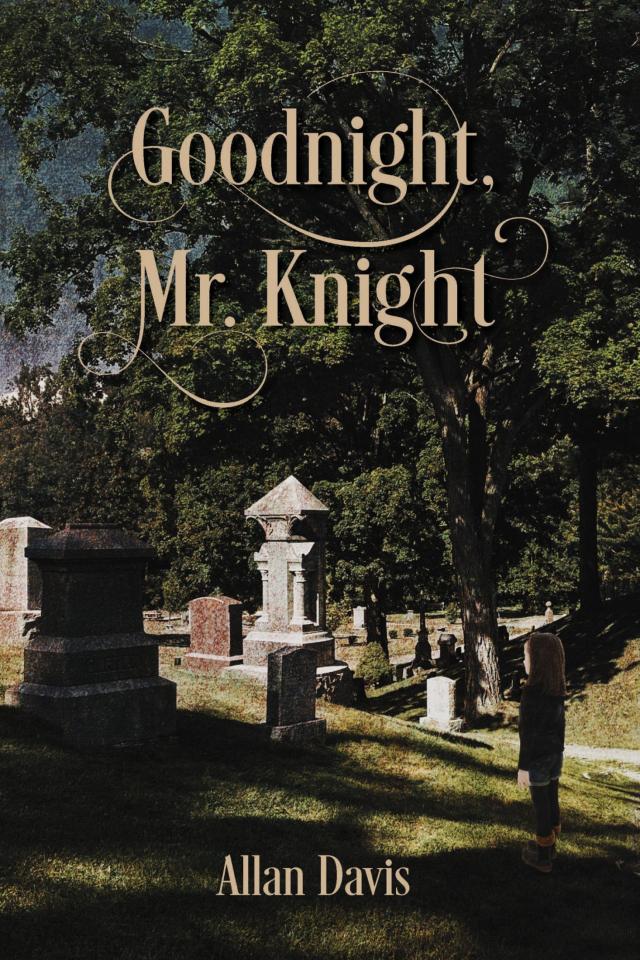
Martha and I hurry along the edge of the cemetery to the first lane, which stretches before us like a long corridor through the shadows of the silver poplars swaying overhead in the sunlight of a beautiful October afternoon. We go into the backyard of Peter’s house, still not sold. We sit on Peter’s bench by the apple tree. Petunia arrives. I hear the crackle and rustle as she wags and sniffs and pokes through leaves from the apple tree blown up against the stone fence. I thought that after two days of rain they should be soggy, but I guess not. I notice that all Peter’s flowers have died, and the withered flower stalks are lying flat, and the lawn has turned brown. Martha shifts position to give Petunia a pat and then pick her up and settle her down with her blankie and bonnet in the baby carriage. We walk over to the flower shop on Yonge Street.
The sun is locked behind the clouds, and the wind is gusty, and the feeling of rain is heavy as we enter the flower shop.
“Two white carnations?” The clerk looks puzzled. “We sell them by the dozen.’
I say, “Just two. It’s a special occasion.”
The clerk stares at me. I don’t know why. My hair isn’t sticking up; I’m not wearing crooked glasses; my shirt is tucked into my cargoes.
“Whatever you say. Four white carnations.”
Martha corrects him. “Two white carnations.”
I pay the clerk and we leave the store, the carnations wrapped in green paper, open at the top. The wind gusts and swirls, blowing Martha’s long hair to one side as we walk along Yonge Street back toward the cemetery. Entering the gate, Martha points to the clouds building above the row of swaying poplars, unfurling silver leaves not yet fallen. I was hoping for sun, but it’s too late to turn back.
As we continue along the lane, we hear a car behind us. We step aside into the grass. But it doesn’t pass, so we continue, walking in a single-file procession, first Martha pushing Petunia in her carriage, then me, and then the car, past the stone statue of Jesus and up the hill. In deliberate motion through the long, monotonous procession of tombstones we move, so slowly that the car, when I glance back, seems to be suspended behind us, not moving at all, like one of the tombstones. At a fork in the lane, we turn to the left, it to the right. Near the top of the hill at the back corner of the cemetery, the car stops. A man wearing a black suit and a woman dressed in red carrying a bouquet of white and yellow step out and cross the grass to a grave on this side of the stone crucifix. She stands by it statue-like, head tilted a little to one side. She seems to be listening to the wind cutting through the trees and the monuments.
We continue toward our first stop, not far from the maple tree, which will shade it for many years from the summer sun. No sun today, though. Situated in this corner near the end of the lane, with such a small marker, the grave is so hidden that, day after day, people will walk over it without knowing that Grandpa is there.
Martha picks up a stick from the roadside and kneels at the almost invisible marker to clean off the grass, but with only a stick, she can’t do much. As she finishes, the car we saw earlier appears. The driver points at us as though he knows who we are and can’t figure out why Martha would be laying flowers on this grave. Neither can I, but Martha will have her reasons. By the time the car has completed its gradual journey through the tombstones and out the gate, Martha has finished. She stands back to examine her work. We watch some sparrows fly down, first one, then a second, followed by a third, chopping down in a swirl of brown to hop and peck in the vegetation that Martha has tidied. She lays her white carnation.
To my right are new tombstones in rows marked with fresh wreaths and flowers, while to my left, a funeral procession brings in one more body, weaving through the trees to stop beside a freshly dug grave, ready and waiting. The pallbearers carry the coffin to the graveside. The friends and relatives gather around while the priest, carrying his Bible, adjusting his black cassock, waits for the mingling mourners to finish their handshakes and hugs.
He opens his prayer book. Gesturing toward the deceased, he reads in a solemn voice, “As it has pleased the Almighty Father to receive unto himself the soul of this brother here departed…”
A gust of wind rips away the priest’s words as he bends and stands to cast the handful of earth upon the coffin. He holds up his hands and makes a sign with his finger telling the soul it is time to go or not go. Being a priest, he knows that the good souls go immediately over the Silent Bridge into Heaven, but the bad ones must hang above the head of the coffin, waiting a few days before beginning their trip to purgatory.
Petunia was snug in her baby carriage, but now she gets up and wants out. At first she wants to play with the fresh ghost, waiting there, hovering above the grave. Then she wanders off to investigate other deceased floating around. But when Martha calls, Petunia sets off, leading the way, plodding in slow resignation, face full of sadness and frowns, on stumpy legs trudging a path ahead of us toward the chapel to say goodbye to Sister Charlotte, soon to be carried by the waiting wind, barely stirring now, from time to time shifting its feet in silent ripples in the cemetery grass, anxious to begin its journey through the silver-leafed poplars to that somewhere beyond St. Mary’s crosses.
Aware that someone has joined us, I turn. Mr. Knight seems thinner and smaller. But he is still wearing the white suit and white shirt and black tie.
“I haven’t seen you for a while, Owen. I guess you’ve been too busy trying to figure things out.”
A stout woman appears on the crest of the hill. She wears high heels. She leans a little forward as she wobbles a few feet along the lane before turning to labour across the grass toward a graveside.
“Can I ask you a personal question?” inquires Mr. Knight. “What are you going to do with that white pigeon?”
I tell him, and he likes the idea. He gives me the keys to the cemetery, so we don’t have to climb through the window.
The day becomes dark. The wind picks up. In the distance, thunder rumbles. Along the cemetery lane, we continue, following Petunia’s slow stumpy steps, one right turn, then right again to the iron fence to the front step. Framed by the windy poplars behind and the heavy grey clouds overhead, the chapel waits. We unlock the door and walk past the pews, past the altar, to open the stained-glass window at the back. Clean air rushes in. I stand by the window as Martha opens the green paper. A special occasion, I told the clerk in the flower shop, hoping that when I leave today I’ll never look back, that it will all be over. Not forgotten but set aside.
We lay the carnation on the altar. Then we follow Petunia single file up the steps and into the belfry. The wind stops, and the day becomes still and dark. I hold Emma at the belfry railing. As I raise her high over my head, I feel her warmth in my hands and feel the beat of her tiny heart in my pulse, steady and strong, anxious to answer the call that will lift her to the clouds and from there to the thermals.
The tears of the angels crying at the same time. I see them coming, starting at the back of the motionless yard, skipping across the roof of Peter’s shed, dancing through the blue-and-white knee-high flowers of Peter’s garden. The fresh-trimmed grass begins to sway, while in the leaves of the apple tree, the rain begins to hum and sing. I feel it fall upon my hair and wash over my upturned face. When I open my hands she springs from my palm, circles once to get her bearings, and then, the curve of her white wings flashing silver against the sapphire sky, she opens into flight.
“Amen,” we say together.
END
About the Author
Al Davis grew up in rural Ontario. He quit school at sixteen and moved to Toronto, where he worked at various dead-end jobs until, at twenty-six, he returned to school. He completed a B.A. in English literature and an M.A. in Religious Studies. He was two years through a Masters in Divinity when he switched to the Bachelor in Education program and became a high school teacher.
Allan Davis, Goodnight, Mr. Knight


