

My Brother the Killer, page 1


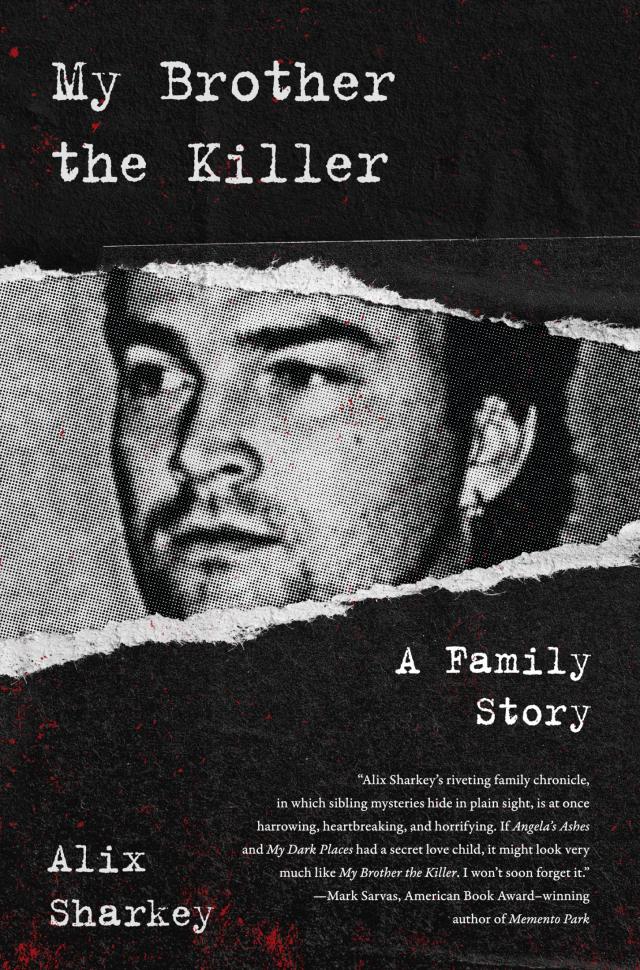
Dedication
For my mother, my daughter and my wife.
Epigraph
Tilbury Docks . . . are very modern, but their remoteness and isolation upon the Essex marsh, the days of failure attending their creation, invested them with a romantic air. Nothing in those days could have been more striking than the vast, empty basins, surrounded by miles of bare quays and the ranges of cargo-sheds, where two or three ships seemed lost like bewitched children in a forest of gaunt, hydraulic cranes. One received a wonderful impression of utter abandonment, of wasted efficiency.
Joseph Conrad, The Mirror of the Sea (1906)
Contents
Cover
Title Page
Dedication
Epigraph
Prologue: My Last Prison Letter, Part One
Chapter 1
Chapter 2
Chapter 3
Chapter 4
Chapter 5
Chapter 6
Chapter 7
Chapter 8
Chapter 9
Chapter 10
Chapter 11
Chapter 12
Chapter 13
Chapter 14
Chapter 15
Chapter 16
Chapter 17
Chapter 18
Chapter 19
Chapter 20
Chapter 21
Chapter 22
Chapter 23
Chapter 24
Chapter 25
Chapter 26
Chapter 27
Chapter 28
Chapter 29
Chapter 30
Chapter 31
Chapter 32
Chapter 33
Epilogue: My Last Prison Letter, Part Two
Acknowledgements
Credits
Photo Section
About the Author
Copyright
About the Publisher
Prologue:
My Last Prison Letter, Part One
Dear Stuart,
Almost 20 years have passed since we last met, on a muggy afternoon in August 2001. Shortly afterwards you were arrested for Danielle’s abduction and murder, and remanded in custody to await trial. Ever since your conviction in December 2002, you have been serving a life sentence behind the watchtowers, razor wire, steel doors and three-foot brick walls of a Victorian prison in West Yorkshire. I assume that’s where you are now, as you read these words.
Despite never having visited, I’ve read that HMP Wakefield is Western Europe’s largest maximum-security prison, housing over 700 of the UK’s most dangerous offenders: serial killers and rapists, child murderers, psychopaths and paedophiles. Apparently, even the guards call it Monster Mansion.
I guess by now it must feel like home.
In your absence the world has changed drastically. Smartphones and tablets, video streaming, Google Maps, YouTube, Skype, WhatsApp, surveillance drones – none of these things existed when you were last a free man.
What else has changed? My attitude.
In my previous letters – sent during your first few years in prison – you must have noticed my soothing tone, the way I avoided any hint of accusation, any suggestion that you might be guilty. I was trying to start a conversation in the hope you might one day tell me what you’d done with Danielle’s body.
This time, I won’t mince my words.
You know how I know you’re guilty, Stuart?
I mean, leaving aside all the overwhelming evidence? Circumstantial, perhaps, but strong enough for a jury to convict you in under eight hours. But all that aside?
Your silence.
Imagine if we swapped places. If I were innocent and unjustly convicted – as you once claimed to be – while you were walking around free as the breeze? My screams for help would have deafened you. My letters of outrage would have swamped you. I would have begged, hounded, shamed and harassed you until you secured my release.
Likewise, if you were innocent, I would never have heard the end of it.
For the first few months after your conviction I waited, giving you the benefit of the doubt. I thought, Maybe he’s still angry with me because I suspected him. But if he’s truly innocent, as he claims, and this is all some terrible mistake, then sooner or later he’ll explain his side of things. Eventually he’ll ask for my help.
You never reached out. Not a peep.
That’s how I know you’re guilty.
So why kick this hornet’s nest? In many ways it would be easier to let you continue your charade and eke out your days, slunk in your corner, cut off from the world. And certainly, for a long time, my best course of action seemed to be denial, pretending not to know or care about you. I felt ashamed to be your brother, a nauseating fear of being associated with your crimes, of being judged along with you. That fear turned in on itself, until I began to wonder if we shared the same genetic predisposition, the same pathological tendencies. Even after I managed to quell those doubts, there was still the lingering fear that maybe I couldn’t access the darkest parts of my psyche. Perhaps my deepest nature was inaccessible, hidden even from myself?
I tried to run away. And for a while at least I managed to escape. After I moved to America, I sometimes forgot that I had a brother serving life for killing his teenage niece. And you made that easy, because you never reached out to me. Perhaps you wanted to be forgotten, in the hope that your crime would be forgotten, too.
Trouble is, I can’t go on pretending that I don’t remember, or that this is out of my hands, or all in the past, or nothing to do with me. Maybe you’ve found a way to compartmentalise or trivialise your crime, but I won’t be able to look myself in the mirror unless I try one more time to put this right.
The impetus for this book was anger. I was enraged when I realised you might be released without ever telling Danielle’s parents what you did with her body. Then I got angry with myself. I’d left it far too long to speak out. And many times during the writing of this book, I became furious whenever I thought about you. But though I despise you for what you did, I’m no longer angry with you. And even though the law has now changed, making it far less likely that you will walk free without giving up Danielle’s body, I still feel a responsibility to challenge you.
And so I’m hoping that if I tell the truth, maybe you can, too. Not only would that be the right thing to do, but I suspect deep down you want to make amends and ask forgiveness. To give closure to Danielle’s parents, Tony and Linda, who welcomed you into their home as part of their family.
Equally, I have come to rescue our mother from an ugly legacy. I’m not going to let her life story be defined by your imprisonment for the murder of a little girl who trusted you. I want people to know that she tried her best, even if her naive attempts to protect you sometimes enabled your depravity. Despite those failings, she was and still is the best thing about our family, and if there is anything honest or kind or brave or noble in any of us, we learned it from her.
Naturally, she still loves you, and has never abandoned you.
My feelings towards you are a little more complex.
But Stuart, I do not hate you. I have no hatred for anyone. True, I cannot love you as I once did. Your cruelty makes that all but impossible. Yet I still feel something, some kind of brotherly affection – or at least, attachment. Some desire to save you from yourself, to prevent you from wasting the few years that remain to you.
Over the last three decades I have moved often, from London to Paris, Miami, New York and Los Angeles. Along the way I have discarded piles of ephemera, including photographs, artworks and numbered editions, sketchbooks, notepads and scads of personal documents. Yet when I set out to write this book and went searching through the small trove of personal papers I had always clung to, I found your prison letters, many dating back to the late 70s. Across tens of thousands of miles, over continents and oceans, for almost five decades those letters came with me.
And I’m still trying to understand: why?
Anyway, here we are again.
This is my last prison letter to you, an attempt to reconcile your brutal crime with the memory of a beautiful young boy, my little brother Stuart.
I want to believe that kid still exists.
I want to believe I can still find him and rescue him.
Maybe after I lay out the story of how we got here, we’ll have a better idea of what comes next. So let’s pick this up at the end of the book.
See you on the other side.
Alix
1
Thursday 2 August 2001
45 days since Danielle’s disappearance
It’s a mild Thursday afternoon and the sky is the colour of gunmetal, a typical British summer day. Having left Paris on the 10.15 Eurostar, I arrive at London Waterloo around lunchtime. Running early, I buy six newspapers at WHSmith and settle into a corner of Costa Coffee with my sandwich and Americano. I really don’t need the caffeine because my pulse is already racing as I leaf through the British press, dreading the moment when I turn the page to find a photo of myself, and learn they’ve finally linked me to the missing girl.
But today there’s no news about the case.
Which is good news, and not just for me: there is still hope.
I take the tube to Tower Hill and walk to Fenchurch Street. Around 2 p.m. the Southend train lumbers out of the station on an elevated track through the City of London towards Essex, a journey back to my roots. The first few miles overlook a warren of bustling East End streets, but gradual
Today is anything but normal.
The journey to Grays takes around 25 minutes but carries a lifetime of memories, starting with family trips to London tourist attractions: the Tower, the Zoo, the British Museum. At 15, I would change at Barking and jump the fence at South Tottenham to join the thousands swaggering up the High Road to White Hart Lane. Soon I was riding into the West End and lying about my age to nightclub doormen. Escape velocity was attained in 1976. After bluffing my way into East Ham College, I teamed up with fellow art student Rob Brown and broke into a condemned council flat in Whitechapel. We changed the locks, jerry-rigged the electricity and became punk rock squatters.
I was finally a Londoner.
Since then, any return to Essex would alter my mood. I never again felt fully at home, not even visiting my family, who – at least on my mother’s side – are warm, loving and generous people, quick to see the funny side of things. Despite my best efforts, friends and relatives could sense this reluctance to visit more often, stay longer than necessary. Whatever they suspected, the problem had nothing to do with any sense of superiority. I respected the community I’d left behind but couldn’t be part of it. Lurking at the back of my mind was always the fear that I was only ever a couple of poor decisions from being sucked back into the bleak, violent haze of childhood.
Perhaps that is why, almost a quarter of a century later, I look out across these haunted fields at the barges on the Thames with the feeling that I never truly left.
And maybe never will.
I try to picture the man I’m about to meet – my little brother Stuart. Little as in younger, but no longer smaller. Physically, much bigger. That’s always my first thought, how much bigger he became. And then? Not much else, really. Despite having shared an intensely violent childhood and adolescence in Tilbury, separated by only 14 months, we have long since grown apart. These days he is almost a stranger.
Of course, I can list a handful of facts. He’s a 44-year-old self-employed builder, a one-man firm called Right Price Builders, doing odd jobs around the local area, erecting walls and fences, replacing doors and windows, fixing broken paving. I think he told me a couple of years ago that he’d built an extension on someone’s house. But his personality? Hard to say. Quiet, I suppose. Private. Doesn’t drink alcohol. Years ago, he would spend hours in the gym, weightlifting and bodybuilding, but he no longer pumps iron. At one point he rode a powerful motorcycle – a Kawasaki. But again, not for years. Same with Shotokan karate. In his thirties he was a keen practitioner and trained regularly, but he dropped martial arts long ago. I heard recently that he likes taking photographs. Otherwise, not much to talk about. He lives a tranquil, respectable life with his wife Debbie, who is expecting their first child in about a month. They’ve worked hard and bought a semi-detached, three-bedroom house in a pleasant residential street.
Apart from that I know little about him. I tell myself this is only natural. After all, I moved away from the area decades ago, while he has always lived here – at least during those years when he was not in prison. We grew even more distant after I first moved to Paris in 1996, and since then we’ve rarely seen each other, let alone socialised.
Still, we’ve never lost touch. Always a call on birthdays and at Christmas, a bland chat for 10 minutes – never more, just a check-in – but enough to maintain brotherly bonds. In February 2000 I even called from Nepal to wish him happy birthday, which seems quite conscientious.
Or maybe I was just showing off.
The last time I saw him – and Essex – was in 1996. It was the last Friday in August when I took this same train, the day before the wedding. Stuart and Debbie were waiting in the car park outside Grays station, waiting to drive me to the hotel where their guests would be staying. I remember thinking how precisely everything was planned. How they liked to have everything under control and leave nothing to chance.
And here I am, five years later, riding the same train, back into my past.
Our past.
I get off at Grays and walk out to the car park, where a grey Vauxhall is parked facing the perimeter wall. As I climb into the back seat, both occupants turn to face me. Two plain-clothes officers from the Major Investigation Team of Essex Police.
You made it, says DS Keith Davies with a tight smile.
He’s glad I kept my word. He wasn’t sure I would.
He introduces his colleague, a female detective called Jo Antcliffe, and then runs me through the drill once more, repeating almost word for word what he’d said on the phone a few days earlier.
This isn’t about accusing anyone, he says. In fact, it’s best if you keep an open mind, a cool head. Don’t judge him. Forget what you’ve learned from us about the case. Yes, we have strong suspicions, but we could still be wrong. So it’s important that you remain detached, unemotional. Accusations or aggressive questions, any kind of confrontation would almost certainly be counterproductive, and perhaps even fatal.
Does that mean – ?
He shrugs.
If Stuart has abducted Danielle, he says, there’s still a chance – even now – that she might be alive, locked away somewhere with food and water. That’s the only reason he’s out on bail. If he decides to go check on her, we’ll be following, right behind him, so let’s not alert him to the fact that he’s being watched.
My task is simple: get Stuart to talk about his life, his thoughts and feelings. Listen carefully to his answers and observe his behaviour, develop my own impressions. Be sure not to mention any facts about his past that could only have been learned from the police. Afterwards, we’ll regroup and go over everything, and they’ll ask for my gut feeling.
You know him as well as anyone, maybe better, says Keith Davies. You’re his brother. If anyone can tell whether or not he’s lying, it’s probably you.
We all look at each other and nod. Nobody in the car wants to speak the words that hang in the air: it is now over six weeks since Danielle vanished and at this point her odds are virtually nil. But we cannot give voice to the unthinkable, not yet. Until she is found, one way or another, there is still hope.
I ask where we should meet up when I’m finished.
Head back here, says DS Davies, indicating the train station.
Okay, I’ll call you when I’m on my way.
Don’t bother, he says. You won’t see us, but we’ll be watching.
* * *
We drive to Long Lane, not far from Stuart and Debbie’s house, and I get out to walk the last hundred yards or so. As I approach, a few minutes early, I notice the curtains drawn at every window, an oddly mournful look for late summer. I’m about 20 yards away when the front door opens. Stuart emerges, swiftly locks and deadlocks the front door, and strides out to meet me before I can reach the front gate. It feels like a magic trick. He must have been watching, peering through a tiny gap in the curtains as I walked up to his house. He nods and grunts at the neighbour in the next garden but doesn’t introduce me.
We shake hands and greet each other in our curt, masculine way. The way we’ve grown accustomed to down the years.
Good to see you, I say.
Yeah, he says. How’d you get down here, take the train?
Of course.
You didn’t walk from the station? You should have called me to come and get you.
No, got a cab, but had him drop me off at the corner. You know, more discreet.
Oh, right, he says, eyeing me suspiciously.
Ten seconds in and I’m already lying. I suspect he knows, and wonder if I’ve already failed in my mission.
Let’s walk, he says.
We’re not going inside?
No, he says. Got to buy a pump filter from the hardware store around the corner. It’ll only take five minutes, then we can get something to eat.
At three o’clock in the afternoon?
Maybe just a coffee then.


