

Chance Encounters, page 41


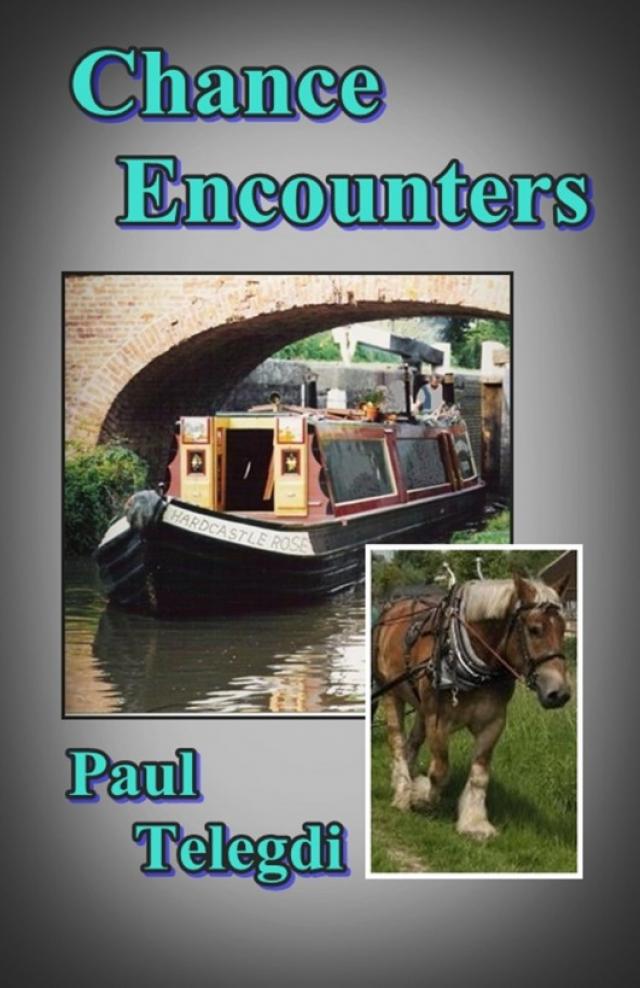
Chance Encounters
by Paul Telegdi
A historical novel of chances and missed opportunities
Published by Paul Telegdi on Smashwords
Copyright © 2012 by Paul Telegdi
This book is a work of fiction in its entirety. Any similarities to persons living or dead are strictly coincidental.
This ebook is licensed for your personal enjoyment only and may not be re-sold or given away to other people.
Dedicated to my wife, Melanie Telegdi.
for all her love and help to my stories and characters
To enjoy other books by Paul Telegdi please search on Smashwords or visit http://www.seeWordFactory.com
The paranormal-crime Dreamcast Series:
Dreamcast...
Dreamcast 2
Dreamcast 3
Dreamcast 4
Historical fiction: Where Arrows Fly
More paranormal: The Call at 3:18 am
Contents:
The Canal chapters 1-5
The Passage chapters 6-15
The Camp chapter 16
By Rail chapters 17-19
The Sluice Box chapters 20-25
Home chapter 26
Preface
I very much enjoyed writing this book taking me to places I have always been interested in. Although there is a veneer of factual accuracy, this book is not a well-researched historical document. The intent here was to imagine being in a certain place in a given time span. Again, I twist time and events to suit the needs of my story. The distortion doesn’t bother me as long as I succeed in giving you the flavor of the time and make you feel a part of it.
In a sense I feel justified in taking such liberties because people living in the times I describe were often no more knowledgeable about what was happening around them. I make no apologies for the license, beyond warning that just because you read it here doesn’t necessarily make it true.
Having said all that, let me welcome you to the story and my latest cast of friends. Paul Telegdi
The Canal
Chapter 1
Chance was breathing heavily, in and out, the fetid air trapped in the tunnel of the Wexworth Canal. He was lying on his back on the cabin top of the narrow boat, his hands holding onto the roof’s edges, his legs up in the air, walking on the tunnel ceiling, pushing the boat along. He was tired and miserable. Gritty brick dust filled the lines of his face and he was desperately thirsty. Where is that good-for-nothing Colin. Sleeping up front no doubt.
“Faster! Move your bloody arse. I want to get out of here today,” Nigel at the tiller barked; he was nervous on account of his claustrophobia in such tight quarters. There were only four inches on either side, and hunched over, maybe that much on top. To make it worse, the tunnel was dark. He peered forward, the view hardly visible by the weak glow of the front lantern. “Damned that Colin, he ought to have trimmed that wick better.”
Swearing under his breath, Chance pushed the boat along at a snail’s pace. The narrow canal boat was heavy, fully loaded with coal, with a small stall at the front housing two horses in tight quarters and the cabin at the back. All that moved by his leg muscles alone. Chance groaned.
The hatch slid back and Ruth poked her head out. “Will it be long? I can’t start the stove until we’re out of here.”
“It won’t be long now. Another quarter mile.”
A quarter mile yet to go? Chance thought despairingly; he’d never last that long. Where was Colin?
Nigel must have had the same question for he yelled to the front, “Colin, get out here you lazy, good-for-nothing shirker... or I’ll have your hide to hang for a flag.”
Colin couldn’t ignore a direct summons. On all fours he scrambled over the piles of coal in the mid-sections. “Whatcha hollering about?” he puzzled with an innocent expression on his face.
“Where have you been?”
“Keeping Big Red calm. He don’t like darkness at midday and gets skittish...”
Liar, Chance thought, Cricket maybe but not Big Red.
“Tell me no tales. Get on your back and help Chance leg us out of here!”
Reluctantly Colin wedged himself onto the cabin roof and pushed with his feet against the brick ceiling. The narrow boat moved forward with a little more energy. Soon, however, Colin was groaning with every step, making a great production out of his effort. Chance grimly walked on, all his muscles burning. He felt like throwing up.
“Push on, boys. I can see light ahead,” Nigel said, much relieved. The tunnel was coming around a slow curve and each step revealed more light spilling in from its mouth. Soon, like a waxing moon rising into darkness, the full semicircle of the entrance greeted them. The narrow boat shuddered when the bright glow ahead blinded Nigel, who allowed the boat to rub against the side. Nigel cursed and moved the large tiller the other way.
“Watch it, man, you’re spoiling the god-damned paint work,” Colin grumbled; he couldn’t keep his opinions to himself, ever, even to the boss man. Most times, Nigel let him get away with it, but he was tired of this dank tunnel, tired of holding his neck in while his hair brushed the brick ceiling.
“Watch your mouth boy, or you’ll be swallowing my fist.”
Chance pushed on, afraid even to pause and not be able to restart his aching legs again. Above him the bricks became more visible in the growing light. Desperately he counted the courses, anything to distract him from the pain and the grinding exhaustion.
Then suddenly, the light of the world burst over him and there were no more bricks to walk upon. His legs still twitched as he let them drop to the cabin roof. He was beyond feeling relief, beyond caring; he just wanted to close his eyes and sleep for a year.
Nigel grabbed a long pole and pushed them over to the right bank. Here the canal opened up to allow boats mooring to wait out the time until the tunnel became free in their directions. On the opposite shore were three boats waiting, two, empty, heading for the coal fields to pick up a new load. A Newbury boat was loaded with hay, probably intended for the cavalry barracks at Plainfield.
“There’re four more boats behind me coming through,” Nigel yelled over to the waiting boats, calculating that they had about an hour and half more to wait.
Chance sat up, every muscle protesting. Colin pretended great fatigue, clutching his stomach. Nigel connected the stove pipe extension and yelled below into the cabin, “Ruthie, you can start cooking now.” He then swatted Colin’s feet hard, “Get up you lazy bum. Get the horses ashore, hitch them up and let’s get moving. I want to be well away before the others arrive and cause a backlog to jam us in here.”
“But I’m hungry...”
“Bull shit on that. You’ll eat at Harper’s Junction, no sooner. Now get your lazy arse moving.”
Reluctantly Colin bestirred himself. Chance was already crossing the coal in the hold to the stall. He let himself down between the two horses. Big Red snorted irritably and even Cricket looked pained. Damn that Colin, he didn’t leave them any feed to pacify them. Quickly he scattered some hay for the horses, then he jumped ashore to tie the boat solid to the quay. He wrestled the gangplank to bridge the boat to shore. Colin arrived, dragging his feet.
“Tie up the plank,” Chance instructed Colin.
“No need to do extra work...”
“Remember Clearwater, when the plank slipped because you didn’t tie it down? Lucky Red didn’t break a leg. Nigel would’ve skinned you alive.” Reluctantly, as he did all things, Colin tied down the plank. The two of them then got Big Red up the ramp, and out onto dry land. The big horse looked relieved and started nibbling on the fresh grass. The smaller horse, Cricket, was always easier, and soon both horses were harnessed to the tow rope and ready to go. The two boys stowed away the planks and untied the narrow boat.
“Ready,” Chance yelled to Nigel sitting on the small rear deck with a pipe in his fist. He stood and looked up and down the canal, before giving them the go ahead. Colin jumped back on board and disappeared into the stall. He’d better be cleaning the place, Chance thought, and not be stealing a quick nap. He couldn’t understand Colin. The boy was a street urchin, picked up from the riverfront in London, no family or prospects, but so lazy... risking his secure position here on the Hardcastle Rose piloted by Niles Turnbuttle through the rivers and canals. Colin had been ransomed from a workhouse his uncle sold him into. Now he was indentured to Mr. Charles Robson who owned the Hardcastle Rose and five more boats besides.
Chance grabbed Red’s lead and started along the tow path. Red pulled and behind the big gelding, Cricket pulled; the narrow boat slowly swung free of shore just as the next boat emerged from the tunnel―a grain boat, hauling rye covered with canvas. Chance looked back at the clean boat wistfully. Aboard the collier everything was dark, gritty and dirty. The Hardcastle Rose transported coal from the coal fields to the north to London for the factories or household sales, or even into the Thames estuary for the steamships to use. Always the same, load on, the long haul, and load off. They had no cargo on the way back and consequently, the return journey was always easier even against the river current.
After the first mile of steady pace, with the horses moving leisurely and the boat following faithfully behind, Chance’s muscles eased from their exertions in the tunnel. The canal was cutting across the countryside, with ripening crops on either side. If Colin were awake, he’d be raiding those orchards. The boy was shameless and... fearless. One day he’ll wake up in the workhouse or on his way to Australia. And Chance shuddered.<
The June sun was warm, but the path was shaded by a line of elms that edged the gravel path. Once moving, the narrow boat was hardly any trouble, and Chance and the horses marched along at an easy clip, Chance lengthening his stride just a little to reach Harper’s Junction for the promised lunch. He looked back and noted with satisfaction the smoke rising from the chimney. He wondered what Ruth had in mind for today. Beans or cabbage with bacon or mutton; there was not much else in the larder. He was looking forward to the fresh bread they had bought before the tunnel. Did she also buy some sweet tarts? Probably not; there were but a few pennies in the money box that had to last the rest of the week.
They passed another boat heading upstream, and people waved to each other. Harry Cruickshank and his boys, returning empty.
“How’s it at the tunnel?” old man Cruickshank asked.
“You got maybe eight boats ahead of you,” Neal answered.
“Oh, hell. Means I won’t get through till nightfall.”
“How’re the locks at Harper’s?” Neal queried in his turn.
“The usual. Some barge traffic. But the Beaston Boys mean to overnight at the Inn.” The Beaston boys were four brothers, two fiddlers, a bass and a hand drum. They were popular wherever they stopped.
At their plodding pace, the miles rolled by. Wasn’t hard, the horses didn’t even break into a sweat. Red was getting hungry and would try to get a mouthful of fresh grass by the path but Chance wouldn’t let him. The boat floated just a few yards off shore, making room for infrequent opposing traffic.
It was a sunny, beautiful day, just the country with hardly a building in view. That would change soon when they hit the industrial district east of the city. But for now, birds sang in the bushes and insects hummed in the tall grass. Disturbed by the boat’s approach, frogs dove into the muddy water of the canal. Just ahead a man fishing got reluctantly out of their way, muttering darkly that the passing would scatter “his” fish, but he had nothing in his pail yet.
They came to a giant willow that hung over the water, interrupting their progress. The tree was reputed to be over two hundred years old and was protected by law. They had to uncouple the tow line and pass it behind the obstructing tree to resume their journey. They’d done this so often that even the horses knew the routine. Red, of course, didn’t want to continue. He was grazing by the side, and Chance had to jerk him hard into compliance. It reminded him how hungry he was; again he thought of the menu for the day. Not lentils, he hoped; he hated lentils, for that was all they’d served in the workhouse, expecting him to labor all day on the thin fare. May they all rot in hell for all the misery they allowed in their institutions.
Ahead, a cluster of buildings appeared, Harper’s Junction. Not much, just the lock, the small caretaker cottage, The Griffin Inn, a small store, and a couple more thatch-covered houses. Chance increased his pace and even the horses perked up, sensing the end of their journey for the day. It didn’t take them long to reach the place. Chance uncoupled the tow rope, tossing it aboard, and tied the horses to the hitching posts. He jumped aboard and peered into the stall. Of course it hadn’t been cleaned; Colin was snoring in his hammock off to one side. Chance spilled him from his nest, and Colin came up ready to fight.
“Help me get the boat into the lock.”
“Help yourself...” Colin sputtered, but they went top side and grabbing the lock rope, the two pulled the narrow boat into the lock that was exactly 7’ 2” wide, barely large enough to accept the 68 foot Hardcastle Rose with its 6’10” beam. Nigel used a long pole to keep them off the walls.
The lock-wife appeared and extended a long pole ending in a small basket to Nigel who dropped the pass-through fee into it. The woman winched the lock gate shut behind them and went forward to open the cocks to lower the water level by five feet. It was an odd sensation to feel the boat “sink” lower into the lock basin. When they reached the bottom, the lock-wife winched open the lower gate to let them out. Again the boys strained to pull the boat through the narrow constriction.
On the other side two boats were waiting. To conserve water, a boat had to come down before the lock would be emptied and a boat could go up, which sometimes meant having to wait for hours.
Chance looked up to see the woman atop the lock gate with basket in hand again, waiting for the upstream traffic. She was middle-aged, sunburned, sinewy tough. Abruptly she turned toward the cottage, yelling something in a dialect, and Chance caught a glimpse of her legs in the swirl of her long skirt.
Then The Hardcastle Rose was through and the boys jumped ashore to pull the boat further down the canal trail. Two boats were there already, no doubt intending to spend the night; their stove stacks discharged volumes of smoke and a pleasant odor of cooking food spread through the air.
“Welcome,” Brian Fair called to Nigel, tipping his cap. Chance regarded the other boat with awe. The colors were so fresh, the panels decorated with flowers, birds and rural scenes. No doubt retouched every day. Brian Fair was proud of his boat, ferrying coal. The man had two sons working with him, not strangers like Chance and Colin, jobbing on someone’s boat. The Hardcastle Rose was painted in heavy colors, gray, green and red, and had only two panels depicting the “hardcastle” for which it was named. Mr. Robson was not a bad owner, but he didn’t care for decorative detail. He watched his ledger balance, what earned him money and what didn’t.
Ahead was the Briar, the blue and white boat belonging to the Beaston Boys from Liverpool. They were never in any hurry, as they earned quite well entertaining all along the way their cargo took them. They didn’t have to work themselves into the exhaustion that was the common fate of other working boats. They could just sing, play their instruments, and drink the free beer the innkeeper served them. They could also count on a handful of coppers to come their way from an appreciative audience that had little else to entertain them.
“Go get the horses,” Chance directed Colin. He made busy securing the Hardcastle Rose to the mooring cleats.
“Go get them yourself.”
“I would, but I’d also tell Master Nigel that you slept the whole afternoon away.”
Colin dragged himself around the lock enclosure and returned, leading the two horses. Chance opened the gate to the small pasture, fenced in for the horses passing through. Big Red snorted suspiciously at the three horses already there. Cricket loped happily over to the others and introduced herself.
“Supper,” Ruth called, sticking her head above the cabin for a quick look around. “Oh, the Beastons,” she exclaimed happily.
“Don’t even think about going. No self-respecting woman shows herself where river rats drink and gamble,” Nigel pounced on his niece. She was fifteen, borrowed from his older brother Steven to do washing and cooking.
“I have no self-respect,” she pouted.
“I have enough for both of us,” Nigel retorted, cutting her off. What was she thinking, wanting to go into a public house where only floozies showed themselves? She could listen from the outside.
They trooped down the three steps into the cramped cabin and squeezed themselves around the small table. It was shredded cabbage with a bit of sausage cooked in it. Chance ate quickly, as he’d learned at the workhouse. Ruth ladled out some more for him.
“Taste good?” she asked, hopefully.
Taste, Chance considered, when had it ever come to taste? He ate because he was hungry and his body craved food. Food was fuel for all the work he was expected to do. It was a need, rarely good enough to enjoy. He held out his bowl and she gave him another spoonful. It wasn’t good, but it wasn’t bad either. She made the best with the few ingredients she had, allowed by their meager food kitty. It’d be easy to cook well if one could afford the spices and all the condiments. Salt and a little pepper was all they had. Sometimes a whole onion to add zest, but little else.
Chance had to loosen his belt to ease his stomach. At least the piece of bread had been fresh, baked only this morning. He burped quietly. Finished with his meal, Nigel took out his pipe and filled the bowl with dark tobacco. He lit it, and soon filled the small cabin with the smoke. They sat there quietly, enjoying for the moment that nothing needed doing urgently.


