

Feverland, page 1


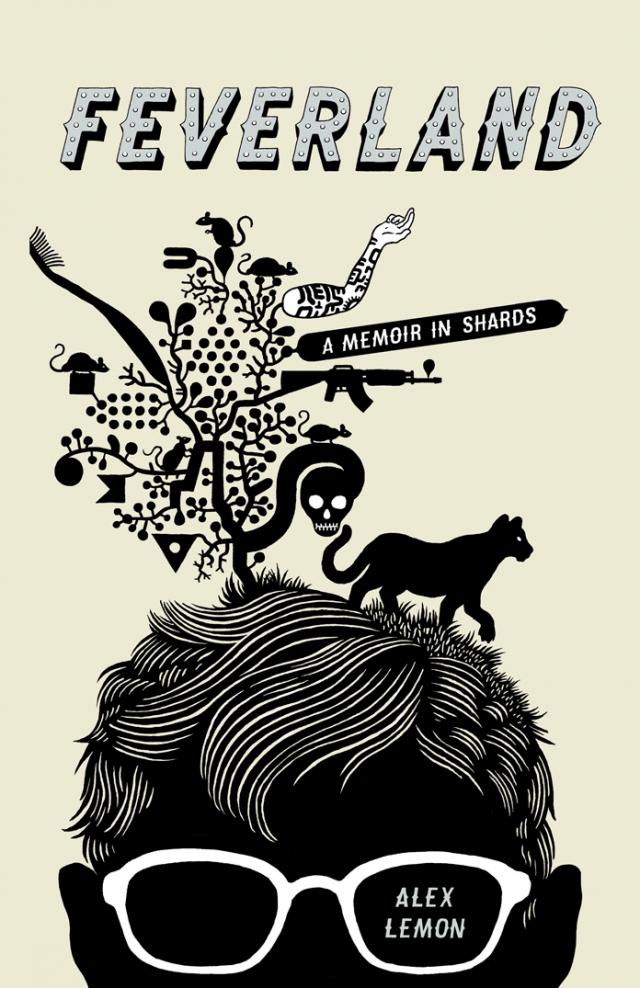
© 2017, Text by Alex Lemon
© 2017, Cover art by Anders Nilsen
All rights reserved. Except for brief quotations in critical articles or reviews, no part of this book may be reproduced in any manner without prior written permission from the publisher: Milkweed Editions, 1011 Washington Avenue South, Suite 300, Minneapolis, Minnesota 55415.
(800) 520-6455
milkweed.org
Published 2017 by Milkweed Editions
Cover design by Anders Nilsen and Mary Austin Speaker
Cover illustration by Anders Nilsen
Author photo by Ariane Balizet
First Edition
17 18 19 20 21 5 4 3 2 1
Milkweed Editions, an independent nonprofit publisher, gratefully acknowledges sustaining support from the Jerome Foundation; the Lindquist & Vennum Foundation; the McKnight Foundation; the National Endowment for the Arts; the Target Foundation; and other generous contributions from foundations, corporations, and individuals. Also, this activity is made possible by the voters of Minnesota through a Minnesota State Arts Board Operating Support grant, thanks to a legislative appropriation from the arts and cultural heritage fund, and a grant from the Wells Fargo Foundation. For a full listing of Milkweed Editions supporters, please visit milkweed.org.
Library of Congress Cataloging-in-Publication Data
Names: Lemon, Alex, author.
Title: Feverland: a memoir in shards / Alex Lemon.
Description: First edition. | Minneapolis, Minnesota: Milkweed Editions, 2017. | Includes bibliographical references.
Identifiers: LCCN 2017011038 (print) | LCCN 2017029387 (ebook) | ISBN 9781571318428 (ebook)
Subjects: LCSH: Lemon, Alex. | Poets, American—21st century—Biography.
Classification: LCC PS3612.E468 (ebook) | LCC PS3612.E468 Z46 2017 (print) | DDC 811/.6 [B]—dc23
LC record available at https://lccn.loc.gov/2017011038
Milkweed Editions is committed to ecological stewardship. We strive to align our book production practices with this principle, and to reduce the impact of our operations in the environment. We are a member of the Green Press Initiative, a nonprofit coalition of publishers, manufacturers, and authors working to protect the world’s endangered forests and conserve natural resources. Feverland was printed on acid-free 100% postconsumer-waste paper by Thomson-Shore.
For Ariane, Felix, and Alma—my everythings
Contents
EKG
I Was Already Ready When I Was Dead
Migrants in a Feverland
Kissing God
King of the Rats
Migrants in a Feverland
My Misogyny
Heartdusting
I Can Hold My Breath Forever
Things That Are: On Pleasure
Migrants in a Feverland
Like So Many Nightmares
Migrants in a Feverland
Rabbit Hole Music
Way Up High Way Down Low
Migrants in a Feverland
Becoming Animal: A History
How Long Before You Go Dry
All Night the Cockroaches
Migrants in a Feverland
Fuck the Alamo; or, Never Forget: A Mixtape
Notes
Acknowledgments
How is it that you live, and what is it you do?
—WILLIAM WORDSWORTH
Thus strangely are our souls constructed, and by such slight ligaments are we bound to prosperity or ruin.
—MARY SHELLEY, FRANKENSTEIN
My ambitions are very old and simple and almost always unvoiced. I want to be whole. I do not know what this condition would feel like and there is no advice on the matter that convinces me. I am not exactly sure what whole means, and to be honest, it sounds too much like being finished.
—CHARLES BOWDEN, SOME OF THE DEAD ARE STILL BREATHING: LIVING IN THE FUTURE
If at home, sir,
He’s all my exercise, my mirth, my matter,
Now my sworn friend and then mine enemy,
My parasite, my soldier, statesman, all:
He makes a July’s day short as December,
And with his varying childness cures in me
Thoughts that would thick my blood.
—WILLIAM SHAKESPEARE, THE WINTER’S TALE
EKG
I heart the rock-and-roll stardust, steroids that let you live, all the spilled love and still being alive. I heart Twizzlers, tangerines, until the stomach can’t take any more. I heart knots, the perfect peel. I heart the heaving. I heart banging my head when I fall in the shower, banging my head on the curb. I heart making out in the ghosting cold. I heart the lips warm. I heart shame on me. Novocain, hydrocodone is what I heart. Ativan, Percocet, I heart you, too. Heart a handful of heart-shaped candies. I heart the moist perfume of Whoppers on the fingers I kiss. I heart the past—drinking through the blackouts and onward, crashing ass over piehole down the apartment stairs. Pills, I heart pills. I heart waking with my head’s dried blood glued to the pillow. I heart asparagus-and-beet salad dusted with manchego. Not remembering speaking to you, that is what I heart. What did I say? I heart. I heart it all wrong, I heart it until it shatters into a thousand sharp hummingbirds. I heart my mother pushing my wheelchair through leaves along the barge-clanging Mississippi. I heart muggings, the quick cut, the knockdown. I heart shame on you. I heart it right. I heart keeping my fingers crossed. I heart going for long, cane-dragging walks, smoking cigarette after cigarette in Minnesota’s winter air—puffing myself light-headed, until I fall into the snow. Too deep, I heart, too long. I heart having nothing while pretending to have it all. I heart every last joint that I’ve smoked, every pop, every line. I heart the pretty. I heart instead, maybe, might. I can’t see, I heart you. I heart walking blindly into traffic. I heart still believing in something better. Still believing, I heart. I believe, I heart. I heart dead animals beneath my bed, in the walls. I heart visitors. I heart I am not home. I heart songs that go on too long. I heart a tight chest. I can’t breathe, I heart. Numb face, too, I heart. I heart amphetamines, amphetamines, amphetamines. The shock of the coldest water, I heart. The ugly, the ugliest, I heart you, too. The belly-up flies on the windowsill, I heart, the orange peels drying in the sun. I heart making love premorning. I heart that assemblage, the way it all falls down. I heart never getting tired. I heart not being able to get out of bed. Codeine my heart, I heart. I heart the bed spins that come each night, the vertigo that makes me claw the air. I heart the butcher beneath my ribs. I heart it all wrong. I heart no speed limit and flicking my headlights off. I heart swerving beneath the moonlight. I heart the kitchen with the oven baking bread. I heart the midnight inside me, nailholed with starlight. I heart the slowdown, the traffic jam. I heart gutting walleye along the shore, the turtles sunning on rocks. The guts, I heart. I heart your body. Your body, I heart. I heart the darkness my boy tells me he knows. His thundering run through our home, I heart—the way he starfishes in his sleep. I heart the bruise of watching him grow up too fast. The good burn and blister of my daughter’s fat-cheeked grin, I heart. I heart knowing I can do nothing about the pain the world will deliver upon them. I heart trying to soak up as much hurt as I can. I heart there is no time to give up, there is so little time. The art of the impossible, I heart. The heart, I heart, I heart. Each ache inside me, I heart. Open windows in winter and blue skies, I heart. That hard work of the heart, I heart. The heart overripe, I heart, the heart always raw. The heart churning, I heart, the heart aflame. The good heart gone bad, I heart, the good heart always coming back. The chandelier heart, I heart, its wicked sparkle, its champion gleam. I heart this heart, this last, this only, this heart glowing swollen because always, we are all about to die.
I WAS ALREADY READY WHEN I WAS DEAD
I have seen such things as they occur in some remote and improbable time.
—C. D. WRIGHT
I’m trying to read poems, to find solace in language, but really I’m just sitting in my living room with the TV on. “BURN IN THE USA” is stamped across the ticker of the ten o’ clock news. A slideshow of images—charcoal drawings from the day’s Zacarias Moussaoui trial—run alongside it. I flick the TV volume up. Listen as the blindingly white teeth of the anchor snap and click over courtroom drawings, as audio of 911 calls crackles over the video everyone has seen a hundred times more than they’d like to: the jet vanishing into the thousand-eyed building, smoke billowing into the New York morning as leapers drop to the earth, dust-faced gawkers pointing at the shuddering tower as it begins to fold downward.
Cut back to the news desk. The newscasters stare wordlessly, motionlessly, into the camera for a second, then another—so long the moment seems frozen—until something signals the two to churn back to life. The woman turns to her coanchor. The camera zooms in on his mannequin face. Another death statistic drops woodenly from his mouth. I hit mute.
Above the TV, one of my stepfather’s paintings hangs half-cocked, a beautiful landscape of bruised woods shrouded by night. The trees are Giacometti-like, black-and-blue apparitions. Slatherings of moonlight crawl between the trunks and branches. Often I imagine clambering into it. The moonlight hot, rushing the blood. Boughs snapping above and around me, as if the cage of my life had been welded together from millions of breaking ribs.
Though my brain surgery—in which a vascular malformation was removed from my brain stem—was seven years ago, still my entire body hurts. My health is detonating. Each day my disabilities seem to worsen.
The cat head-butts my blistered hand, prodding and ramming until I cup her tiny skull. She purrs and pivots in my palm, and kneads her claws against my belly. It is hours past her feeding time. On the coffee table in front of us, atop a pile of tattered magazines, my cell phone jumps. My entire body jolts in surprise. Catface leaps off me and sprints out of the room. I listen to her scamper down the basement steps, scrabble up a mound of unpacked boxes, and then claw and slink into the paneled ceiling, and I am reminded of my aloneness. Lonely in the silent house and a stranger to myself.
I’ve been waiting for months to be told if I have a tumor-growing syndrome that I’d likely pass on to any future children. Waiting to be told whether I will ever have a family.
The glass screech of the bird feeder swinging against the window scissors apart the quiet. The phone’s screen blinks as I rise from the couch.
Nights are the worst. Sleep will be impossible and the phone is blinking again and suddenly my chest is tight. It feels as if the world is collapsing down on me, strange and hot breathing in my face.
The phone jukes sideways. In the basement ceiling below me, Catface is skulking. Scree-scree-scree.
The calamity parade is unstoppable this year: All the torture, the poor handling of Katrina. Miners trapped miles beneath the earth who die, already buried, and are forgotten within a week. Mudslides, earthquakes, stampedes. Another shooting spree, another family murdered. Each day a roadside bomb, a sunk ferry. Mass graves. And the vice president shot his friend in the face.
I need to talk, want someone to assure me that this place isn’t as fucking horrible as I think it is.
The unbreachable gap between the pathos of the artwork—an aesthetic quality—and the experience that produced it and that it produces—a moral quality—means that there is no straight path from the artwork to life-action. The two—aesthetic impression and moral sympathy—cannot coincide in themselves, though they may find temporary coincidence in the mind of one responding to the artwork.
—HELEN VENDLER, INVISIBLE LISTENERS: LYRIC INTIMACY IN HERBERT, WHITMAN, AND ASHBERY
It’s not even spring yet in Minnesota, but already the kitchen air is cottony and humid. In the distance—somewhere across the bridge, on the other side of the Mississippi—sirens winnow. The melting ice fills the air with groans and drips and clatterings. Out front, earlier today, the muffled conversation of walkers taking advantage of the warmth.
It is so beautiful. The lazy weeping of winter as the world inches itself back into the dirt. Pearls falling from the eaves, growing larger and larger holes in the snowbanks.
But I can hardly see it. I can hardly see anything. Another day chewed apart by medical appointments. Another week on medical leave. My face sweat-greased, burning beneath the eye patch in the razor-sharp strap. No urge to do anything, no heartbeat in my chest.
I am alone, lonely—waiting, always waiting, and getting sicker. I want to lose myself in poems tonight. Have them swallow me whole.
Next door the British lady’s porch light winks off. She’s just home from the hospital. This morning I saw the top half of her face in her window, peeking out at the street. Her cigarette smoke seemed to rise from a pyre of hair.
Tomorrow it will be more of the same. Joggers in the slush. Melt gurgling in the slicked streets. Rivers along the curbs. Breaking tree limbs falling from the sky.
And all over again, surely, more bad news.
Good Friday. Good God. Goddamn.
When I tear open a package, wet cat food spoots into Catface’s dish. The last tuna-flavored squeeze dribbles over my fingertips. I streak the chunky paste down the thighs of my jeans—the same ones I’ve worn all week—and pick up my phone. The text is from my fiancée, who right now is sitting in a hotel room in Philadelphia reading Shakespeare. I have to squint, close one eye to read it. Six digital words, all buzz-sawed twenty-first-century language.
Tomorrow I will again use this phone to call the doctor, again ask the receptionist if the results of the genetic test are in. Again she will say not yet—that they will call me when it’s time.
Your gesture which is neither embrace nor warning
But which holds something of both
—JOHN ASHBERY, “SELF-PORTRAIT IN A CONVEX MIRROR”
After refilling the Groveland Tap pint glass that Catface laps water from, I watch her hunch over the food dish. Shoulder bones press from her cobalt fur. She takes a bit of the mush in her incisors, looks up at me, then whiplashes her skull backward. I open my mouth and thrash my head, mimicking her—to know the pleasure she gets from that kind of car-wreck eating—but it only makes me dizzy and nauseous. I steady myself against the counter-top, sigh as she throttles more food into her mouth.
I take the trash out back and stand in the snow-glowing yard, listening to the rumble and blink of my neighborhood, Prospect Park. Jets landing and taking off a few miles south, the constant hum of the campus down the hill, cars passing through the slush on University Avenue.
Drifting slowly through the porch shadows, I think about the photos my fiancée e-mailed me this afternoon. In one she’s grinning, crouched over the hole Benjamin Franklin buried his shit in. In another she’s giving the camera a thumbs-up. I start laughing and round fist-size snowballs in my hands until they are concrete hard and slam them off the garage door. My fingers and hands go numb and disappear in the blackness. From the dryer vent in the neighbor’s basement, steam chugs into the cooling air.
Back in the living room, the flashing screen wrenches me forward. I turn the volume back on and slump on the couch. The news footage is of a high-speed chase filmed from a cop’s dashboard camera. Blue-shadowed jumps, and cars yanked to the shoulder of the road before the Lexus misses its turn. Its headlights pierce the air as it vanishes into a ditch and then twists around a tree on the other side. Smoke and flames wisp into the tree’s limbs.
The news isn’t worth watching—I know this—and it’s probably making me worse, but I can’t turn it off. The apartment feels almost comfortable, like a home, like a place I can be OK in, when I turn up the TV loud enough to be clearly heard from down the block.
To make the days feel as if they have substance, I want—need—everything to be worth it. I want to twist everything out of this life, slurp from it every last drop.
I pick up my collection of Ashbery’s poems. I let the lines twist and tumble me through them. I have so little, barely even words, but art is a bomb shelter packed with dynamite, the bottom of an ocean where somehow I can breathe. When writing, I can make my own livable world, a safe house, a hideout.
When I next look up at the TV a man in a Minnesota Twins hat is weeping into his hands, sputtering out half words because the Ford assembly and production plant on the Mississippi River in Saint Paul is going to shut down soon. Downsizing. Going international.
“I had the same job my father did,” he gasps, red cheeked. “I can’t do anything else.” Video of an assembly line of Ford Explorers follows, then an interview with a union rep, a curved scar over his lip and cheek.
“After the shock, we’ll all be OK,” he says. “It will all be OK.” The way he speaks, the undertow of his voice, reminds me of a Saturday morning in college when I woke up in the woods near that same Ford plant. “Somehow,” he says slowly, “it will all be OK.”
My T-shirt was nowhere. My shorts were down, torn. Scratches crosshatched my forearms.
I do not want to remember that man, the person I was, that sometimes I can’t seem to stop myself from being. I want him to stay in the past tense. But always I think of him. There is too much failure inside me still, too much slippage and hook. I try to love him, forgive, but it’s impossible.
I stare at the TV, look down at the cat, ask her how one reshapes the world around oneself so one can get better. “How?” I ask her. “Huh?” This world makes it so easy to be a bad person. It excels at making you feel worthless. To see brutality and become brutal. Perched on the coffee table, Catface licks her paw before looking back at me and turning her head to the side, quizzical, asking what the fuck I am talking about now. I swat at her with my book. Throw a pen at the TV.


