

Ghosts of the Arizona, page 1


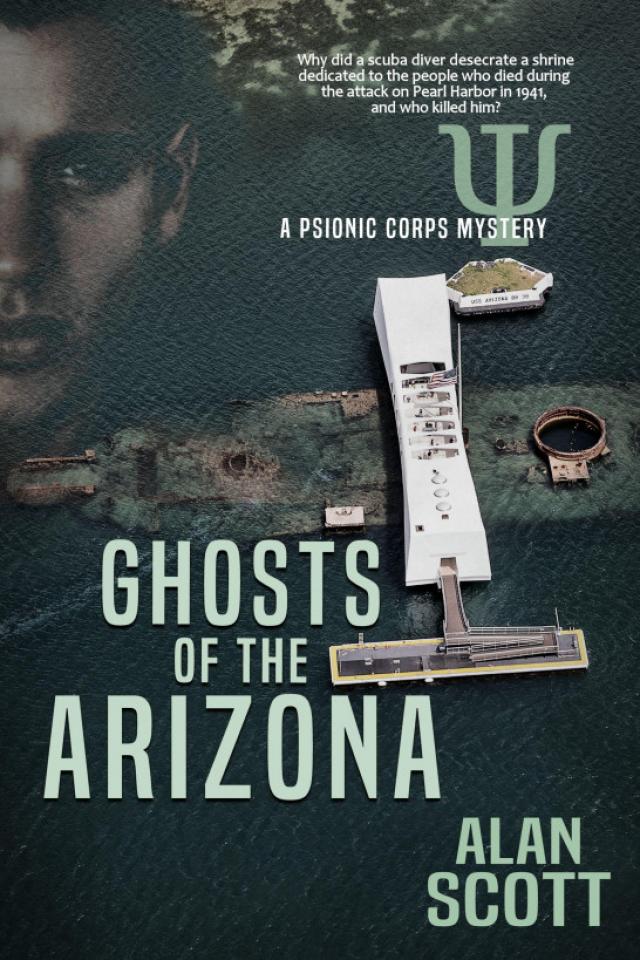
GHOSTS OF THE ARIZONA
Alan Scott
Published By Purple Sword Publications, LLC
This is a work of fiction. Names, places, characters, and events are fictitious in every regard. Any similarities to actual events and persons, living or dead, is purely coincidental. Any trademarks, service marks, product names, or named features are assumed to be the property of their respective owners, and are used only for reference. There is no implied endorsement if any of these terms are used. Except for review purposes, the reproduction of this book in whole or part, electronically or mechanically, constitutes a copyright violation.
Copyright © 2023 ALAN SCOTT
All rights reserved.
Smashwords Version
ISBN: 9798215454947
Edited by Shoshana Hurwitz and Traci Markou
Cover Art Copyright DusktilDawn Designs
www.dusktildawndesigns.com
Table of Contents
GHOSTS OF THE ARIZONA
Prologue
Chapter 1
Chapter 2
Chapter 3
Chapter 4
Chapter 5
Chapter 6
Chapter 7
Chapter 8
Chapter 9
Chapter 10
Chapter 11
Chapter 12
Chapter 13
Chapter 14
Chapter 15
Chapter 16
Epilogue
Acknowledgements:
About the Author
Prologue
December 7, 1941, 0045AM
The mini-submarine I-16 detached itself from the mother sub and set course to the east. Sub-lieutenant Masaharu Yokoyama, the senior officer, round-faced and stoic expression, ordered a speed of four knots. That would put them at the mouth of the channel to Pearl Harbor, Hawai’i, in a little over two hours. There, they would wait for the antisubmarine net to open and enter the channel.
Warrant officer Sadamu Komita set the rudder and acknowledged the correct heading. The interior fell silent except for the sounds of the sub’s propulsion system. The two Japanese naval men had their orders to enter Pearl Harbor during the air raid and release her two torpedoes onto Battleship Row.
But they had another assignment, one that didn’t require sitting submerged for what could be hours, carbon dioxide levels rising, in the slim hope the anti-subnet would open.
Yokoyama kept a lookout through the periscope. The dim lights on the coast of Oahu just several miles away gave the area scant illumination, allowing him to spot any American ships nearby. He swept the horizon.
The lights of a minesweeper showed from a mile away. Yokoyama did not panic. He was too seasoned for that. He made a quick hand signal to Komita to remain silent and resumed his watch to see if the vessel changed course to give chase. It would be unlikely that the Americans could see a periscope from this distance at night.
Still, they had sonar and could detect them, no matter how large the space was between them.
Komita nodded and checked his heading. Although their ultimate target was Pearl Harbor, they had one more stop before the channel.
Yokoyama watched the ship. It had altered its course, probably had picked up the noises from the sub, but they hadn’t started pursuit.
He kept an eye on the minesweeper as they neared Iroquois Point just to the west of the channel. He estimated they were less than a mile from shore when a small light appeared on the beach. It died suddenly but then restarted ten minutes later.
The signal he was looking for.
He motioned for Komita to make a slight change in course. A flame guided them to a place where the mini-sub could get closest to shore.
The sub could travel in shallow water; hence, it was chosen for this task. It took almost thirty minutes to get close enough to the beach to surface and rendezvous with a small canoe.
Yokoyama opened the hatch when the sub came to a stop about one hundred feet from shore, the cool air giving them relief. The raft closed in on their position. He exchanged a few words with the man in the canoe and handed him a package before retreating into the sub.
* * * *
Takarada paddled the canoe back to Iroquois Beach as quickly as he could, his muscles already aching from the trip to the mini-sub. The sweat on his palms made his grip on the paddle slippery, and he struggled to maintain control of it. To remain out in the open, even at three o’clock in the morning, put him and the whole Japanese spy network on Oahu at risk. The package he had just received from Yokoyama held vital information and instructions for the undercover operatives. They knew an attack was coming. Today.
The Americans were clueless and blissfully unaware of what the next seven to eight hours would hold. Their world would be turned upside down. They would be shocked, horrified, and demoralized.
Takarada pulled his canoe onto the sand and scanned the immediate vicinity. As far as he could tell, his activities had been unobserved. The Americans had no reason to think anything untoward would be occurring on their island this day.
He hid the canoe in the brush above the beach. It didn’t matter if it was discovered. A canoe wouldn’t raise any suspicion or give any cause for alarm.
Well, maybe it would up until about eight o’clock or so. After that, no one would ever care.
Takarada turned toward the west, away from the hustle of Honolulu. Even at this hour, enough people were still up and about. Takarada wouldn’t draw attention to himself, but his business here could not be witnessed.
Before he went twenty yards, a figure stepped from behind a palm tree. Takarada froze. There should not be anybody nearby. That was the reason this spot had been chosen.
Whoever this was, he could not be friendly. Takarada reached for his gun, but the shadow was quicker.
* * * *
Edward Whalen had staked out a spot near Iroquois Point that was close enough to watch the beach but far enough away he wouldn’t be seen. He found the place several hours ago when it was light and returned about eleven o’clock. Despite the idyllic Hawaiian location, nights could still get cool; Whalen rubbed his bare arms to coax some warmth into them. The salt breeze from the ocean did nothing to help.
The intelligence he had been given was too urgent to ignore. He had little choice but to follow orders, vague as they were.
Edward received instructions to watch this area of Iroquois Beach since naval intelligence suspected an operative from the Japanese spy network in Honolulu would be handed information on a possible strike against the United States in the Pacific. The material could also contain vital data on the identities of the operatives in the Japanese spy network.
Edward hunkered down among the toddler grasses to wait as long as necessary.
At least the cool breeze keeps me from falling asleep.
He checked his watch. Just a little after 3:00 A.M. As he was beginning to worry that this was all for nothing, a shadow moved in the darkness a short way down the beach. Forgetting his frozen limbs and mind numbed by boredom, Edward came alert.
A figure walked onto the beach, dragging a canoe. The figure crouched down, and a few minutes later, a small fire appeared.
Before Edward could get a good look at the man’s face, the fire went out. The man waited ten minutes before restarting the fire and putting it out again.
A signal?
A noise just over the sound of the surf drew Edward’s attention to the ocean. Less than one hundred feet from the shore, he could just make out the silhouette of…
A mini-sub! Excitement rose in Edward, but he forced himself to stay hidden as the man on the beach pulled a canoe into the water and began to paddle toward the sub.
Despite the heavy surf, the canoer made good progress and soon reached the vessel. A hatch opened, and a man in some sort of naval uniform rose up from the depths of the interior. The sailor handed the canoer something and spoke to him.
From his vantage point, Edward couldn’t hear the exchange, and even if he could, he was certain they were speaking Japanese. He knew the language, but the surf and breeze made their words unintelligible.
After less than a minute, the man turned his canoe around and headed to the shore while the sub sank beneath the waves. Edward took the advantage of the situation to circle around the beach to where the man had entered the ocean. Keeping to the tall grasses and staying as quiet as possible, he crept around, all the time watching the man’s progress.
Once in position behind a palm tree, he waited until the man had reached the shore and pulled the canoe into the grass. The man edged closer to Edward’s hiding spot, carrying the item from the mini-sub in his hand.
Edward held his breath until the man was almost on him. He stepped out from behind the tree, and the man froze his tracks. Edward was about to demand the package, but the man drew a pistol. Edward was quicker drawing his gun and fired one shot, dropping the man to the ground.
For a full minute, Edward didn’t move, watching to see if the man moved. When he didn’t, Edward crept forward, keeping his pistol ready, and rolled the body over. His hands shook, but he watched for any movement that might suggest the man was just pretending.
Even in the dark, he could tell the man was dead.
Too bad; if I had captured him alive, we could probably have got some information out of him. Edward grimaced. Oh, well. Better him than me.
He grabbed the package, which had fallen from the Japanese man’s hand, and headed toward Ford Island. He tried to stop shaking. This was the first time he had had to kill someone. He breathed more easily now that his mission had been completed.
Well, almost completed. I still have to make it back to Pearl Harbor.
He ran the mile to where he had parked his Jeep. Sweating and panting from the exertion, he climbed into the driver’s seat and placed the package underneath it.
He drove to the bungalow he maintained in the married housing area of the base. He told his friends aboard the USS Arizona it was for his wife and son to live in when they arrived. They winked and smiled, intimating he really used it for rendezvous with some of the beautiful island ladies. He chuckled at the thought. If they knew what he really did, how would they react?
Excited? Scared? Proud?
Inside, he opened the package, which held a stack of papers. The light bulb over his desk illuminated the Japanese figures on the paper. His knowledge of the language was the reason he was entrusted with this task. He read through the pages, ten in total. His hands began to shake.
It was all laid out in front of him. His reconnaissance of the Japanese population on Oahu had come to fruition. Their navy was poised to attack Pearl Harbor in a few short hours. The documents included the plans for several waves from the north by plane, attacking the battleships, while mini-subs would penetrate the harbor and fire their torpedoes. The spy network on Oahu had proved the Japanese navy with information on the anti-submarine net so the captains could enter.
And they provided names, one of which he recognized.
Anger rose in him as the idea of a traitor in their midst made his blood boil. A fellow American had fed vital data on the U.S. fleet here in Hawai’i to the Japanese. One of the sheets of paper had a map of the USS Arizona with a certain location circled.
Ed had to force himself to read more slowly. In his excitement, he read too fast and skipped important items and had to go back to reread them.
He had to warn Pearl Harbor and Washington. There was still time to mount a defense. He activated his cipher device to encode the message he would transmit into Morse code. As he began to send the warning, the power went out.
Ed’s pulse spiked in alarm as he tried the light switch on the desk. A quick glance outside the window revealed lights on nearby.
It’s not an area-wide system failure, he realized. Just here. He had prepared for such a situation if his secret had ever been discovered. As fast as he could, he gathered all the documents and files he had collected as part of his reconnaissance and shoved them into a hiding place no one would ever find. He had just finished secreting the documents when the front door burst open.
Ed dropped to the floor and scrambled to grab the revolver he had just used to kill the man on the beach. His eyes had not adjusted to the sudden darkness yet, but he could hear the intruder as he crept through the house. The floorboards creaked under his weight.
Ed held his breath, listening, trying to determine the exact location of the intruder in order to get a clear shot. For the span of several heartbeats, he heard no noise. Suddenly, a sound right next to him alerted him to the intruder’s position. He pointed his pistol and fired.
He heard a cry of pain just before a knife pierced his chest. His dying thoughts were of the fate of the U.S. fleet. It was in terrible danger.
Chapter 1
Present-day, Sunday Morning
The bright, Hawaiian sun warmed the features of Hawai’i psionic officer Kenneth Nu’uani but did not dispel his sense of uneasiness. The strange feeling did not come over him until he spotted the austere, reverent white structure of the USS Arizona National Memorial as if the sight of it triggered his clairvoyance to warn him of something. He ignored the other passengers on the museum’s boat, chatting happily and taking pictures of the variety of ships moored around the tropical harbor. He gripped his seat and concentrated on the scent of the salt air whipped up by the wind.
“Why today?” he asked himself. “It’s not like I haven’t been here a thousand times. What’s so different about this trip?”
“Did you say something?”
Kenny turned to the woman sitting next to him.
“I’m sorry, Mrs. Chambers,” he said. “I didn’t realize I was talking out loud. Just mumbling to myself.”
“Thank you so much for taking the time to show us old folks your beautiful island, Kenny.” Sophie Chambers smiled as the cool breeze over Pearl Harbor loosened several strands of gray hair from the neat bun that had been so perfect before boarding the shuttle boat. The blue water splashed against the bow as if happy to greet visitors to the USS Arizona Memorial.
“My pleasure,” Kenny said. “You come well recommended.” He grinned back at her, taking in the bright blue eyes that shone through the wire frames of her glasses and then turned to her husband Glenn, who looked like Santa Claus in a flowered shirt and shorts, unwisely exposing sensitive, white skin to the intense, Pacific sun.
“Your fellow officer, Mark, is such a sweet man to help us arrange this trip,” Sophie went on.
“I read Mark Shotridge’s report of the murders on your cruise ship last year,” Kenny said. “It said you were taken hostage for a short time, Glenn. That must have been terrible.”
“It was awful,” Sophie said before her husband could answer. “He had a gun and pointed it at Glenn and Mark. But Mark saved him and several other people on the Lido Deck. I hope never to experience something as frightening as that again.”
Glenn leaned forward, talking over his wife. “Don’t let her kid you. Whenever people start talking about travel nightmares, this gives her the prize-winning story.”
Sophie pressed her lips together and turned away as if she had stopped speaking to him.
“I hope you won’t have any misadventures while in Hawai’i,” Kenny said, sounding more confident than he felt.
“That’s what the cruise company said, too,” Glenn said. “They gave us a lot of guarantees, but they stopped short of promising no murders.”
“I’m surprised you didn’t opt for another journey to Alaska for your free trip,” Kenny said.
“Oh, it had nothing to do with all that,” Sophie put in. “When the travel agency offered us a comp, we decided to go someplace else on our bucket list.”
“We’ve wanted to come here for years but never thought we would make it,” Glenn added, gazing at the memorial, which was erected as a chapel and perched on the waves of the harbor. The gleaming, white structure glowed brightly against the lush, tropical backdrop.
In the absence of any city noise other than the low drone of the shuttle boat’s motor, Kenny’s percipience felt the temper of the passengers as anxious and reflective as they approached the shrine.
“Were you stationed here at Pearl Harbor?” Kenny asked.
Glenn shook his head. “No, I’m not that old. World War II was a little before my time, but my father was. I followed in his footsteps and served in the army in Vietnam.”
Kenny’s smile broadened as he found a new respect for this man. Although Glenn was bent with age and used a walking stick, he still towered over Kenny’s five-foot-six. The native Hawaiian felt a bit insignificant standing next to the elderly man and his dedication and bravery. Kenny had seen his share of danger and battle but nothing like World War II or Vietnam.
The boat pulled up to the memorial’s dock, and excited tourists filed out. Inside the white building, the mood gave way to a respectful silence as everyone climbed the steps and entered the antechamber, which led into the main part of the memorial. Long and narrow, it reminded Kenny of a church sanctuary open to the Hawaiian air. People gazed out the side openings to view the mammoth vessel just below the surface. A small oil slick floated on the water as oil from the sunken ship still seeped out at a quart a day.
“They say the drops of oil are the tears of the sailors who died with her that day,” Kenny explained. Sophie put an arm around her husband as he leaned on the railing. Glenn brushed a finger across his cheek, wiping away a tear. Kenny, who had visited the memorial many times before, also felt his eyes getting moist.
A scream of alarm sobered him, and he snapped his head around.
“Omigod! Look!”
Tourists rushed to the shrieks like flies to garbage and added their own gasps and screams of horror. Kenny shoved his way through the throng. He took in the horrific sight, aghast like the rest of the tourists.


