

The Building That Wasn't, page 1


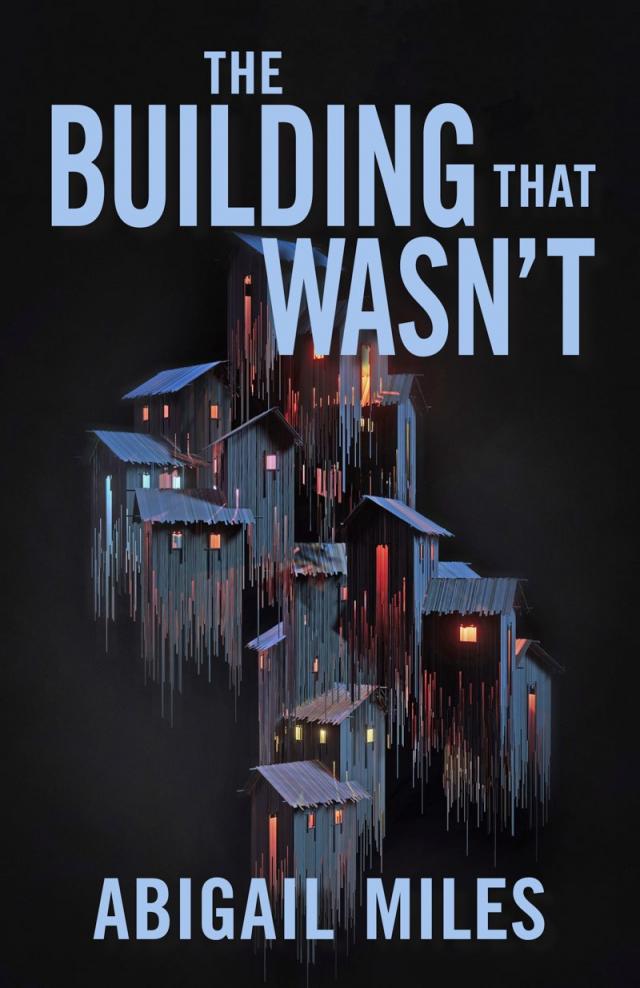
The Building That Wasn’t
Abigail Miles
Contents
Chapter 1
Chapter 2
Chapter 3
Chapter 4
Chapter 5
Chapter 6
Chapter 7
Chapter 8
Chapter 9
Chapter 10
Chapter 11
Chapter 12
Chapter 13
Chapter 14
Chapter 15
Chapter 16
Chapter 17
Chapter 18
Chapter 19
Chapter 20
Chapter 21
Chapter 22
Chapter 23
Chapter 24
Chapter 25
Chapter 26
Chapter 27
Chapter 28
Chapter 29
Chapter 30
Chapter 31
Chapter 32
Chapter 33
Chapter 34
Chapter 35
Chapter 36
Chapter 37
Chapter 38
Chapter 39
Chapter 40
Chapter 41
Chapter 42
Chapter 43
Chapter 44
Chapter 45
Chapter 46
Chapter 47
Chapter 48
Chapter 49
Chapter 50
Chapter 51
Chapter 52
Chapter 53
Chapter 54
Chapter 55
Chapter 56
Chapter 57
Chapter 58
Chapter 59
Chapter 60
Chapter 61
Acknowledgments
About the Author
More from CamCat Books
The Mechanics of Memory
More Eerie Literary Reads from CamCat Books
CamCat Books
CamCat Publishing, LLC
Fort Collins, Colorado 80524
camcatpublishing.com
This is a work of fiction. Names, characters, places, and incidents are either products of the author’s imagination or are used fictitiously.
© 2024 by Abigail Miles
All rights reserved. Printed in the United States of America. No part of this book may be used or reproduced in any manner whatsoever without written permission except in the case of brief quotations embodied in critical articles and reviews. For information, address CamCat Publishing, LLC, 1281 East Magnolia Street, #D1032, Fort Collins, CO 80524.
Hardcover ISBN 9780744309850
Paperback ISBN 9780744309874
Large-Print Paperback ISBN 9780744309911
eBook ISBN 9780744309898
Audiobook ISBN 9780744309959
Library of Congress Control Number: 2023950763
Cover and book design by Maryann Appel
Cover artwork by Mordolff
5 3 1 2 4
Chapter One
The room was white—almost blindingly so, with surfaces that had been scrubbed to a shine, so that by staring at the floor or a wall it was nearly possible to see one’s own reflection. It was clean and fresh and sterile. The perfect canvas.
The most beautiful aspect of the white room was how stark contrasting shapes and colors appeared on the initial blankness. This was an aesthetic quality that the man found particularly pleasing to explore, and so he did as such extensively, to a near-compulsive rate. He fancied himself an artist, with the borders of the room providing the ideal location to bring his masterpiece to life.
Keeping that in mind and aiming for the truest form of artistic perfection he could conjure, the man gripped the tool in his hand—his paintbrush of choice—and hefted it before him. His arm dropped in an almost graceful fashion as he completed a full swoop, similar in form to that of a baseball player setting up to bat. Then, pausing once to allow the moment to settle in its resplendent glory, the man slowly lowered his arm, tool in hand, and looked around at what he had created.
The white backdrop truly was perfect, he thought. It made the red look so much fresher—sharper and more potent. And the shapes the droplets formed, the pattern they enacted across the room. Perfect. The man admired the final product and couldn’t help but think that this may have been some of his finest work yet.
Not to mention the added pleasure derived from the screaming.
While some find the sound of a human scream to be unpleasant, the man found it to be more precious than music—a chorus of varying pitches and volumes coming together in a resounding crescendo at the final moment. He would do it all for that, for the symphony that was forged as a result of the fear, the excitement. The pain.
That’s why he was there, after all. To create such a stupendous pain in the people they supplied.
Well, that was not technically true. Technically he was there for many, many more reasons. Glorified kidnapper being one, rubber duck watcher another.
But the pain. That was his favorite.
Though usually the pain was accompanied by a distinct factor of more—the unraveling of the universe and all that.
Not this time. This was only an ordinary body, with no spark of the otherworldly in sight.
The man didn’t care.
Maybe others would, but he found purpose enough for himself in the beauty of what he could fashion there, with or without the ulterior motive. In some ways, one could say that having a secondary reason for the pain only tarnished it, whereas this belonged solely to him. This moment, right here.
The man took a deep breath, savoring the complete ambiance of the space he was in, before he turned back to his subject and assessed his options. Settling on a different, more precise tool—one with a much sharper edge—the man once more lifted his arm and continued with his ordained task.
From a different room, a set of eyes casually observed on a screen as the man set to work on his masterpiece, nodding once in approval before turning away. The screen left on displayed the white walls, no longer pristine, which echoed back the horrendous chorus the man’s work produced.
Chapter Two
There was an elderly man Everly had never seen before standing behind all the black-clad patrons, and his eyes had been focused on her for the duration of the service.
She blinked and realized that wasn’t quite right. There was an elderly man Everly recognized, as if from a dream, as if from a memory, lodged deep and low down in the recesses of her brain. She squinted at him, because if she could just . . .
She blinked again, and of course she knew him, why wouldn’t she know him, why would she ever not recognize—
Blink. Everly shook her head. The man was still there, and she didn’t know why a second before she had recognized him, because she did not, though she felt oddly unsettled by the memory of recognizing the man. Not as unsettled as she was, however, by his mere presence or by the fact of his staring at her.
He was too far away for her to actually see his eyes, to know for sure, but she could feel his attention pierced on her like a dagger through her spleen. The sensation was disconcerting, but in a strange way she appreciated the man and the mystery he presented. It gave her something to focus on. Something to puzzle over.
Someone to look at other than the form in the coffin on the elevated platform in front of her.
The man wore a bowler hat over his tufted gray hair, and a brown tweed coat, which worked even further to set him apart from the sea of faces that encircled him—the rest of whom were all adorned in shades of black or blackish blue, all at least a little familiar to Everly. The friends, the coworkers, the distant acquaintances and associates.
But not the family. There was no other family. None but her.
The preacher had finished speaking, Everly realized with a start, and was gesturing for her to step forward. She didn’t want to. She wanted to go back to pondering the mystery of the peculiar man in the bowler hat, trying to work out how he had found his way there, and why, but they were all staring at her, so she stood, refusing to breathe as she crossed the distance between her chair and the platform ahead of her. A sharp pang flashed through her skull when she reached the front. Everly gritted her teeth, resisting the urge to lift a hand to the side of her temple.
She couldn’t look at the body. They had asked if she wanted to beforehand, to make sure he looked okay—like himself, she supposed—but she knew it would be no use. He would never look like himself. Never again.
A car accident had led her here, to this raised platform, in front of all the vaguely familiar forms in black and the solitary strange one in brown. Or at least, that is what they had told her, when it was already too late for the cause to even matter.
But according to them, it had been a car accident, and so he hadn’t been quite right. Or his body hadn’t been. They told her it would be okay if she didn’t want an open coffin, but she wasn’t able to stand the thought of locking him up in there any sooner than she needed to. So even though she refused now to look, she kept him out in the open. She kept him free.
Afterward, Everly was ushered to a dimly lit reception room, where she had scarcely a moment to herself before the other mourners came flooding in to report how very sorry they were, how devastating of a loss it must be, how much she would be kept in their prayers. Everly hardly heard any of them. She leaned against one of the whitewashed walls of the hall and rubbed her temple, trying not to close her eyes, though she wanted nothing more than to shut out everything a
But back to what, she couldn’t help but ask herself. Back to the empty house with too many rooms and the life that she wasn’t sure she could picture any longer in his absence.
Her father’s absence.
She was too young, all of Everly’s neighbors had tried to claim. Too young to be all alone. But at twenty-four, she was hardly a child anymore, and really, what would anyone have done anyway? Where would she have gone?
She had nowhere else to go, no one else to go to, and they knew it as well as she did.
She was on her own.
Everly considered leaving. She thought better of it a moment later, looking around at all the people who had come out to celebrate her father’s life, but an instant after that she realized she didn’t even care. None of them had truly known him anyhow. They had only come for the cake, which was now set out on a plastic folding table by the door, the words Our Most Sincere Condolences traced out in poorly scripted black icing across the center of the buttercream sheet. They probably wouldn’t even notice if she left, Everly thought, and even if they did, she could see no reason why she should care. No reason at all.
Everly stood up from the wall to leave, trying to appear as nonchalant as possible as she walked between the well-wishers, making her way toward the doors of the reception hall.
As she stepped out into the deepening evening air just beyond the doors, she caught sight of a blur of brown fabric far ahead of her. Straining her eyes against the dusk that was swiftly descending, Everly could just make out the shape of the strange man from before—the one she remembered and knew yet was certain she had never met—as he strode off into the night, the shadow of his curved bowler hat protruding distinctly above his head as he left without so much as an insincere commiseration offered her way.
Chapter Three
It was his own fault, and he knew it. Luca shouldn’t have told Jamie that he’d take on the second shift, but he hadn’t been able to resist. It had felt like the right decision at the time, and like all the worst decisions, it was only through the harsh lens of retrospect that he could see how little he had thought this through. After nearly a full twenty-four hours in front of the screens set up around the cramped surveillance room, Luca’s eyes had more than glazed over, and he was becoming afraid they’d get stuck that way if he stayed in there much longer: frozen in a state of half-awareness.
Struggling—failing—to suppress a yawn, Luca leaned back in his chair and ran his eyes over the screens again, searching for anything he might have missed the past thousand times he had scanned the camera feeds. It was proving to be an unusually dull shift—doubly so, for the added hours of monotony. Despite the long hours and unending boredom, it was almost worth it for the chance to be alone, if only for a little while.
To be the eyes instead of the watched.
(As far as he was aware, at least.)
And to use his eyes for his own purposes.
If only he could stay awake to use them. Luca could feel himself fading, and every few seconds he had to jerk his head up to prevent himself from collapsing from exhaustion. If only something interesting would happen, he thought. Something to wake him up.
Unbidden, his mind began to drift, in a half-conscious state, to the dreams that haunted him during the night—not the only reason, but certainly one of the reasons that had driven him to make the ill-guided decision to stay awake through the night in front of those awful screens.
Though, perhaps haunt wasn’t the right word. Haunting implied ghosts from a past lived through and regretted. If anything, Luca’s dreams hinted at something that hadn’t yet come to pass, if he was feeling high-minded enough to label himself as being prophetic.
And really, would he have been that far off?
He was never able to place a finger on what it was about his nighttime visions that unsettled him so, but more often than not, Luca would jerk awake during the night, drenched in sweat and with fleeting images filling his head, then vanishing moments later. He didn’t ever retain much from them—mostly just a feeling of dread—but occasionally he would find something tangible to hang on to, something that he thought he could remember, if only for that brief instant.
Sometimes he saw her. She was always different: sometimes a child, with strawberry-blond pigtails and a lopsided grin; sometimes older, with a sharp chin and mouth perpetually turned down on the ends; most of the time she was a young woman in her twenties, around his age—fierce, tall, defiant.
Always she burned.
Last night she had returned, the auburn hair a fiery halo encircling her head, her eyes burnished with their own kind of flame as they met his in sleep—and in memory. But she always left far more quickly than he would have liked, and in her absence Luca was always more shaken than he could reasonably account for. He didn’t think she was the cause of the fear that always gnawed at him after such dreams—though he could not have said why—but nonetheless, where she walked, so did the shivers that racked his body the next day, casting all his thoughts into a shadow of doubt and worry.
They were getting worse. When he was a kid, Luca would find himself awoken by a fiery nightmare once, maybe twice a year. They were always vague, already distant by the time he had shaken himself fully awake.
That changed years ago, for no clear reason that Luca could think of, but now they were arriving more and more frequently.
Most days now, he was afraid of closing his eyes for too long, afraid that that alone would be enough to hurtle him back into the dreams.
So, to avoid further encounters with the girl and her flaming hair and everything else that would inevitably follow, Luca had volunteered to stay on watch well into the night—long past when his normal shift would have ended. It gave him time to think, he had tried to tell himself. But really, by that point he would have attempted nearly anything to evade the dreams.
(A secret unbeknownst to Luca: he wasn’t the only one in that building to dream.)
Luca didn’t have a way to track the passing of time in the surveillance room (clocks in the building had an uncanny knack of being disobedient), but he knew that the night must have faded away when he heard the sharp beeping of the alarm that signaled the start of the morning. A few minutes later, the door behind him creaked open, and with the sound, Luca tensed, sitting up straight. Pretending he wasn’t doing anything wrong. Even though, for the moment at least, he wasn’t.
Taking in shallow breaths, Luca steeled himself, then turned his head, slumping immediately back in his seat when he saw that it wasn’t one of the building’s runners, but rather Caleb’s slim form stepping into the room.
Cast in the pale lights emanating from the wall of screens, Caleb Arya looked cold, in the way that he always seemed to lately. Racked with shivers from an invisible force Luca never felt himself, his friend held his arms tightly wrapped around himself even now. Adding to the ensemble that was Caleb were the permanent dark circles painted beneath his eyes, the clammy sheen to the skin of his forehead, the hitch in his breath every few seconds that was only audible if you were listening.
And Luca was listening.


