

The Voluble Topsy, page 1


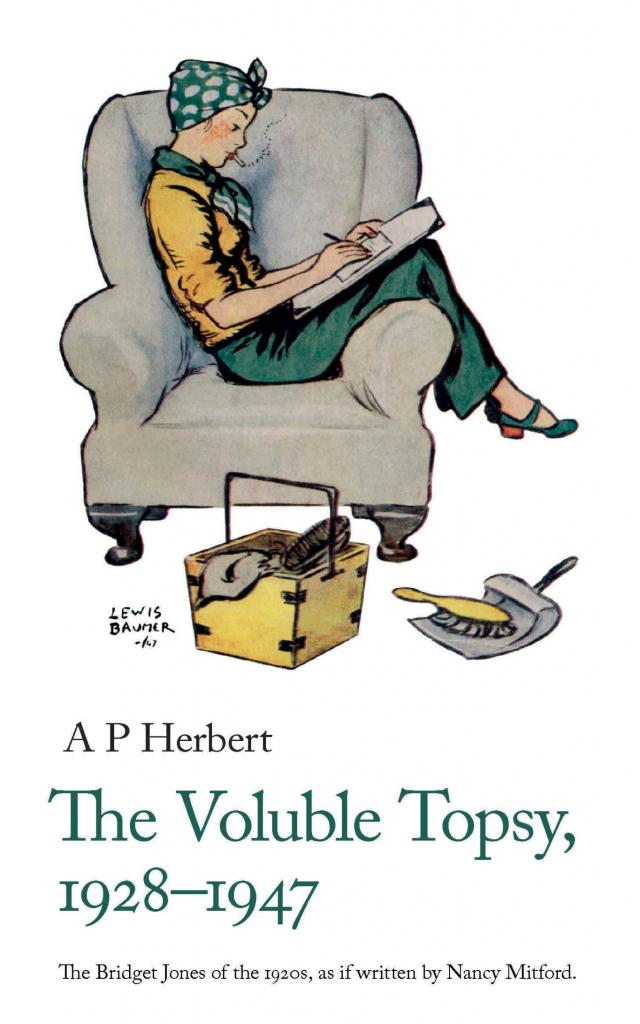
The Voluble Topsy
More Handheld Classics
Betty Bendell, My Life And I. Confessions of an Unliberated Housewife, 1966–1980
Algernon Blackwood, The Unknown. Weird Writings, 1900–1937
Ernest Bramah, What Might Have Been. The Story of a Social War (1907)
D K Broster, From the Abyss. Weird Fiction, 1907–1940
John Buchan, The Runagates Club (1928)
John Buchan, The Gap in the Curtain (1932)
Melissa Edmundson (ed.), Women’s Weird. Strange Stories by Women, 1890–1940
Melissa Edmundson (ed.), Women’s Weird 2. More Strange Stories by Women, 1891–1937
Zelda Fitzgerald, Save Me The Waltz (1932)
Marjorie Grant, Latchkey Ladies (1921)
Inez Holden, Blitz Writing. Night Shift & It Was Different At The Time (1941 & 1943)
Inez Holden, There’s No Story There. Wartime Writing, 1944–1945
Margaret Kennedy, Where Stands A Wingèd Sentry (1941)
Rose Macaulay, Non-Combatants and Others. Writings Against War, 1916–1945
Rose Macaulay, Personal Pleasures. Essays on Enjoying Life (1935)
Rose Macaulay, Potterism. A Tragi-Farcical Tract (1920)
Rose Macaulay, What Not. A Prophetic Comedy (1918)
James Machin (ed.) British Weird. Selected Short Fiction, 1893–1937
Vonda N McIntyre, The Exile Waiting (1975)
Elinor Mordaunt, The Villa and The Vortex. Supernatural Stories, 1916–1924
John Llewelyn Rhys, England Is My Village, and The World Owes Me A Living (1939 & 1941)
John Llewelyn Rhys, The Flying Shadow (1936)
Malcolm Saville, Jane’s Country Year (1946)
Helen de Guerry Simpson, The Outcast and The Rite. Stories of Landscape and Fear, 1925–1938
Jane Oliver and Ann Stafford, Business as Usual (1933)
J Slauerhoff, Adrift in the Middle Kingdom, translated by David McKay (1934)
Amara Thornton and Katy Soar (eds), Strange Relics. Stories of Archaeology and the Supernatural, 1895–1954
Elizabeth von Arnim, The Caravaners (1909)
Sylvia Townsend Warner, Kingdoms of Elfin (1977)
Sylvia Townsend Warner, Of Cats and Elfins. Short Tales and Fantasies (1927–1976)
Sylvia Townsend Warner, T H White. A Biography (1967)
This edition published in 2023 by Handheld Press 72 Warminster Road, Bath BA2 6RU, United Kingdom.www.handheldpress.co.uk
Copyright © The Executors of the Estate of Jocelyn Herbert, M T Perkins and Polly M V R Perkins, 1928, 1929, 1947.
Copyright of the Introduction and Notes © Kate Macdonald 2023.
All rights reserved. No part of this publication may be reproduced, stored in or introduced into a retrieval system, or transmitted, in any form, or by any means (electronic, mechanical, photocopying, recording or otherwise) without the prior written permission of the publisher.
The moral rights of the authors have been asserted.
ISBN 978-1-912766-47-5
1 2 3 4 5 6 7 8 9 0
Series design by Nadja Guggi and typeset in Adobe Caslon Pro and Open Sans.
eBook conversion by Bluewave Publishing.co.uk
Contents
The Voluble Topsy
Acknowledgments
Introduction
The Trials of Topsy
1 A Brush with the Highbrows
2 The Simple Life
3 Nature
4 Don Juan
5 Good Works
6 Hymen
7 Literature
8 Reducing
9 Going To The Dogs
10 Ideals
11 The Origin of Nieces
12 The Superfluous Baronet
13 The Noble Animal
14 The Fresh Mind
15 A Run With The Yaffle
16 Case For The Defence
17 Good Women And True
18 Charity
19 A Real Christmas
20 The Ephemeral Triangle
21 Engaged
22 The Untrained Nurse
23 Politics
24 Scandal at Burbleton
25 End of Act One
Topsy, MP
1 Becomes A Member
2 Goes Shooting
3 Flies Half The Atlantic
4 At The Prunery
5 Makes A Film
6 Goes Hunting
7 Passes Poxton
8 Is All For Al
9 Takes Her Seat
10 Hauls Down The Gold Standard
11 Has Words With The Whips
12 Knows Too Much
13 Wins Bread
14 Behaves Badly
15 Plays Golf With Nancy
16 Solves Everything
17 Converts A Whip
18 Is Unlucky
19 Converts the Councillor
20 Starts A Salon
21 Trouble In The Home
22 Asks Questions
23 Loses The Whip
24 Trouble In The House
25 Does Needlework
26 Becomes A Mother
Topsy Turvy
1 Peace!
2 Consolations
3 The Suffrage Episode
4 The Moon Party
5 Frustration
6 Iodine Dale
7 Saving At The Races
8 The Danes
9 Force 5
10 The New House
11 The Prime Meridian
12 Good Resolutions
13 Heroic Act
14 Timothy Brine
15 The Dogs
16 Jack and Jill
17 Keeping Fit
18 The Canaanites
19 Stiff Lips
20 Movements
21 Ulcerous World
22 Haddock In Trouble
23 The Speech Sweep
24 The Dogs Again
25 Radiant Day
Notes on the text
Acknowledgments
From The Trials of Topsy: ‘I have to thank the Proprietors of Punch for their courtesy in permitting Topsy to appear in this dress — A P H.’
From Topsy, MP: ‘These letters are reprinted here by the courteous permission of the Proprietors of Punch, for which I thank them. — A P H.’
Note on the text
While some spelling errors may be spotted in Topsy’s letters, they were intended by the author to show the speed of her writing and (probably) her vagueness about her expanding vocabulary.
The text in this edition was scanned non-destructively from first or early editions of the three books, and proofread. Any obvious typographical errors have been corrected.
Some words have been silently deleted or replaced where they would cause offence to modern readers, with the permission of the Executors.
Kate Macdonald is a literary historian and a publisher. She first discovered A P Herbert in the pages of old volumes of Punch and has published research on the mechanisms of comic writing.
Introduction
By Kate Macdonald
Topsy’s letters to her best friend Trix, whom she addresses with gushing endearments such as hen of the North, crystallised cherry, distant woodpigeon, aromatic angel, are a torrent of delightful chatter about the joys and catastrophes of her life. She writes first as a girl about town, then as a rather radical Member of Parliament, and finally as a harassed post-war householder. Her letters were published first in Punch in 1927, nearly a century ago, but their human warmth and righteous indignation about wrongs to be righted are undated.
Topsy is one of a distinguished line of British female satirical commentators. Her letters preceded both E M Delafield and Nancy Mitford in the interwar years, surely the doyennes of this tradition in British comic writing. Delafield’s Diary of Provincial Lady first appeared as episodes in Time & Tide in 1930. Nancy Mitford’s novels deployed Topsy’s upper-class idioms and social milieux from 1931. In our own day, Helen Fielding’s Bridget Jones’s Diary from 1995 – also a periodical serial – continued the tradition of recording the private remarks and hapless affairs (not always romantic) of a single woman in possession of a sense of humour who might be in want of a husband.
What makes Topsy so attractive as a character, and gives her artlessly hyperbolic letters their unexpected gravitas, is that she is immersed in the concerns of everyday life. She is passionate about studying the form at greyhound races; she gamely escorts large numbers of unruly children though the London Underground to get them to the train for their country holiday; casting about for ways to earn some money of her own she is employed as a magazine influencer; and she is outraged, often, about the laws of England that prevent ordinary people from having a good time. She serves on a jury, she goes to the theatre, she tries out public speaking and she is an enthusiastic habituée of West End nightclubs and Soho restaurants.
Topsy has no hesitation about trying the new fads and technologies of her day. In ‘Flies Half the Atlantic’ Topsy accepts sponsorship from a rich feminist to become the first bride and the first lady MP to fly across the Atlantic as a passenger from east to west. In ‘Makes Film’ Topsy uses croquet to combat her
Topsy’s exuberant letters were published in three waves of volubility in Punch, the eminent and very popular political and satirical magazine, at least 50% of whose content was cartoons poking fun at the topics and personalities of the day. The first tranche of letters, appearing from August 1927 to February 1928, were quickly published as The Trials of Topsy in 1928, with the replacement of one letter from Punch in which Topsy was thoughtlessly rude about Liverpudlians, with a much funnier one. After a six-month break Topsy’s letters were back in Punch from September 1928 to March 1929, to be published as Topsy, MP in 1929. She was then retired to domestic duties. Sixteen years later, in October 1945 Topsy returned to Punch for a further 25 episodes until April 1946, to be published in 1947 as Topsy Turvy.
Topsy was created by the comic writer, lyricist and novelist Alan Herbert, known to his varied public as ‘APH’. He was born in 1890 in Ashtead, Surrey, and after school at Winchester College he took a first-class degree in Jurisprudence at Oxford, during which time his comic verses began to be published in Punch. He read for the Bar but never practiced. After marrying Gwen Quilter, the daughter of the Victorian artist and critic Harry Quilter, APH served in the First World War in the Royal Naval Volunteer Reserve. In 1919 he published his first novel, The Secret Battle, which attacked the cruel military regulations governing courts martial. In 1924 he was invited to join the staff of Punch, which brought him a regular income to support his growing family (three daughters and a son). As well as his verse and regular columns for Punch and other magazines, and more novels, APH wrote plays and musicals for London’s theatre. After writing satire for over ten years to press for legal reform, he was elected to the Parliamentary seat for the now extinct constituency of Oxford University, sitting as an MP from 1935 to 1950 as an Independent Member. In the Second World War he served as a Petty Officer in the River Emergency Service and later the Royal Navy Auxiliary Patrol in his own boat, the Water Gypsy, mine-hunting and fire-watching on the Thames. After the war APH had his biggest theatrical success with Bless the Bride, for which he wrote the songs. He was knighted in 1949 in Sir Winston Churchill’s Resignation Honours List, the year before APH left Parliament. He died in 1971.
Once installed at Punch APH wrote the first of a series of imaginary law reports on Misleading Cases, in which an energetic and public-spirited gentleman called Albert Haddock challenges the English legal system to rule on such questions as what is a Reasonable Man, and whether a cheque written on a cow may be honoured by the bank. These are the works by which APH is best remembered now. David Langford’s assessment of the Misleading Cases (Langford 2007) is recommended as one of the very few pieces of critical writing available on Herbert, summarising the range and impact of APH’s satire, especially the responses from readers and lawyers outside the UK who failed to spot the jokes. While APH’s admirers may know that he was also an MP it might not be known that he wrote the first two Topsy volumes, packed with critical remarks about the state of the law, as well as screeds of Haddockian satirical law reports, before he became a legislator himself. Topsy therefore heralds APH’s campaigning achievements as a Member of Parliament by rehearsing in her letters the faults in the law that her creator would later be in a position to do something about. APH’s first and most famous legislative triumph was to reform the divorce laws, which took several years of patient negotiation and lobbying in a conservative society dominated by religious considerations of the sanctity of marriage.
Albert Haddock’s early legal appearances are closely connected to Topsy’s début. In the Misleading Case from 10 August 1927, ‘Rex v Haddock. Is a golfer a gentleman?’ (Langford nd), the judge giving judgement is Mr Justice Trout. Topsy herself arrived in print a week later, on 17 August, also in Punch. The judge quoted the phrase ‘Nature’s gentleman’ in his argument: a phrase used incessantly by Topsy throughout her letter-writing life. Clearly APH liked the sound of Trout as a surname and enjoyed deploying the idioms of the day, but we don’t know by which blossom of ingenuity the idea of a scatterbrained yet irrepressibly jaunty English débutante commentating on English daily life sprang into being alongside Haddock’s adventures. APH’s own autobiography is silent about Topsy, and his biography by Reginald Pound barely mentions her. How could a character so lively and perspicacious, and long-lived, be ignored in the Herbert canon? Haddock himself is a key character in all the Topsy letters, central to her life and happiness. Albert Penrose Haddock is quite obviously APH himself: also a novelist and a playwright, he owns very few suits, roars with laughter when other men would scold, has a passion for campaigning to right legal wrongs, and celebrates the annual Boat Race from his house on the Thames bank with an enthusiastic house party, just as APH was and did himself. Like Haddock, APH also deplored fox-hunting, had an unpredictable income, adored playing pub skittles, swam the Thames from Waterloo Bridge to Westminster Bridge, and noted the new graffiti in the Commons lavatories after the election of a new generation of Labour MPs (Pound 108, 112, 119, 121, 197). Like Topsy he made a sensational maiden speech in Parliament which was complimented by Churchill, endured shattered windows in his house for the duration of the war, and was nearly blown up by a rocket (Pound 137, 167, 191).
Topsy’s letters are an anomaly in Punch, in that they are almost the sole female voice in a very masculine publication. Punch had very few female contributors. Albeit written by a man, Topsy’s voice reads as authentically female; she is also young, self-assured, disrespectful and sardonic. She uses swooping hyperbole as an art form, deriving naturally from the slang and convoluted syntax of sophisticated bright young things in her day. Readers may notice that there are over 13,000 italicised words in the three volumes of letters, which produce Topsy’s highly distinctive mode of expression. She italicises every important word that needs attention, and the result is rather comic genius, lending stress, and directing attention, to the less obvious choice of word. The result suggests a delightfully euphonic rendition of the speech patterns of the period. Her voice is unforgettable, and also curiously historic: was this how the chattering classes of her day really spoke? Evidence from the published letters of Nancy Mitford and Evelyn Waugh, for example, might clinch this point.
Topsy is delightful, ridiculous and shamelessly ignorant (especially about her erratic spelling). Perhaps her most outstanding exploit of obtuseness is when she is asked to review a performance of Othello. Her criticism of the tired old clichés in the script, the ridiculous plot and poor character delineation, the tediousness of the soliloquies and so on, are not received well by her editor. Yet the reader can see her point. Topsy is an Everywoman for common sense and could never be accused of being pretentious or too learned. She is certainly uneducated, and is utterly at sea about many subjects, but her discourse is so wildly off the point at times that the reader might wonder whether she is making a joke of her own dimness, or was this just Herbert laughing at Topsy’s expense?
Is Topsy a snob? She was hardly created to be what she calls proletarian, but she is fervently in favour of doing practical and useful things for the improvement of the lives of the ordinary people, as well as enjoying her titled family’s access to what she calls Cadogan and Belgravian parties. Is she shallow? Probably, but she is also very good at heart.
In Topsy Turvy, Topsy sounds more frayed than insouciant, because now she is an aggrieved housewife who has endured six years of being bombed and resents that life has not returned to normal now that the bombing has stopped. Her overall tone of controlled exasperation and being resigned to discomfort and shortages is shared by other wartime novelists of domestic life, Angela Thirkell in particular. Yet she remains funny, particularly in her accounts of the builders who do not work, the bizarre episode of the detective novelist looking for copy, and Haddock’s appalling behaviour at the Speech Sweep.
After the war, Topsy stopped writing letters, presumably because Trix, her only known correspondent, had finally moved to London. Captain Haddock contributed racing features in Punch and continued his goading of the Law Courts with more Misleading Cases until at least 1963. But Topsy is immortal: her commitment for legislating for the Enjoyment of the People is merely an expression of her enjoyment of life, spilling over into all our lives for the benefit of all.


