

The Stranger at the Wedding, page 1


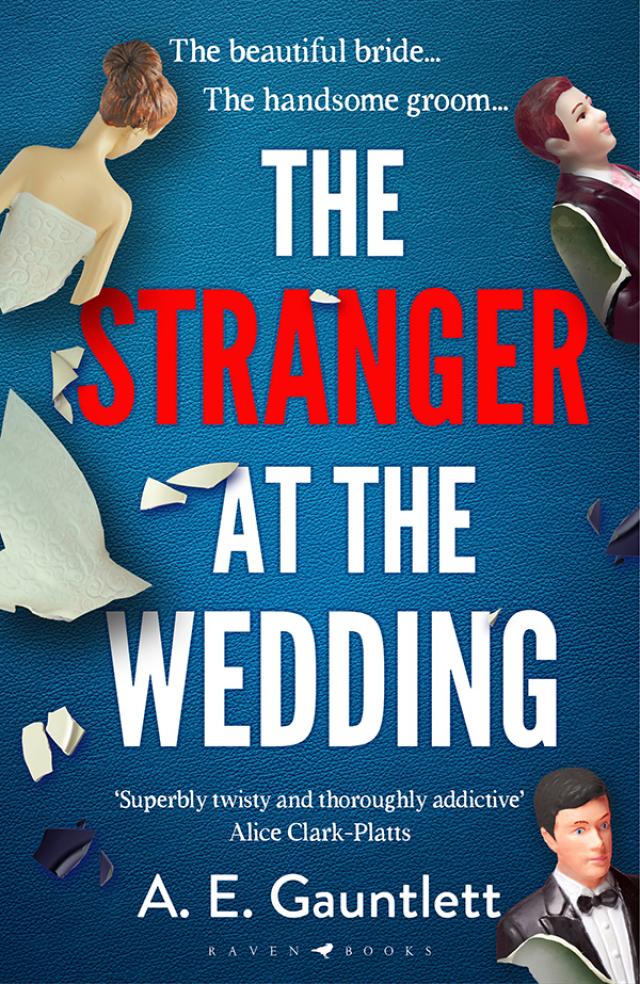
THE STRANGER AT THE WEDDING
For Sharon and Charlotte
CONTENTS
Part One The Wedding Day
1
2
3
4
5
6
7
8
Part Two The Proposal
9
10 Hope’s Diary
11
12
13 1st March
14
15
16 4th March
17
18
19
20
21 17th May
22
23
24
Part Three The Honeymoon
25
26 6th September
27
28
29
30
31
32 2nd December
33
34
35 6th December
36
37
38
39 October … sometime
40
Part Four The Happily-Ever-After
41
42
43
44
45
46
Acknowledgements
A Note on the Author
Once upon a time, or so the story goes, a woman Pandora – the first woman and daughter of Zeus – was forged of clay and breathed into being by the god of fire, Hephaestus. The gods of Mount Olympus gathered at Zeus’ behest and bestowed upon her the gifts of language, beauty, emotion and craftsmanship. But Zeus had a gift for her too: the gift of curiosity, so that she may always have her eyes open to the world.
On Earth, Pandora soon fell in love with Epimetheus, the brother of the fire-stealing titan, Prometheus, whereupon Zeus decided the two should marry. And so they did.
As a wedding gift, Zeus gave the couple an ornate box, whose lid had been sealed shut by lock and key.
You must never open this, said Zeus. Promise me.
And so they did. They promised him.
Blessed, or else cursed, with the gift of curiosity, Pandora’s thoughts would turn with alarming regularity to the box. Her father had said that its contents were not fit for mortal eyes. But I am Zeus’ child, she reasoned. Am I strictly mortal? The thoughts became incessant, overwhelming, until the thick knot of an obsession took hold and she could bear it no longer. She begged and she pleaded with her husband to let her open the box, and still he refused.
One night, as Epimetheus lay sleeping, she stole away to the box, key in hand. One quick look inside and the thought will be loosed from my head forever. One sharp turn of this key and –
And so she did.
The key slid in the lock and carefully she prised open the lid. Only she wished she hadn’t, for out rushed every sickness, every malady, every force of evil and suffering, every ill of human nature that the world would ever know in a swirling maelstrom of smoke and screeching. Pandora tried desperately to usher the monsters back into their prison, but in vain.
As she lay on the floor weeping, she became distantly aware of a tiny sound echoing within the box. She lifted the lid once more and was cast backwards by a glorious beam of light that shot by her and out into the world. This force was not evil, this force was not ugly; it was beautiful.
It was Hope.
PART ONE
THE WEDDING DAY
1
The room shifts beneath me and the tiny hairs on my arm bristle. There is a happy disquiet in the pit of my stomach.
‘Darling, the car will be here soon.’
My mother always calls me darling. I wish she wouldn’t. It’s a terrible affectation that she cultivated soon after my father died. Gone were the sombre floor-length dresses that she wore every day for six months after his passing; gone the Montecristo cigars that she lit each morning in his name. And hello, single life. The parties, the Altuzarra dresses, the tumbler of gin forever installed at the end of her arm. I don’t know who she thinks she is with all this darling business.
There are but three opportunities in life to reinvent oneself: secondary school, university and divorce – or else widowhood. I suppose she’s taken her final shot, and I don’t begrudge her that. Despite her period of mourning though, we’re yet to discuss my father’s crushing absence.
‘Darling …’
My sister throws the blusher she’d just been applying to my cheeks into her vanity box.
‘Mum, go fix yourself a drink. You’re fussing.’
‘I am not fussing.’ She draws the word out on her tongue as one would a card from an envelope. ‘Can’t I be excited that a man finally saw fit to make an honest woman of one of my daughters?’
Mother has never quite accepted the fact that Karen is a lesbian. My sister once invited her partner to my birthday meal in London, and throughout, Mother continued to refer to Hannah as Karen’s little friend. That is until the waitress asked what she wanted for dessert. Karen, exasperated, took one of Hannah’s boobs in her hand and asked, calmly and confidently, for the bill. Now Mother doesn’t acknowledge Hannah at all.
‘Perhaps it’s best if you wait downstairs …’ I say, my feet shifting nervously beneath my dress. I expect my mother to pounce, to rip the radiator from the wall and launch it at the window, but she doesn’t. She simply looks at me, cold, collected, then to Karen, and stalks from the room, the ice clattering loudly in her glass.
‘You’ve been gifted a get-out-of-jail-free card today,’ Karen says, smiling.
‘It’s only 10 a.m. and I’ve already cashed it in. I’ve got a whole day ahead of me … I’ll end up killing her, or her me. Wouldn’t that be something?’
Karen giggles, the glint of a memory in her eye, as she withdraws a deep red lipstick from her vanity box and makes to etch the first line into the curve of my lower lip.
‘Perhaps something a little more … or rather a little less …’
‘Tarty?’
‘I was going to say bold, but we can go with tarty.’
Karen fishes out a pink terracotta. ‘Hold still.’
‘Yes, boss.’
K shoots me a look of faux reproval. ‘Hey, do you remember when Dad took us to see The Lion King?’
‘How can I forget?’ I can see him now, in his oversized denim jacket and khaki corduroys, the sun combing a greyness through his hair.
‘We’re barely through the door and Dad starts limping as though he’s just made it out of the Falklands.’
‘It worked, though. They gave us the best seats in the house.’
I’m laughing, but I can feel tears forming in the corners of my eyes.
‘Mum’s face … she was so embarrassed.’
‘We all were. But that was Dad.’
‘That was Dad.’ A sadness comes over Karen. ‘Do you think about him?’
‘Every day.’
‘Do you think Mum does, too?’
‘I know she does, but she’ll never admit it.’
‘No, I don’t suppose she will.’
Mother was once so open to the world, to us, but in the time since his passing, she has closed herself off. K and I hope beyond hope, though that hope remains unspoken, the mother we once knew is in there somewhere, waiting to be let out.
Karen crosses to the other side of the room and pulls a pair of silver heels from the shelf, which she deposits before me and eases, one by one, on to my feet. They pinch at the toe. ‘Right, let’s have a look at you.’
I take my sister’s hand and find myself hauled before the mirror, where I’m confronted with an image that is simultaneously me and not-me; a version of myself that I’d only ever contemplated – and even then, briefly – as a young girl, lemonade in hand and feet dangling precariously into the dyke that abutted our farm. I sat there, peering down at the darkness, and I threw all my hopes and dreams and visions for the future into the great chasm and vowed, one day, when I was older and wiser and that little bit more wizened, to dive in after them.
And now here I am, stood on the edge, and I’m scared. I see the woman before me, smiling out of the mirror, running her hand down the lace brocade of her dress, her feet squeezed into a pair of silver heels, and I’m scared. Not for the threat of the fall or the uncertainty of the blackness that awaits, but because I know I’m about to retrieve what I’d once discarded.
Everyone warned of the first patchwork of nerves that arrived right on schedule, just as I’d climbed out of the bath this morning; of the waxen look that would greet me as I regarded myself and my certain future carefully in the mirror. They warned me of the instinct to run; of the urge to commit some terrible sin before I committed myself to Him. They spoke of the dreads, which I had long thought reserved for sportsmen or actors; of the chicken heart, the white feather, the weak knees. They spoke of cold feet. Not me, I thought, my feet are always cold.
They told me, too, how I’d look back on all this in years to come and laugh – laugh at the absurdity of my worry, at the notion that there could be any other man for me. And I knew that to be true. For all my fleeting doubt, Mark is the only thing in my life I’ve ever been sure of.
And it’s that thought that enables me to take the step into the unknown, and into the abyss.
‘You look beautiful,’ Karen says, tugging at the hem of my dress. ‘Ready?’
‘Ready,’ I say, smiling. And just like that, I jump.
*
The farm was a small
‘You’re going to love it here,’ said Dad, as we drove slowly up the winding gravel path. I’d never seen him so happy. ‘There’s a pigpen, room enough for us to get a dog and a swing by the pond …’
‘A dog!’ gasped Karen, wide-eyed.
‘That’s right, K. But you’ll have to look after it.’
‘I will, I promise.’
‘I know you will.’
Mother stayed silent. I supposed she was in one of her moods.
‘What about me, Dad?’ I said.
‘Well, it will be your dog, too. What will you name him?’
Karen and I screwed up our faces.
‘A boy? Why would we want a boy?’
Dad laughed and I remember thinking how much I loved the way his mouth crinkled at the corners as he did so.
‘Fine. Then what will you call her?’
‘Doggie!’ yelled Karen, as though it were the most obvious thing in the world.
‘I think you can do a little better than that, K.’
Karen thought for a moment.
‘Jessica.’
And just like that, the car’s mirth dissipated and Mother began to cry. What started as a small shudder, a crack in a drainpipe, grew and grew with each turn of the wheel and each bend in the path, before erupting – until we, Herculaneum and Pompeii, found ourselves drowning in its torrent.
Dad tried to rebuild something from the ashes. ‘Let’s keep thinking, eh?’ He placed a big hand on the nape of Mother’s neck, leant over and planted a kiss on her wet cheek.
We were not supposed to say that name.
When the car finally came to a rest before the great oak door, excitement got the better of me. I remember rushing out, turning the circular iron handle and running from room to room, sweeping open the faded William Morris-print curtains and marvelling as the crisp light picked out each mote of dust. We were not a tall family, and just as well, for low-slung, coffee-coloured wooden beams propped up a ceiling that seemed as though it might fall in at any moment. It wasn’t much to look at – mostly bare brick and unvarnished oak floors, but it was charming, and it was home.
Upstairs and hidden, to the rear of the house, I found a room drowning in old books. I picked up the nearest one to me, wiped the dust from the spine with the back of my hand and took it to the light of the window. The Velveteen Rabbit. I liked the way my tongue rolled the syllables around in my mouth.
I settled on to the hard warmth of the floor, my dress pinioned between my legs, and opened the book as gingerly as one might a clam. And this clam hid a pearl. I remember it clearly, not least as I have read it many times since. A simple story, deceptively so. A stuffed rabbit, given to a young boy one Christmas morning, wonders if he will ever become Real. To be Real, a toy horse tells the rabbit, is to be loved. When the boy cannot sleep one evening, his nanny places the rabbit in his bed and the two become inseparable – wherever the boy goes, the rabbit goes, too. And over time, through play and adventure, as the rabbit’s hair is loved off, as his whiskers grow threadbare and shabby, the rabbit becomes Real. For the boy loves him. It hurts to be Real, the rabbit learns; but when you’re Real, you don’t mind being hurt.
I closed the book and looked back up at the room: at its squat ceiling, its peeling paintwork and faded grandeur; at the small flap of wallpaper that hung limply torn from the wall; at the pockmarked floorboards from which nails protruded irregularly but decisively. It wasn’t the room I had in mind, but it was mine; a room of my own at last.
‘Annie? Annie, where are you?’
‘Just a minute, Mum.’ I didn’t always call her Mother – not then.
‘Annie, down here, please.’
She had that tone: a request concealing an instruction. She meant business. So, I replaced the book carefully and made my way back down the stairs.
At the bottom, Dad stood with a broad smile still plastered across his face. He had slung Karen over his shoulder like a fireman and laughed as she squirmed, her feet beating the air, for a chance to beat the ground. Finally, he set her down and squatted, placing her cheeks between his wide hands.
‘One day,’ he said, his weight balanced uncertainly on his haunches, ‘you’ll want me to pick you up and I won’t be able to.’
Karen thought for a moment. I don’t think she’d ever reckoned on Dad growing old. In truth, I hadn’t either.
‘One day,’ she said, her face brightening, ‘I’ll pick you up.’
He smiled sweetly. ‘Yes, I’m sure you will. But you’ll have to get big and strong first. Come on, show me your guns.’
Karen crooked her elbow and strained to flex her muscles.
‘Woah, easy there, Tiger. You’ll have my eyes out with those things.’
Karen giggled and made to box Dad in the chest, who staggered back each time as though he’d just gone several rounds with Joe Frazier.
‘Annie?’ Mother walked in, searchingly. ‘Oh, good, you’re here. Now listen … you too, Karen …’
‘Yes, Mummy?’
Karen was good at playing the doting daughter. I struggled – I struggle.
‘Things will be different here. This is a brand-new start for us all. Isn’t that right, David?’
‘Yes, but that’s not to say—’
‘We will build new things. New memories, new friendships, new ideas. The past stays put, you hear?’
*
The Kent hills are dressed in a riot of autumn colours as we make our slow journey church-bound in a cream-coloured Rolls-Royce, two lavender ribbons fluttering from the outstretched angel on the bonnet. A skylark keeps pace with the car; I watch as its white-frilled wings negotiate the complex ripples of wind on its upward swing, before plunging into the grasslands below. The bird resurfaces, and for the briefest of moments, the outside is alight with song.
Inside the car, there is only silence. Mother sits next to me, quiet, composed. She feels to me, at this moment, a near-perfect stranger. I look over at her as she gazes out absently at the rolling hills, and I see a great emptiness. A vacuum in a void.
The car makes its final turn on to the long, winding drive that leads to the great door of the church, and suddenly I’m back at the farm for the first time: my dad in the front seat, planting a lingering kiss on my mother’s cheek. She’s crying heavily and Karen, beside me, doesn’t seem to understand; she wrestles with a loose stone in the heel of her boot.
The church looms and the past recedes. I wonder how many cars carrying wide-eyed brides have come before me. How many of them nervously set foot on the gravel? How many of them froze? And for the brave, how many of them got their happily-ever-afters?
It’s every girl’s dream to be a princess, we’re told, to be a bride. Not me. I didn’t grow up planning my wedding; I grew up planning my career. I wanted to be someone, not someone else’s. An astronaut, a warrior, a leveller of mountains, an adventurer. I wanted to define myself and for the world to know me and understand me on my own terms, not terms that had been written for me many years ago. If history teaches us anything, it’s that bad men have got away with far too much for far too long. History needs more bad women: more Joan of Arcs, more Cleopatras, more Agrippinas; more women who misbehave. Why would you want to be a good woman when you can be a bad one?
The car pulls to a stop and Mother remains unmoved, her arms set like a dinner table in the peak of her lap. I wonder if I’m looking at the woman I will become. No, I tell myself, you will be better. You must be better.
The driver circles the car and opens the door for me. The birds return, but their song is different now, plaintive. Mother sighs.
‘You’re a vision, Madam,’ says the driver, as he takes my hand and guides me from the car. ‘Your intended is a very lucky man.’
‘I bet you say that to all the brides.’
He smiles. ‘Just the pretty ones.’
‘Come on,’ says Mother. ‘We better get in there – before they suspect a jilting.’ She stands tall, back straight, and raises her left arm proudly for me to take. She’s trying, and I’m thankful for that. I turn and look at the driver, who leans back against the car bonnet, one ankle crossing the other. He seems to be mouthing something, which I can’t quite make out. He tips his cap and ushers me forward with his hands.
Deep breaths, Annie. You’ve got this.


