Daphne Du Maurier, page 34


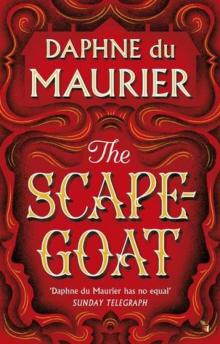
This makes The Scapegoat an interesting novel to study for that ‘something rather deeper’, and almost immediately it is apparent what Daphne meant. The man she chose to be the narrator is a man who is looking ‘for the courage to go on living’. He is depressed, feels his life has passed too swiftly and his only pleasure is to lose himself in fantasy. All he has ever done with his life is ‘to watch people’, and he has always felt ‘an alien . . . too diffident, too conscious of my own reserve’. But inside himself he knows there is another person – ‘who clamoured for release, the man within’, the other self he was ‘so used to denying expression’. The novel becomes not so much the story of two men swopping lives, with all the excitements of plot which result, as the story of one man releasing his inner self and experiencing ‘the sensation that I myself did not matter any more’. He suddenly has a mission in life: ‘to heal’, and the family into which he has been brought needs a great variety of healing. He finds himself responding to the love he receives from his double’s daughter, and from one of his mistresses, and even to the participation in the lives of all the others. The whole experience is an exercise in what Daphne would herself have liked to do – to release her ‘man within’, her troublesome No. 2. The fact that this released inner self was a man helped her to express thoughts and feelings about herself which would otherwise have been impossible. The scenes between the male narrator and his wife and his mistress are further examples, as in September Tide and My Cousin Rachel, of Daphne identifying with her male character so completely that she was able to believe he was herself in a way no one could ever guess.
But at another level, she had invented a complicated and bizarre story, full of thrills, which included death, drugs, dark deeds hinted at and business dealings incredibly protracted and involved. Her ‘fantastically impossible story’ does not read with that absolute conviction she wanted after all, particularly at the end when she had trouble getting the double back, but the portrait of the narrator is so strong that this is unimportant. She did not, in any case, want it to be read ‘as a fast-moving thriller’, but as a psychological study which just happened to be set in the context of a thriller. Unfortunately, this was one occasion when her publisher disappointed her. Victor wrote to Sheila: ‘I have been enthusiastic enough not to worry her . . . but cannot control my tone of voice and I think she realises I have pretty grave reservations – (1) Too long. (2) The combined Assurance and Marriage Settlement motives don’t quite work out. (3) Signatures not credible. (4) Child in well unsatisfactory.’ Daphne had indeed realized all this and was anxious to take on board these criticisms while feeling that Victor had missed the point – all the things he had mentioned, with the exception of the length, were to do with the plot and it made her impatient that he should think they mattered so much. On the other hand, because they didn’t really matter, she was perfectly happy to try to straighten them out and also to cut, as directed by both Sheila and Victor. Never at any time did she think of telling them, as many an author with her sales figures did (and still does), that she liked her novel as it was and if they did not she would try elsewhere. She didn’t seem to realize that the fortunes of Gollancz rested firmly on the money they had made from her and that the merest suggestion that she might go elsewhere would have been disastrous for the firm. Instead, she wrote to Victor apologizing for ‘all the hard work’ she was causing Sheila, who was going through the manuscript marking suggested cuts – ‘I feel so guilty’. At least Sheila appreciated the modesty of such a reaction, writing to Victor that Daphne had been ‘angelic . . . about all the millions of points raised with her (it seemed like millions)’, though she herself had found working on The Scapegoat ‘the very d—1 . . . so many changes and bits of rewriting’.
The novel was not to be published until April 1957, but simply finishing it (in the previous June) had had a rejuvenating effect on Daphne. Her spirits were higher than they had been for years and – she knew it was all to do with ‘giving No. 2 something useful to do’. Nobody needed to underline the significance of this for her – she knew perfectly well how clearly it showed the supreme importance of writing in her life. Nothing could take its place. She could tolerate only a few months without writing before being plagued by her discontented No. 2 which had no other outlet. But none of this was obvious to her family and friends who, though knowing how lost she was without writing (she told them so), never fathomed quite how aimless and unsettled her fallow periods were becoming. On the surface, she could seem happy and busy, especially in the summer with a steady stream of visitors coming to Menabilly for their holidays – Tessa and Peter with their two children; Flavia and her fiancé Alastair Tower (a Captain in the Coldstream Guards whom she had met through her brother-in-law); Kits and friends from school; Maureen, Tommy’s PA and now a great friend of the whole family, and Monty Baker-Munton, whom she had married the previous year;9 Ferdy; Ronald Armstrong; Oriel Malet – all these were regulars, and then there were people who came perhaps once or twice for a weekend, like Brian Johnston and his family, Carol Reed, the Prescotts, the Agars, the Deakins, and other friends who were passing through Cornwall. Far from living a reclusive life, she felt at times as though she were ‘running a holiday camp’. Tommy, too, had his guests, and sometimes these would be interesting people like Margot Fonteyn – ‘the little ballerina was sweet and no trouble’ – or even royalty. Prince Philip had stayed again, rather amazed to be told not to worry if he heard crashes in the night – it was only the old wing falling down. To all these visitors Daphne and Tommy seemed the perfect couple, acting as foils for each other’s wit, calling each other ‘duck’ with such affection, both charming, especially to members of the opposite sex. There was always a lot of laughter, and the idea that Daphne had within her this demanding other self which was placated only by writing was impossible to guess at.
The Christmas of 1956, with The Scapegoat corrections finished, was especially happy. Now that the family circle had extended itself – Flavia had married Alastair in July, another smart London wedding – gatherings were even more convivial than they had usually been at this time of year, and Daphne loved it. Her mother and Angela came for Christmas Day itself, and Tod, of course, was there too, so it was a full house. Tommy acted as butler, Tessa and Flavia as maids, Kits was the pantry boy and ‘it was like the house in the past with a full strength staff!’ Watching them all, she felt proud and happy and, when the New Year arrived, was not at all daunted to realize she was going to be fifty in May. There was a certain relief, she decided, in reaching such an age and ‘not to have to bother about emotions any more’. Or, come to that, clothes – ‘so stupid to care too much’. She had decided she looked best in blue shirts and slim trousers and she refused to ‘feel hopeless any more looking at dresses’. But she knew, at the same time, how dangerous it might be to become totally fixed in her attitudes and get to the stage of not caring about anything at all – ‘I must not become detached and so be unsympathetic to other people’s troubles’.
Of those sitting round that Christmas table the one who had the most troubles was Tommy. Part of his problem was familiar: he was drinking too much and in spite of desperate attempts to reduce his intake he had not succeeded. Attacks of the ‘liver complaints’ with which his wife had so little sympathy were more frequent and his left leg, which had begun to trouble him during the war, was making exercise difficult. For some years now he had been going into a nursing home from time to time ‘to be overhauled’, but any improvement was always temporary. Daphne knew all this, but what she did not know was how serious his emotional problems were becoming. There was a young woman (nicknamed ‘Sixpence’ by her) who worked in a shop in Fowey, whom he now took sailing. This half amused Daphne but also earned her contempt, though she retaliated merely by mercilessly mocking both him and the girl. In London, however, Tommy was having an affair with a woman about whom his wife knew nothing. Daphne did not want, and never had wanted, to know what he did in London – that was his life, just as Cornwall was hers. She could cut off London without difficulty. But Tommy, a far less complex person who lacked his wife’s emotional strength, could not. He was running two lives and he hated it. The strain of pretending everything was fine, coupled with a tiredness that had been draining his reserves of energy for nearly a decade, was bringing him close to breaking point and he did not know if he could carry on. How much he knew of his wife’s own problems it is impossible to guess. Small indications she reported – such as his unease over the snaps Gertrude sent and his puzzlement over her time in Paris with Frank Price – suggest Tommy may have divined rather more than he acknowledged about his wife’s sexual nature. But if he had, still nothing was said, by either of them. As she had written to Ellen, any intimate talk was taboo.
Unaware of Tommy’s misery, Daphne looked forward to the publication of The Scapegoat, believing that this, the year of her silver wedding anniversary, was going to be a good one. She wrote to Victor, asking him if he could cut down on pre-publication publicity – ‘it irritates the brutes sharpening their biros’. She very much wanted not only to avoid annoying the reviewers, but also to ‘break new ground’ with this novel – ‘I don’t believe I ought to go on just resting on sales and faithful fans’. She wanted to attract a new readership and so felt ‘softly, softly would be the best approach’. She had her own ideas about getting various eminent authors to read the novel and give quotes for the publicity handouts – an entirely new venture for her and quite contrary to her usual reticence where promotion was concerned. She suggested that, since it was set in France, Victor should send it to André Maurois, whom she had met in Paris and discovered was a fan of hers. Victor promptly did so, and a very flattering quote came back. Then she began to worry about reviewers, wishing there were some way in which Victor could get J. B. Priestley to review it. She did not want women reviewers – ‘women are inclined to be jealous of other women’.
In fact, when the reviews appeared, several were by women and were excellent – ‘Nancy Spain, my old enemy, did me proud’. She was elated to have the novel, into which she had put so much, praised – with particularly good notices in the Spectator and the Daily Telegraph – but was not so carried away that she did not wonder whether ‘perhaps they all felt sorry for me for a change’. The sales, on the other hand, were in du Maurier terms, though in no one else’s, disappointing, according to Victor (he’d printed 100,000 copies), but Daphne was philosophical about this, saying ‘surely the days of great sales are over’. What was more exciting was the tremendous film interest there had been, even before the novel came out.10 A Hollywood studio wanted to buy it as a vehicle for Cary Grant, but she herself planned to form a company with Alec Guinness to enable him to take the double part. She had great expectations of how brilliant a film it could be in the right hands, which she believed to be Alec Guinness’s hands.
Then, with great suddenness, Tommy collapsed at the beginning of July 1957, just before his twenty-fifth wedding anniversary. He was hospitalized but it quickly became apparent that, although there were things physically wrong with him, the main trouble was emotional stress – he had had a nervous breakdown. Upset by this news, but not as yet really understanding its cause, Daphne acted swiftly and compassionately. She went up to London at once to see her husband, who was under the care of Lord Evans, and found him sadly changed – thin, worn-looking, and visibly distressed. It was still not clear to her what all this was about until she received a telephone call from the woman with whom Tommy was having an affair – a call in which the woman voiced her anxiety over Tommy’s health and her feeling that his breakdown was the result of his running two lives. The shock for Daphne was profound. It had simply never entered her head that Tommy could be having a serious love-affair, and she could hardly cope with the blow not only to her pride but to other feelings. She loved him and thought he loved her, in spite of the collapse of the physical side of their marriage, and that he should care for another woman to the extent of breaking down because of it seemed to her incomprehensible. But she rose to the sad occasion magnificently: Tommy was ill and for the time being that was all that mattered. She must help him get better before anything was resolved, and that is precisely what she set herself to do.
Everyone except the close family and Maureen and Monty Baker-Munton was told that Tommy was suffering from nervous exhaustion. Lord Evans, reported Daphne, had said the blood was going too slowly through his system, including his brain, and he needed ‘pills to thin his blood’. His collapse, in Lord Evans’ opinion, was due to ‘personality deterioration’, which in turn was due to an alcohol-damaged liver plus arterial trouble. If he stopped drinking and took more rest it would help, but only if the psychological basis of his illness was tackled would he really recover. Daphne, hearing this verdict, was struck by the notion that this was the test for which she had been somehow preparing herself all her adult life. ‘I feel’, she wrote, ‘. . . like a soldier who is out of line to pick up strength, or perhaps a battleship having a refit . . . it’s queer . . . but once one has been given the courage to face up to a difficulty the battle is half won.’11 It made her laugh to remember she had once thought she had to get into training for anything as trivial as ‘some sort of climbing expedition . . . or a journey of exploration’, when now it was obvious ‘that what I was meant to get fit for was this present crisis’. She saw it as a battle, but one she and Tommy had to fight together. Her own measure of guilt was bravely acknowledged – ‘I have got to put my passion for solitude and my own company behind me, and thank goodness I had put emotions for other people (except my family) away for good some years ago, so I can now concentrate on doing what is right and best for everyone.’
What had first of all to be decided was whether she and Tommy would stay married, or whether there was any question of an official separation and possible divorce. This was quickly resolved: of course they would stay together. Not for a moment did Daphne contemplate leaving Tommy, nor did he wish to part from her. As soon as he was well enough to leave hospital, she took him down to Menabilly and there, in the August sunshine, he pottered about and grew stronger. Meanwhile, Daphne reflected on her own past love-affair, the only one in her married life, or at least the only one with a man. ‘I had a love-affair with a man in the war . . . which dragged on for six years. We were set to end it when Moper came back from the Far East. When Moper showed no interest in me . . . the temptation to go on again was only too easy. Furtive meetings, futile and wretched for us both. Making poison and somehow spoiling the remnants of the friendship. So we cut the knot and . . . he lives . . . with the wife who knew and forgave him. I had an impulse to write to her yesterday. The first time in fifteen years. I wonder if she will understand.’ What she wanted Paddy Puxley to understand was that she herself now knew the depth and brutality of the shock she, too, had just received. But was she going to be able to forgive as Paddy had forgiven? This troubled her and drove her to examine the meaning of the marriage vows.
‘For richer, for poorer,’ she wrote, ‘doesn’t mean whether you can afford TV or buy a car, but whether the person you marry grows in personality and character or falls away; and for better or worse means whether you can measure up to happiness and joy, or suffering and failure; in sickness and in health means not just cherishing someone who may get pneumonia, but someone who gets sick with longing for someone else.’ The fact that this crisis happened in her silver wedding anniversary year was ironic – ‘twenty-five years, of which too many have been misspent through both our faults’. She remembered how, standing in church while Flavia and Alastair were married the summer before, and again when Maureen married Monty Baker-Munton, she had ‘felt pretty ashamed and shit-like that I’d broken my own word’ when she heard the marriage vows repeated. But she could not help feeling disgusted that during those same ceremonies, while she was feeling guilty about a love-affair some twelve years before, Tommy had been standing there knowing he was actually breaking his vows at that very time. ‘I don’t believe’, she wrote, ‘I could have gone to . . . Flavia’s wedding if I’d been living or even having a wild affair with someone else.’ At the end of this letter, written rather surprisingly to Tessa’s former boyfriend, Ken Spence, she told him to ‘keep it . . . to produce and show to myself or any of the people concerned if crisis comes again’. It was in the nature of a declaration and she wanted it preserved. She also wrote an extraordinary letter which was in the nature of a confession to Maureen Baker-Munton. In this she fantasized that ‘Sixpence’, the girl Tommy was interested in who lived in Fowey, ‘is the second Mrs de W and I – in Moper’s dark mind – can be the symbol of Rebecca. The cottage on the beach could be my hut. Rebecca’s lovers could be my books. Mrs Danvers, devoted, could be Tod, the old devotee.’ Having invented this scenario, she then imagined that ‘Moper, in a blind rage, [could] shoot me as Maxim shot Rebecca, and put my body in Yggie [sic], and take Yggie out to sea, and then the old tragedy be re-enacted, and when he married, as he would in time, some younger “Sixpence”, be haunted by my ghost.’ Even then she was not finished – ‘Or, the present “Sixpence”, a symbol of Jan, be taken out to sea and killed because what has happened is that some old ghost of Jan is resurrected . . . just as Rebecca’s body was discovered in the boat and brought to the surface. The evil in us comes to the surface.’ What she actually claimed might happen was ‘something berserk might snap, with that revolver, and that . . . gun, and the arrows. I am not talking madly. I know.’ In other words, she thought Tommy might kill her.