

Heap Earth Upon It, page 1


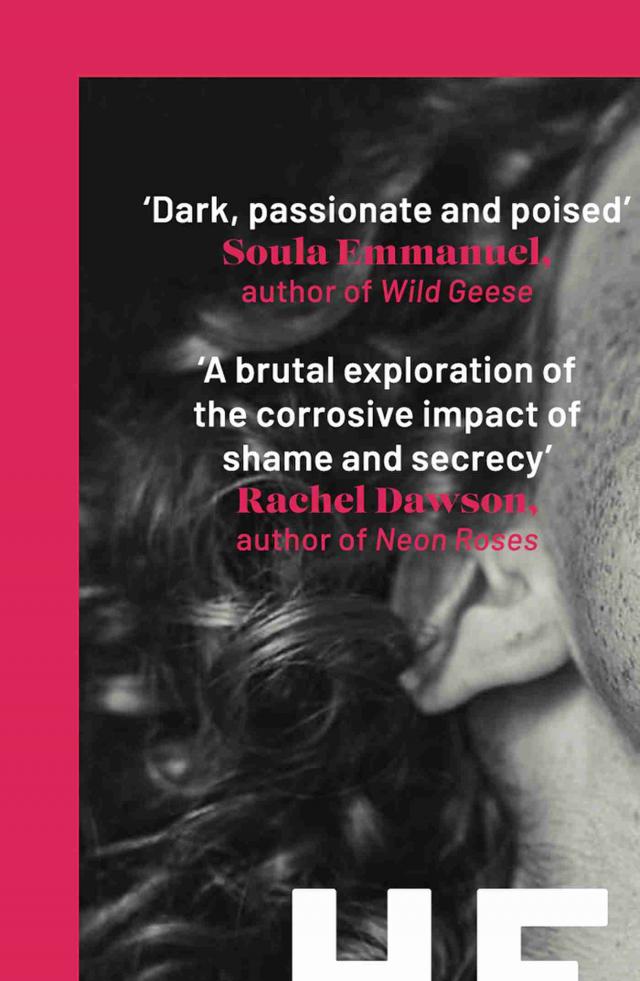
Praise for Heap Earth Upon It
‘A tense and claustrophobic novel with gothic atmosphere which seeps into your bones like fog… A brutal exploration of the corrosive impact of shame and secrecy. Howarth knows her sapphic yearning!’ RACHEL DAWSON, author of Neon Roses
‘Dark, passionate and poised. A remarkable story of the way rural Ireland haunts and is haunted. Intense and thrilling’ SOULA EMMANUEL, author of Wild Geese
‘I lost myself in Howarth’s strange and startling second novel. It’s a deeply affecting tapestry of gothic landscapes and virtuosic, character driven prose. As it haunted me, Heap Earth Upon It will haunt you too’ LUCY ROSE, author of The Lamb
‘A masterclass in suspense… I could not put this down. The characters are brilliantly realised and I really admire Howarth as a writer for doing something completely different to Sunburn… A compulsive mystery that’s threaded together so expertly, with language that sings from the page’ @READSBYROSS
Critical Acclaim for Chloe Michelle Howarth
‘A tender and heartfelt coming-of-age tale’ HEAT
‘A compassionate take on the push and pull between what’s expected and what is felt’ HERALD
‘This book truly blew me away… heart-wrenching. Another incredible debut that I’ll be thinking about for a very long time’ MIRROR
‘A deeply moving, heartfelt love story’ DAILY MAIL
‘Tender and poignant… Ideal reading for the last month of summer’ DIVA
‘Lucy tells her story in a true, compelling voice, with an eye for minutiae, quaint apercus and confidences that make her account moving and convincing’ SAGA MAGAZINE
‘A heartfelt sapphic love story’ ELLE CANADA
For Ben & Chris
Prologue
Often I wake to the sort of scream that permeates soil and rattles the coffins and fossils it passes by. The sort that even the birds and insects understand as pained. A sound so intense it has a texture and a weight. When that screaming comes to me, I wrap myself around it and cling on. There’s something soothing about it; it’s like having you around.
There’s something about all of this that is easier to sink into than to break free from. The deadweight of grief. The small bliss of my stagnancy. Habits I cannot sense the evil in.
And yet, it hurts to think about you. About what happened. So I leave it in my blind spot and try to move on, and pull what comfort I can from your constant screaming.
Jack
Didn’t they all tell me that this would come with time? Healing. Things getting lighter. Things meaning less. I thought it was just something people were saying to fill silences. But it appears that they were right. The trouble is running off me. I am moving on. Such quare liberation.
While the others sleep, I step out of the house to take in the last of Kilmarra. Knowing without really understanding that in the morning we will leave the place we come from and never come back again.
Big bloodied sky, yellow clouds hanging in the thick air. The bare winter trees reach up to be touched by lightning. I do the same. I wait for the weather to break over me. For the rumble of thunder. For God to make Himself known to me. But when the sky opens, no god or heaven is there. Only miles of navy dark.
And I realise that over the last year, I’ve been so focused on the darkness of my skies that I’ve let the rest of the world pass me by. I wonder have the others noticed this? I wonder have they seen the gloomy fire that cuts up my horizon, and know how gladly I have let it blaze?
I go back inside to start loading up the cart. To wake the rest of them.
Leaving the house for the last time, my mind turns away from you, and to the whole year that has passed. A year of things left unsaid, unacknowledged. As though their happening didn’t ruin me.
I’m woken by the bumps in the road, the cart rolling on. All the rest sat up and awake. High time I sat up with them. A little birdsong. A clear evening. White fog lining the roads, smudging the town before us. And yet without the haze of mourning, I see clearly.
‘How are ye now?’
Tom calls, nodding at two passing men. How he has strained to hold us all together. How well he has done. Say what you want about Tom, but thanks to him, we are now just an ordinary family, leaving our ordinary past behind as we come into a new town. When we’re settled, I’ll sort him out with a few pints. To say thanks.
‘Fine morning.’
Tom smiles at the man and woman standing into the hedge to let us pass. His eyes widening. The woman smiles obligingly. It might seem like a small thing, but when she looks at me, I feel able to hold my head up and nod at her. Just yesterday that would have felt like an immeasurably big task. Anna mutters something to herself. I look at her for what feels like the first time all year. And although it makes her uncomfortable, I find it hard to look away.
Beneath a sky of soft clouds, we trickle into the square of Ballycrea. Our wheels meet their potholes, I taste the salted wind, and we are irreversibly here.
It looks just the same as all of the other small towns we’ve travelled through. Post office, shop, pubs. Weathered walls, horse shit, county flags. A girl in a miniskirt and her mother in a shawl. Donkeys and carts among Fords. Modernity is doing what it can to make its impact here, just like in Kilmarra. I’m not sure why I expected this new place to be any different from home.
The further our cart rolls into the town, the more heads turn to take us in. How perfectly dull this is. How wonderful you would look among it all. Warm skinned and blonde, in your pink frock. Glowing in the crowd. Smiling at everyone, wanting to be known, reaching out to shake the hands of the locals like some sort of pageant queen.
But there is none of that. It’s just a quiet day, like every day. All achingly plain. Although I want to leave my sentimentality behind and embrace my new start, I cannot help but long for the immediate vibrancy that you brought to everything. The absolute wonder of you. Darling. Anyway.
A big, unexpected sigh leaves me. It feels good to let the shoulders drop.
‘Hello, hello, folks.’
Ah, he’s loving this. Tall, square-jawed Tom, who our mother would describe as strapping, trying desperately to catch the eye of anyone he can. Look how he holds himself, as though the world is watching. As though god himself has taken audience to see Tom bring us into town, holding the reins of the pony as though she is some unbroken stallion. Glancing out of the corner of his eye to see who is looking. The torn lapel of his coat, burying him with embarrassment. Even before all the effort he had to take to make us appear like a happy family, Tom was always obsessed with appearances.
And yet, here are Peggy’s socks, browned at the soles. A pile of battered trunks and cases, and the chicken pressed against the wire of her cage. Anna in Mammy’s faded red headscarf. My cap, low over my eyes.
‘How are ye keeping?’
Tom asks through a stiff smile. So strange that he can’t just drive the cart through the square without trying to connect with people.
They are all going to think that Anna is my wife, aren’t they? Or they’ll think that she’s Tom’s wife, and I’m just some poor, lonely bachelor that they have graciously taken in. I take Peggy’s feet in my hands to warm them up, squeezing her little bones. Tom turns to look at me, and in the name of optimism, of healing, I pull a smile out of my mouth. I am not the same dreary old Jack that I have been. If this is going to be a new start, I need to be new.
‘This is the crowd in Dr Desmond’s place, I suppose.’
A woman says, as though we are too far away to hear her. Pure brazen.
‘Isn’t the town getting busy?’
Her friend says back. In ways I’m surprised, and in more ways I am not, when Anna calls down to her,
‘We’ll turn around and go so, will we?’
Peggy gasps, and laughs without meaning to. Tom’s jaw tenses. And in a move of solidarity that I can’t quite explain, I laugh too. Later on, I’m sure, Tom will have something to say about all of this. About how we can’t waste our chance here by acting the fool. Later on, I’m sure, I will regret taking Anna’s side. Tom will probably try to track those two women down and apologise to them. And I suppose he’ll be right to do it. Already I’m sorry for laughing. But in that moment, Anna displayed a very rare version of herself. Somebody unbothered and happy, unburdened and funny. Healing will mean untangling the good parts of Anna from the rest of her. That’ll be some job.
I open out my arms for Peggy, and she comes to sit with me. Her small head against my arm, vibrating with the gravel beneath us.
‘Are we nearly there?’
She asks, getting restless, and I stroke the back of her hand. I have no idea if we are nearly there. ’Tis Tom knows where we’re going, not me.
A little while out of the town, we trundle up the long grass of a steep hill. It seems cruel to let the pony pull all this weight. I suppose I should have considered that when we left home.
A white cottage, dark blue paint beginning to peel from each of its five windowsills and front door. A little beaten path starting from a seemingly random point in the grass leading up to it. And a fence around a patch of land adjoining the house. I suppose that’s where the pony will live. The poor creature may never move again after this journey. Moss on the roof, moss on the walls. Suitably rundown. I can’t express how much I am trying to gee myself up about this new cottage.
My knees crack as I get down from the cart, and for the first time in a long time, I am reminded of my age. I can’t say I remember turning twenty-eight. And yet, here I am. This definitely isn’t where I thought I would be at twenty-eight. A full, fresh start unfolding before me. A fresh start was never something that I wanted; certainly not something that I thought I would need. And yet.
Peggy is bouncing around the yard, burning off all the energy she stored up in the cart. She is happy to be here, and I try to mirror her enthusiasm. After struggling with the lock and working himself up, Tom lets us into the cottage where we are hit with the smell of dust and the look of disuse. Peggy dashes past us, unfazed. It’s all on one level. That’s the first thing that lands with me. No stairs, no ladder. All laid out flat here in front of us. I suppose the others notice this too. And it will be added to the ever-growing pile of things we leave unsaid.
Smaller than we are used to. All arranged in a completely different way to home. It isn’t that I expected it to look the same. I just didn’t expect it to look different. I wonder how long it takes to settle in somewhere new.
‘There’s no beds!’
Peggy shouts, running back out to me. Looking to Tom, I realise there that we don’t have half the things we need to fill a home. Anna answers her.
‘No, we’ve no bed yet. Sure we’ve nothing yet.’
‘Obviously, Anna, I just said.’
‘Don’t start acting the brat the minute we arrive.’
‘Era shut up will ye, girls? I’ll sort ye beds. I’ll sort everything we need in the next few days.’
Tom says, dragging in the two largest trunks. I stand at the window, allowing all this to happen. Peggy’s lip trembles. I wonder if she has come to expect me to be passive. I lower myself to her height.
‘Go on and get the chicken, will you? And we’ll find a place to put her.’
Before we left, I tried to explain to Peggy it wasn’t worth having only one chicken, that she wouldn’t lay enough eggs for us all. But Peggy wouldn’t leave her. She said a chicken isn’t just for eggs. My girl. How could I refuse her?
As she turns to walk out the door, it hits me; I think it hits us all at once: we have left our home behind, permanently. There isn’t a scrap of our past here. Nothing to identify with, nothing to hold on to. And so I will have to hold on to Tom, Anna and Peggy. It will be easier to keep my head above water if I am buoyed by them. None of us have the strength to stand on our own.
‘Has he no shame at all, not to run so much as a brush across the floor before we arrived?’
She’s only being judgemental. No bed, no curtains. A table and chairs coated in dust. No sign of life at all except for the turf, the loaf and the jam that Dr Desmond has left for us. That’s something you don’t get from most landlords. Tom and Anna stare at the doctor’s offerings, presumably embarrassed and offended at the idea that we might need a little boost to get us started. Peggy opens the jar of jam and cleans the little blobs on the lid off with her finger, licking it away. A purple stain, sugar in the grooves of her skin. Tom pulls the jar off her and turns his face into a smile, while Anna lets hers fall into a frown.
‘Wasn’t that good of him? A great sign of the people here.’
He says, and Anna responds by rolling her eyes.
‘God yeah, such charitable people.’
She looks around for somewhere to put herself, and her eyes fall on me. For the second time, I find I cannot look away from her.
‘Have a look for a sweeping brush there, Anna.’
Tom says, and she breaks our gaze.
There isn’t a brush. Peggy lets the chicken out of her cage and chases her across the room. We unpack the cart, arrange things and then rearrange them. We have an argument about it and then put things back where they were the first time. We light the fire, we all eat a slice of the bread, and, like every evening, Tom leads us in a rosary. Afterwards, he settles by the fire to count the cash in his money tin.
We’re at the time of year when the night comes in fast, thanks be to god, because I can’t face being awake at midnight, hearing the town ring in the New Year. Without a bed, we lie out on the unbrushed floor and Anna drapes a few blankets over us. Maybe tomorrow, I will talk to her.
And then, the first day is over. And the last of Kilmarra tries to leave us.
I wake to blonde light.
For a moment, there is nothing but this gleaming, pale yellow. What sweetness. What peace. Let me touch it. I chase it, trying not to come back to life.
But it’s too late. I am suddenly awake. All the appalling colour of the world rushes back to me, and there is no more room for the blonde of you. I have woken to the day of your first anniversary.
The comfortable smell of the newspaper and cooking rashers. The crushing weight of three hundred and sixty-five days. The urge within me to mention your name and force my siblings to dissect every moment of your death.
I sit at the table, Peggy alongside me, asking Anna where her school pinafore is gone. Tom puts a hand on my shoulder and squeezes without looking up from the paper. It’s hard to say how many times he has told me that time heals all wounds. Hard advice to be grateful for when you aren’t something that I want to heal from. I feel every muscle in his hand and send the small bit of good that’s left in me back to Kilmarra, back to you. Blessing myself, I take the heel of the bread the doctor left.
Do you know that I would have helped your sisters today? I’d be below at your father’s house now with the cart, waiting to bring them all down to Mass. And then I would have stayed on and looked after him. I would have looked after him for the rest of his life. I hope that you know how much they mean to me. Yet another thing out of my reach. I butter the bread and try to find a way to make the best of this.
But sure look, I hear your voice telling me, look at all the good things that are here. And it’s true, as the sun begins to show itself, I see that I’ve Peggy, and bread, and blackberry jam. Somehow, I’ve enough strength left in me to believe that 1965 could be good to us all. And in the mornings, however briefly, I have blonde light.
Tom
For a small town, Ballycrea is an awful big place. It bleeds out for miles and miles into the countryside. The type of edgeless endlessness that could scare a person. There’s always people to meet, townlands to memorise. All day, every day, I make my way around the town, shaking hands and introducing myself to the locals. Like a politician. A little bit pathetic, I know. But I do what I have to do. And it appears to be paying off, because today, at last, I have been invited to the pub with some local men.
Ger Doyle’s pub is all dark wood, a wall of shelves lined with bottles, stained glass from Murphy’s brewery, a typewriter and record player up on the bar. Ger Doyle lets his two girls pull the pints. I don’t like to see a woman pulling a pint. They haven’t the wrists for it. One stands behind the bar, only a few years younger than me. Smoking a cigarette, waiting for somebody to tell her what to do. Another girl, perhaps my age, comes out from behind the bar in the full bloom of pregnancy. She puts a shiver through me, which I choose to ignore.
‘The price of pork is gone astronomic.’
Bill Nevan says, sitting his pint on the bar. Barrel-chested and going grey, he seems to be the oldest of these men. I agree with him emphatically; I would agree with him if he said the price of pork had gone through the floor, also. I try to somehow hide the sliced ham I bought this morning, though it’s wrapped and left on the counter in front of them all. Whatever these men say, I will take on as my own opinion. Just until we’re settled and they like us. Then I’ll see about speaking my mind.
‘Isn’t it a great thing?’
Another man, whose name I haven’t caught yet, replies. He is the only one drinking beer among pints of stout. Bill has the deepest, loudest laugh, which spills out of his mouth as he pats the man on the back.
‘’Tis well for you, boy.’


